REVIEW · TUNIS
Self guided bike tour of Carthage archeological site
Book on Viator →Operated by Le Lemon Tour · Bookable on Viator
Carthage is easier by bike. I love the self-guided pace that lets you linger where your curiosity lands, and I love that you’re working through a UNESCO World Heritage setting street-to-street instead of doing one rushed stop. One possible drawback: most site entries are not included, so you’ll want to budget for tickets (and confirm you’re at the correct meeting point first).
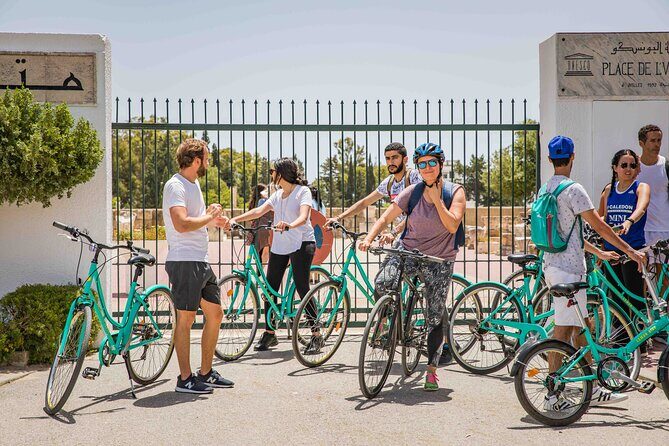
You start at 9 Rue Hannibal, pick up a bike and helmet, then follow a route using a detailed guidebook (French only). The ride is built around major layers of Carthage—Punic, Roman, and later sites—so even if you’re not chasing facts, you’ll still feel the story as the ruins roll past.
You can do this as a short 1-hour burst or a full 8-hour day, and you’ll also have the option to tack on Sidi Bou Said if you want a softer, scenic finish after all the stones.
In This Review
- Key things I’d circle before you go
- Carthage by bike: what your day actually feels like
- Meet at 9 Rue Hannibal: avoid the wrong-address headache
- Choosing your ride length: 1 hour vs up to a full day
- Stop-by-stop: Carthage ruins you can hit in an order that makes sense
- Stop 1: Tophet de Carthage (Punic sanctuary)
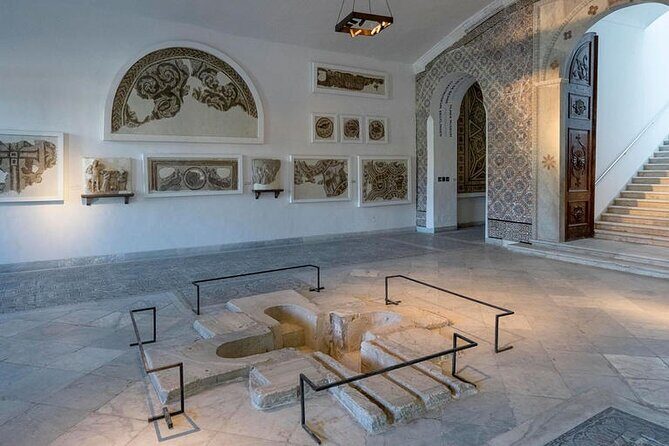
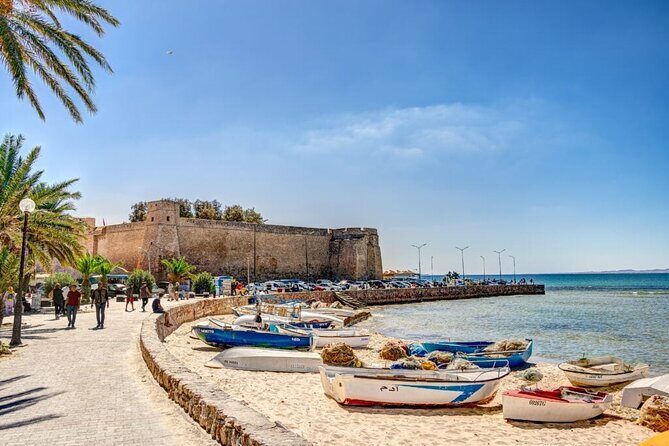
- Stop 2: Punic Ports & Museum (Punic and Roman ports)
- Stop 3: Site Archéologique de Carthage (main archaeological area)
- Stop 4: North Africa American Cemetery (free stop)
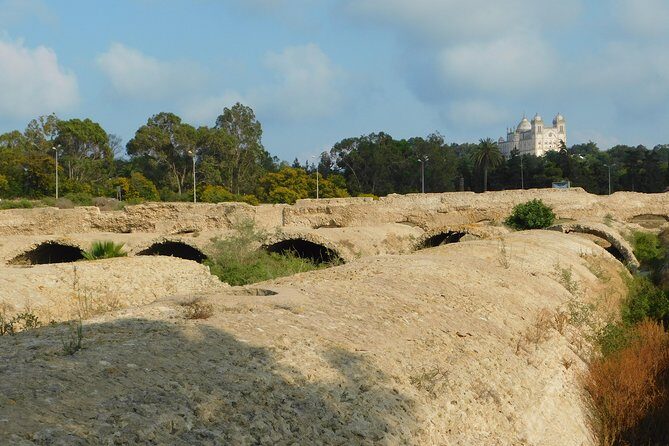
- Stop 5: Carthage Aqueducts (Malga Cisterns)
- Stop 6: Villas Romaines (Roman villa area)
- Byrsa Hill (viewpoint segment)
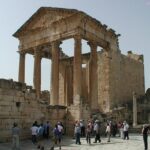
- Stop 7: The Roman Theatre of Carthage
- Stop 8: Baths of Antoninus (Anthonius Bath)
- Tickets and cost reality: budget for admissions on the day
- Guidebook is French-only: use it as a tool, not a barrier
- Sidi Bou Said: when you want charm after the stones
- Price and logistics: $45 is fair if you’re prepared
- Who should book this bike tour (and who should pause)
- Should you book Le Lemon Tour for Carthage?
- FAQ
- Is this a guided tour with a person?
- What is included in the $45 price?
- Are admission tickets included for the ruins?
- Where does the tour start and end?
- How long is the bike tour?
- What language is the guidebook?
- Can I cancel and get a full refund?
Key things I’d circle before you go
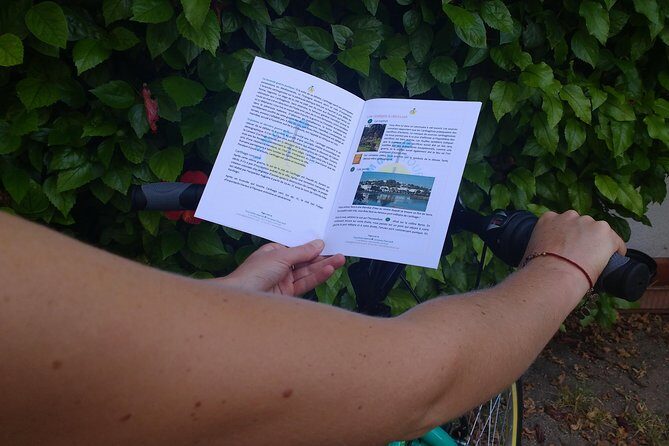
- French-only guidebook means you’ll rely on your reading skills more than a spoken guide
- Helmet + bicycle included so you’re not scrambling for rentals on the spot
- Half-day or full-day timing lets you match your energy to the number of stops
- Most admissions not included (with one major free exception) so plan your budget
- Multiple historic layers in one loop: Punic sanctuary, Roman ports, aqueducts, theatres, baths
Carthage by bike: what your day actually feels like
Carthage can feel like a lot on paper. Ruins, monuments, names, timelines. The bike format fixes that by turning the visit into something you can pace yourself.
With this experience, you ride between key stops instead of jumping from one far-flung location to another and hoping you guessed right on timing. That matters because Carthage has plenty to look at even when you only have a short window. A bike day gives you the freedom to slow down at an angle you like, then move on when you’ve had your fill.
I also like that the tour is built around a clear set of landmarks—Tophet de Carthage, Punic ports & museum, Byrsa Hill area, Roman theatre, and Baths of Antoninus—so you’re not wandering aimlessly with a vague map. You’ve got stops with suggested time blocks, which helps you avoid the classic ruins problem: you reach one highlight, spend too long, then realize you’ve run out of daylight.
The only thing that can trip you up is that this is self-guided and the guidebook is French-only. If you don’t read French comfortably, you might still enjoy the ruins visually, but you’ll lose some of the meaning.
You can also read our reviews of more cycling tours in Tunis

Meet at 9 Rue Hannibal: avoid the wrong-address headache
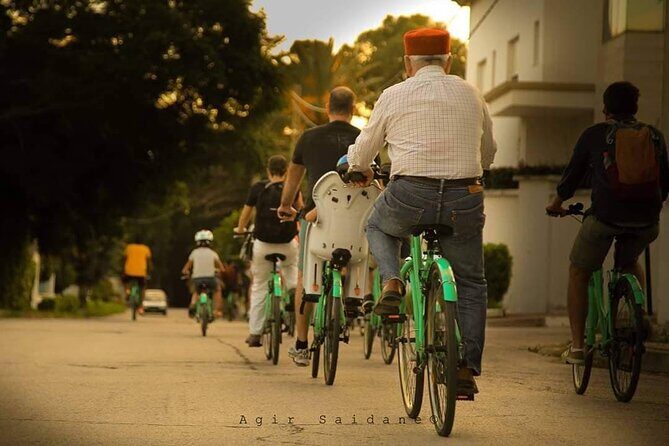
Start location is specific: 9 Rue Hannibal, Site archéologique de Carthage 2025, Tunisia. The activity ends back at the same meeting point, so you’re planning a closed-loop day.
Here’s the practical tip that really matters: confirm the provider’s location before you roll out. The operator is Le Lemon Tour, and their local is described as identifiable by a bike on the wall and by appearing on maps (so you can find it like a normal human, not like an explorer with a guess and a prayer).
If you’re using a taxi, don’t assume the driver has perfect knowledge of the exact street pin. If you do end up dropped in the wrong area, the consequences are annoying: you can lose time, pay extra transport, and still end up paying on-site admissions because you can’t hit everything in your planned order.
So do this: while you’re still fresh, open your map app, zoom in on the route to 9 Rue Hannibal, and double-check you’ve got the right pin for Le Lemon Tour.
Choosing your ride length: 1 hour vs up to a full day
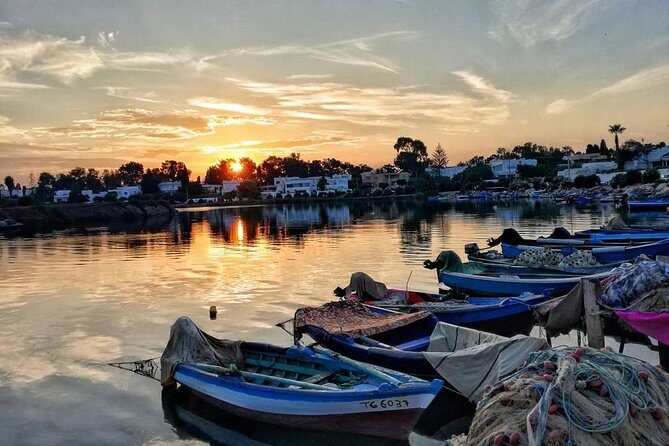
This is designed for flexibility. The experience duration is listed as 1 to 8 hours, which lines up with two common styles of ruin-hopping:
- Short visit: focus on fewer stops, spend longer at the “most you” locations, and leave with energy intact.
- Full day: follow the full sequence—then you’ll cover the major Punic and Roman highlights plus the big “big statement” views like Byrsa Hill and the Baths area.
The route is organized as a sequence of short and longer blocks, which makes it easier to do the half-day version without feeling like you missed everything important. You can also stop and reset as needed, because you’re on a bike you control.
One more practical note: it’s described as near public transportation, which can be useful if you’re trying to build a bigger day around Carthage and the coast.
Stop-by-stop: Carthage ruins you can hit in an order that makes sense
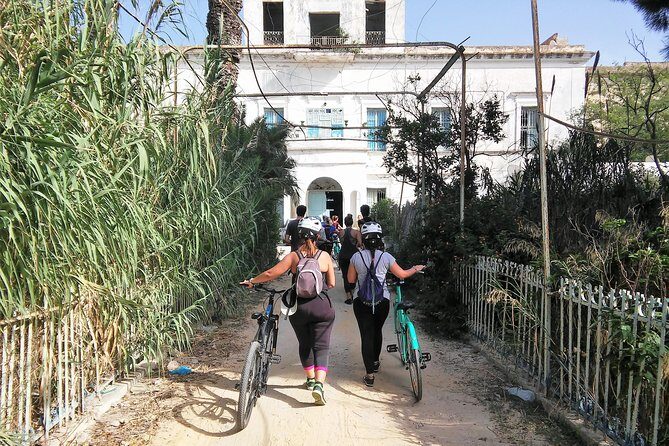
The stops below are the backbone of the day. Most include entry times, and most do not include admission tickets (so keep that in mind as you pace yourself).
Stop 1: Tophet de Carthage (Punic sanctuary)
You’ll start with Tophet de Carthage, a Punic sanctuary, with an allotted visit time of about 10 minutes. This works well as a warm-up because it sets the tone early: Punic-era Carthage isn’t a side note here—it’s the foundation.
Drawback to expect: 10 minutes is quick. If you’re the type who reads slowly and likes to absorb every label, you may want to extend it, but that means trimming elsewhere later.
You can also read our reviews of more guided tours in Tunis

Stop 2: Punic Ports & Museum (Punic and Roman ports)
Next is Punic Ports & Museum, with roughly 5 minutes. This stop is short by design, and that’s not a flaw so much as a pacing tool. You get the idea of the ports—then you move on.
If you’re someone who likes maritime or Roman infrastructure, you might want more than five minutes. You can do that, but be aware you’ll shift time from the later larger stops.
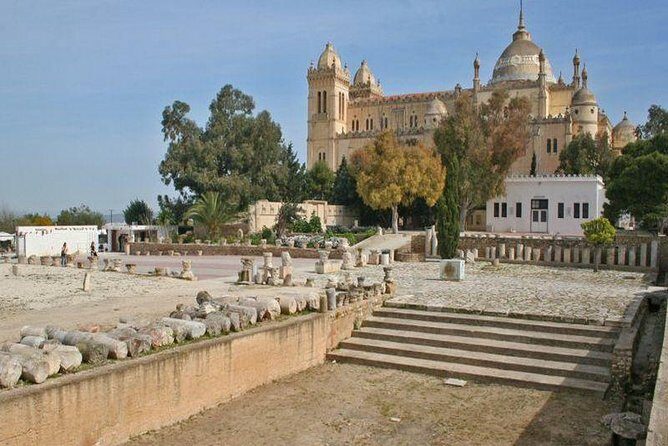
Stop 3: Site Archéologique de Carthage (main archaeological area)
This is your big anchor stop: Site Archéologique de Carthage, about 3 hours. Admission tickets aren’t included here, so plan to handle entry on-site.
This is the point where the bike tour stops feeling like a checklist and starts feeling like a day. You’re likely to linger, because the area offers enough to keep your eyes busy without needing to understand everything perfectly.
Best way to use this block: don’t try to see every corner. Pick the parts your guidebook points you toward, then allow time for surprise finds along the way.
Stop 4: North Africa American Cemetery (free stop)
Then you hit North Africa American Cemetery for about 15 minutes, and it’s listed as admission free.
It’s a welcome change of mood after the ruins. It’s also one of the easiest stops to fit in, because the time window is clear and short.
Stop 5: Carthage Aqueducts (Malga Cisterns)
Next: Carthage Aqueduct viewing around Malga Cisterns, about 5 minutes. Admission isn’t included.
This is one of those “quick but meaningful” moments. Aqueduct-related remains help you think about what daily life would have required—water management, access, and infrastructure—rather than only grand monuments.
You won’t spend long here, so don’t plan this as a stand-alone highlight. It works better as a piece of the larger puzzle.
Stop 6: Villas Romaines (Roman villa area)
Then Villas Romaines, about 20 minutes, again with admission not included.
Roman villas tend to reward you if you like domestic-scale history: how space was arranged, how buildings were used, and how everyday living shows up in architecture. If you’re more architecture-forward than timeline-forward, this stop is likely to click.
If you’re more into sweeping viewpoints, you may find this stop a quick read—fine, just be ready to keep moving.
Byrsa Hill (viewpoint segment)
You’ll also have a Byrsa Hill stop. The itinerary doesn’t list a fixed time for it, so treat it like a flexible “pause and look” area.
This is where you’ll benefit from slowing down. Even if you’re not a deep history reader, topography helps you understand why cities and empires cared about this spot.
Practical tip: if your day is running long, don’t skip it. Byrsa Hill is the kind of place where the view does some of the storytelling for you.
Stop 7: The Roman Theatre of Carthage
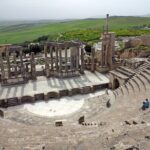
Next is the Roman Theatre of Carthage, about 15 minutes.
Theatre spaces can feel magical because you’re standing in a place designed for people to gather. You might find it especially satisfying if you’re the type who likes to imagine performances—without needing to know every historical detail.
Stop 8: Baths of Antoninus (Anthonius Bath)
Finally, Baths of Antoninus for about 1 hour.
This is the end big stop, and one hour is a good allocation if you want to actually look at the layout and not just take a few photos and move on. It’s also often the part of a ruins day that makes you think, okay, this was a real place where people lived, worked out, and socialized—at a grand Roman scale.
If you arrive tired, shorten earlier stops and protect this one. It’s worth the attention.
Tickets and cost reality: budget for admissions on the day
The tour itself lists a price of $45, and the includes are mainly the transportation and tour materials: bicycle, helmet, and a detailed guidebook.
But here’s the cost reality: admission tickets are not included for most stops. The North Africa American Cemetery is listed as free, but the rest will likely require you to pay on-site.
So how do you judge value?
- If you’re comfortable paying entry fees at multiple monuments, the $45 is mainly a rental + route + guidebook package.
- If you want every single admission included, this won’t be your best match.
The good news is that the route is structured to reduce random wandering. You’re not paying to explore in circles. You’re paying to follow a plan through key areas.
Guidebook is French-only: use it as a tool, not a barrier
You get a detailed guidebook of Carthage and surroundings, and it’s listed as French only. There’s also a note that the written guide is only available in French, which basically means you shouldn’t expect an English booklet to fall into your lap.
What this means for you:
- If you read French passably, you’ll get more out of each stop than by looking at stones alone.
- If you don’t, you can still enjoy the ruins visually, but you’ll need to rely more on your own questions and curiosity.
One interesting note from visitor feedback: guidance can make a big difference when it’s delivered clearly. In particular, Jibram is mentioned for being very knowledgeable and for explaining details about Tunisia and culture in a way that helps people connect the dots. Even with self-guided touring, clarity at the start can set you up to read the guidebook more effectively once you’re on the route.
Sidi Bou Said: when you want charm after the stones
The experience explicitly suggests you can also visit Sidi Bou Said. That’s a smart add-on because it gives you a different pace after the concentration of archaeological stops.
Think of it as your “coast reset.” The ruins are about layers of ancient power and daily life. Sidi Bou Said is more about atmosphere and getting your eyes back on something lighter.
If you choose to add it, keep your timing realistic. The Carthage route already asks you to ride, look, and pay attention. Don’t schedule Sidi Bou Said as a sprint unless you’re feeling fresh.
Price and logistics: $45 is fair if you’re prepared
At $45, this sits in the “good value if you’re self-sufficient” category. You’re not paying for a live guide escort for hours. Instead, you’re paying for practical help: bike + helmet + route guidance through a guidebook.
That can be a win if you like your days to feel yours.
It can be a downside if:
- you want English interpretation throughout,
- you hate dealing with on-site entry payments,
- or you struggle with finding exact addresses.
So the best preparation is boring but effective:
- confirm the meeting pin for 9 Rue Hannibal and Le Lemon Tour
- expect you’ll handle admissions when you arrive
- plan your ride length so you’re not rushing through the final big stop at the end
Who should book this bike tour (and who should pause)
This experience makes sense for you if you:
- want flexibility and don’t want to be tied to a group pace,
- enjoy ruins and architectural details, even if you’re not chasing every ancient name,
- feel comfortable riding and navigating on your own with a guidebook.
You might want to think twice if you:
- don’t read French and you were hoping for that to be solved by translations,
- dislike paying entry fees at multiple sites,
- or are likely to get flustered by “find the exact meeting address” situations.
Also, kids must be accompanied by an adult, so plan for that if you’re traveling as a family.
The group size is private—only your group participates—so you won’t be squeezed by strangers. That’s another point in favor if you like quiet mornings and controlled pacing.
Should you book Le Lemon Tour for Carthage?
I’d book it if you want Carthage to feel like an actual day out, not a rushed museum circuit. The bike freedom, the structured stop sequence, and the clear end-to-end route from the meeting point make it a solid way to see the major highlights.
I would not book it if French-only materials and multiple on-site admissions would make you feel annoyed. This tour rewards preparation more than luck. If you confirm the start location well, bring the right expectations about tickets, and use the guidebook (or the support you can get at pickup), you’ll likely have a satisfying, paced experience across Punic and Roman Carthage.
FAQ
Is this a guided tour with a person?
No. It’s a self-guided bike tour. You pick up your bicycle and use a route with the provided guidebook.
What is included in the $45 price?
You get use of a bicycle, use of a helmet, and a detailed guidebook of Carthage and surroundings (French only). A mobile ticket is used as well.
Are admission tickets included for the ruins?
Admission tickets are not included for most stops. The North Africa American Cemetery is listed as free.
Where does the tour start and end?
It starts and ends back at the meeting point: 9 Rue Hannibal, Site archéologique de Carthage 2025, Tunisia.
How long is the bike tour?
The duration is listed as 1 to 8 hours, depending on whether you do a shorter or longer version of the route.
What language is the guidebook?
The detailed guidebook is French only, and the written guide is also only available in French.
Can I cancel and get a full refund?
Yes. Free cancellation is available up to 24 hours in advance of the experience start time for a full refund. If you cancel less than 24 hours before, the amount is not refunded.