REVIEW · TUNIS
Roman Archeology Guided Tour Thuburbo Majus & Uthina
Book on Viator →Operated by Tunisia Guided Tours · Bookable on Viator
Roman ruins with breathing room. This 7-hour route turns Tunis into a launch point for three Roman-era hits, from major temples and amphitheaters to North Africa’s big water bragging rights. I like the clean, guided structure that keeps the story straight across stops, and I like that the pace leaves enough time to actually look at details instead of just snapping photos.
What makes it extra satisfying is the range: Uthina offers big, excavated public spaces, including an amphitheater and mosaics from the villa called Laberii, while Thuburbo Majus gives you an especially readable Roman town core with its Capitol and Forum view. One consideration: lunch isn’t included, so plan a meal stop strategy (or bring snacks) if you don’t want the day to feel rushed at midday.
In This Review
- Key highlights
- A Seven-Hour Roman Route from Tunis
- Uthina (Oudhna): Amphitheater Views and the Villa Laberii
- Zaghouan Aqueduct: How Romans Moved 132 Km of Water
- Thuburbo Majus: Capitol Columns, Forum Stairs, and Two Bath Seasons
- Price and Logistics: What $140.96 Buys You
- Who This Tour Is Best For (and Who Might Want to Skip)
- Should You Book This Roman Archeology Tour?
- FAQ
- How long is the Roman archaeology guided tour?
- What stops are included in the itinerary?
- Is pickup included?
- Is lunch included in the price?
- Are entrance fees included?
- Is the tour private?
- What transportation is provided?
- Do I need a paper ticket?
- What’s the cancellation policy?
Key highlights
- Uthina’s scale: a backed-up ancient city spread over more than a hundred hectares, with major Roman buildings
- Laberii mosaics and villa remains: a villa named Laberii with thirty rooms across about 2,300 m²
- Zaghouan aqueduct power: a hydraulic system tied to Carthage’s water needs, measured at 132 km
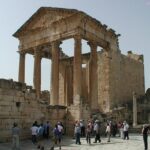
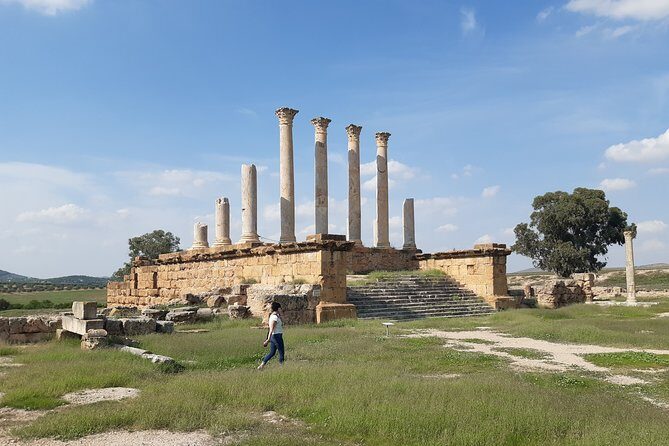
- Thuburbo Majus Capitol views: six Corinthian columns on the facade, with four still standing above the wide staircase to the Forum
- Two-bath Roman town planning: winter and summer bathing establishments at Thuburbo Majus
- Private comfort: air-conditioned vehicle, WiFi onboard, and pickup offered
A Seven-Hour Roman Route from Tunis
This tour is built like a classic Roman road trip, just with the driving sorted out for you. You’ll be picked up (when the option is available) and carried in an air-conditioned vehicle with WiFi onboard, which matters in Tunisia when the sun is doing most of the talking. It runs about 7 hours, long enough to see three major sites without feeling like you’re sprinting through history.
The price is $140.96 per person, and in this case, the “what you get” is the key part of the value. You’re paying for private transportation plus the guide-style interpretation that helps Roman ruins make sense, and you also get included fees and taxes. Site admissions are also handled as part of the package: Uthina and Thuburbo Majus include admissions, while the aqueduct stop is free.
If you’re the kind of traveler who hates spending time figuring things out mid-trip, the tour’s setup helps. You get a mobile ticket, and everything runs on a schedule with set time windows at each stop (so you don’t lose half a day hunting down the right entrance).
You can also read our reviews of more guided tours in Tunis

Uthina (Oudhna): Amphitheater Views and the Villa Laberii
Uthina, also known as Oudhna, sits about 30 km south of Tunis on a hill site that controls main access routes coming from the south and west toward Carthage. It’s the kind of location that lets you picture why a settlement mattered even before the Roman layers arrived. The history here isn’t a straight line: it begins with Berber-era foundations, then shifts through periods of punishment, Romanization, and later short Vandal and Byzantine guardianships before a more definite decline after the Arab conquest in the 7th century.
The Roman remains are what you’ll focus on during the visit. The ancient city extends over more than a hundred hectares, and that size helps explain why Uthina feels more like a real “place” than a single ruin postcard. You’re not only looking at a temple or a wall segment. You’re moving through the scale of a Roman town that was “capitonée” by imposing buildings.
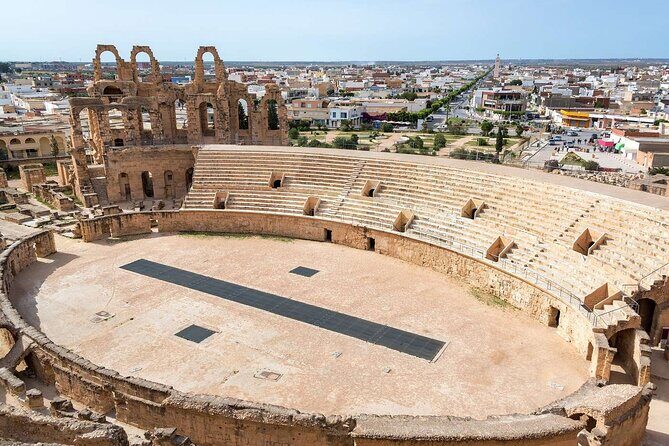
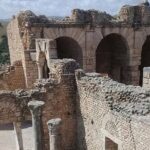
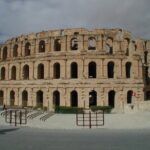
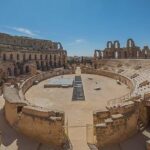
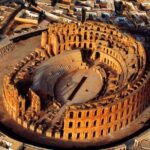
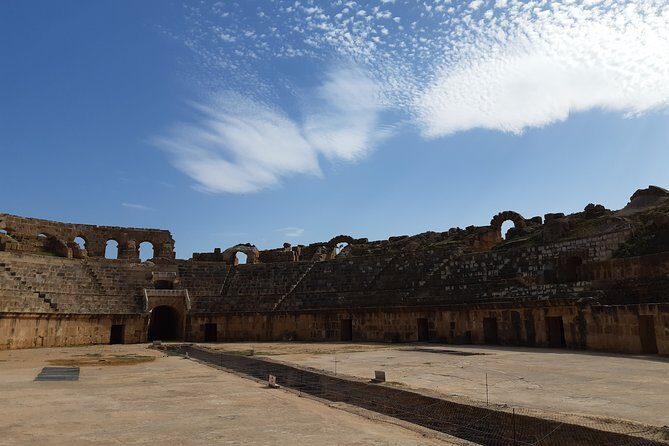
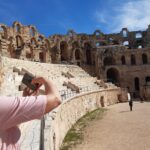
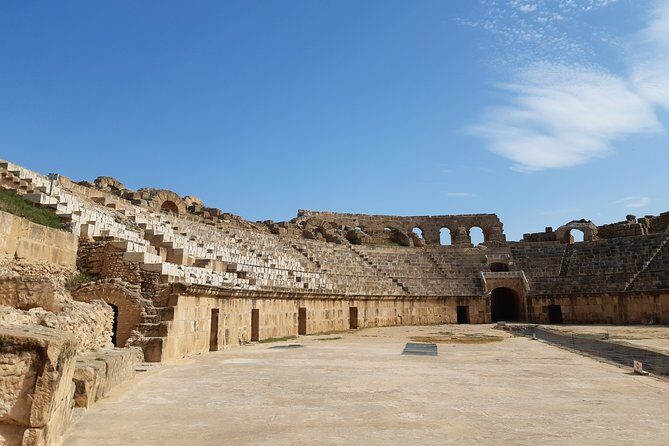
The standout is the amphitheater, which is described as astonishing and excavated in recent years. It’s sized for big crowds—up to about 20,000 spectators—so when you stand in the right place, you can feel how public life and entertainment were engineered into the city. It’s also one of those structures where a guide’s pacing helps. If you rush, you miss how the seating shape and stage area were designed to pull in an audience.
Then there’s the villa called Laberii, noted for its thirty rooms spread across about 2,300 m². Villas are often treated like “side stops” in Roman touring, but here it’s worth prioritizing because of the mosaics. Mosaics are a visual language—pattern, color, and craft that were meant to be seen by visitors and residents alike. Even when ruins are weathered, the mosaic focus gives you something tactile to study, not just stone columns and foundations.
Potential drawback at Uthina: your visit time is about 1 hour 30 minutes, and Uthina’s scale is huge. That means you’ll see the important highlights, but you won’t get “wander until you finish” freedom here. If you love ultra-detailed archaeology photography, you’ll want to come ready to pick priorities fast.
Zaghouan Aqueduct: How Romans Moved 132 Km of Water
After Uthina, the day shifts from city life to infrastructure. The Zaghouan aqueduct is tied to Carthage’s water supply and sits inside one of the largest hydraulic complexes of its type ever built. This isn’t the kind of ruin where you can guess the purpose just by looking. The “wow” comes when you connect the dots: where water started, where it traveled, and how it was stored before it reached baths.
The system runs 132 km, built at the beginning of the 2nd century AD. You’ll learn how it crosses rugged terrain and how the pipeline alternates between sections flush with the ground and sections that run underground. In other stretches, the water is carried on raised arcades—sometimes more than 20 meters high—so you can see Roman engineering flex when the route gets tricky.
One of the most impressive numbers is the estimated daily flow: around 30 million liters per day. That’s hard to picture until you realize what it was feeding. The water was stored in giant vaulted reservoirs at Maalga, near the entrance to Carthage, before supplying the Baths of Antonine. If you like the story of empires through “boring” systems, this stop is for you. It turns aqueducts into living proof of administration, planning, and maintenance.
You only spend about 20 minutes here, so the goal isn’t to “study every stone.” It’s to get the big picture quickly and leave you with a mental map of the route. A shorter time window is also a plus if your legs need a break between longer site walks.
A practical note: the aqueduct stop is admission-free, and it’s easy to underestimate its value because you might expect more access. The real win is the guide’s explanation—how the system was built to work day after day, at a scale that still reads as futuristic.
Thuburbo Majus: Capitol Columns, Forum Stairs, and Two Bath Seasons
Thuburbo Majus is the place where Roman town planning becomes easy to read. The site sits on a hill, surrounded by fertile valleys that help set the stage for why a settlement could grow before North Africa was fully Roman. But it’s the Roman-era remains that make it one of the most beautiful archaeological sites in Tunisia.
The town story includes ups and downs. There was a decline in the mid-3rd century, then a renaissance in the 4th century. After that revival, the city proclaimed itself Respublica Felix Thuburbo Majus—a loud statement that tells you the community wanted to be remembered as thriving, not just surviving.
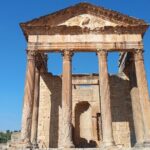
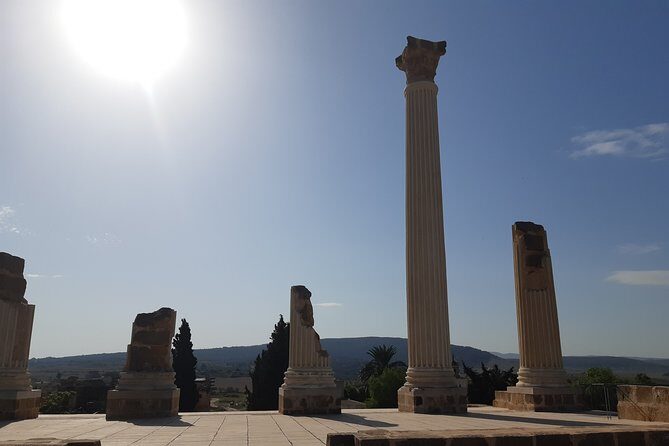
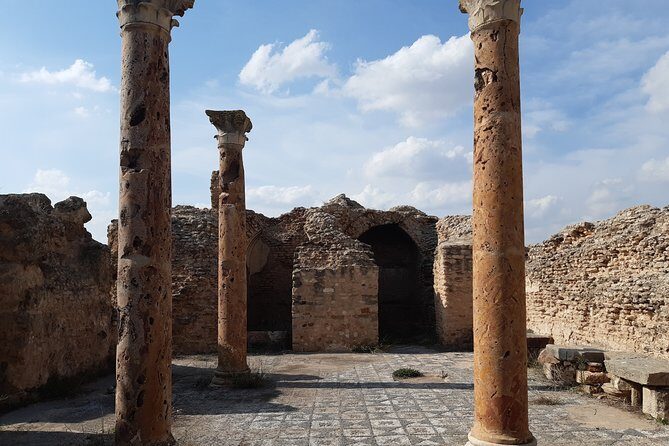
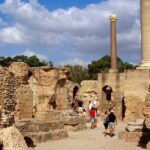
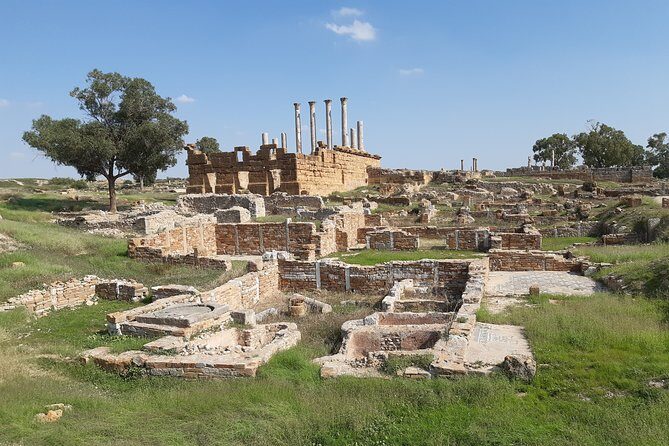
The headline building is the Capitol, described as the most important temple in Roman cities and one of the best preserved in Tunisia. The facade features six Corinthian columns, with four still intact. What I like about this is that you get an easy visual connection between temple front, civic space, and movement through the site.
Those four columns overlook a wide staircase leading down toward the Forum. That means you’re not only staring at ruins—you’re standing where people once processed through a planned urban flow. If you enjoy “reading” how Romans staged daily life, this is where the tour earns its keep.
Another detail that makes Thuburbo Majus feel specific is the presence of two bathing establishments: one for winter and one for summer. Roman bath culture is common across North Africa, but the seasonal split is the kind of practical design choice that makes the city feel engineered for real weather. It suggests the city cared about comfort and routine across the year.
Your Thuburbo Majus stop runs about 1 hour, and that’s a good amount of time for a site this readable. You won’t get slowed down by endless dead ends; instead, the major features line up in a way your guide can interpret fast and clearly.
Potential drawback at Thuburbo Majus: the visit is one hour, so if mosaics or smaller domestic ruins are your main obsession, you’ll have less time for side areas. Use that time to focus on the Capitol, the stairs toward the Forum, and the bathing story.
Price and Logistics: What $140.96 Buys You
Let’s talk value without hand-waving. At $140.96 per person, you are paying for more than entry tickets. The tour includes private transportation, an air-conditioned vehicle, and WiFi onboard, plus pickup offered. Fees and taxes are covered, and you get a mobile ticket for the day.
On top of that, the itinerary includes admission tickets at Uthina and Thuburbo Majus, while the aqueduct stop is free. That matters because it turns your day from a “pay to enter, then pay again for guidance” setup into something closer to a bundled interpretation experience. You’re also getting structured time at each stop: about 1 hour 30 minutes at Uthina, 20 minutes at the aqueduct, and 1 hour at Thuburbo Majus, with the rest of the day spent driving and repositioning.
You’ll also want to factor in the one missing piece: lunch isn’t included. In a 7-hour schedule, that can make a difference. If you hate deciding on the fly, look for a meal plan around the middle of the day—either stop for something quick near the sites or bring snacks and water so your energy stays steady.
One more logistics detail that affects how smooth your day feels: this tour is listed as private, so it’s only your group. Private touring usually means you’re not fighting crowds or spending your day stuck behind a slow-moving cluster.
Finally, timing matters. This experience is typically booked about 36 days in advance, which is a hint that demand exists. If Roman sites are your priority trip, booking earlier usually helps lock in your preferred day.
Who This Tour Is Best For (and Who Might Want to Skip)
This tour fits best if you want a Roman day that connects themes instead of listing monuments. You’ll like it if you care about how Romans built cities: temples and forums at Thuburbo Majus, city scale and public entertainment at Uthina, and water engineering that fueled Carthage at the Zaghouan aqueduct. It’s also a good match for people who want a guide-driven story, because the sites make more sense when someone explains what you’re looking at.
It’s also a solid pick if you like the idea of a day that feels organized. The schedule gives each stop a defined window, so you don’t get stuck in the trap of spending your vacation trying to manage transport.
I’d consider skipping if you’re chasing a super-slow, “let me wander every corner” archaeology experience. With set stop times, you’ll see key highlights, but you won’t have open-ended exploration.
One of the biggest reasons people rate this highly is the guide approach. In past feedback, the tour is praised for a strong local guide—sometimes named Fathi, a retired professor described as passionate about teaching and with a strong grasp of Roman historical sites across Tunisia. The flexibility of start and end times also shows up in reviews, which is a real quality-of-life perk when you’re matching a tour to your hotel plans.
Should You Book This Roman Archeology Tour?
Book it if you want a Roman day that’s structured, interpretive, and comfortable. The combination is smart: Uthina delivers scale and the amphitheater experience, Thuburbo Majus gives you a readable civic core with the Capitol and Forum stairs, and the Zaghouan aqueduct adds the big infrastructure story that makes Roman life feel real.
Skip it only if you’re the type who needs long time at every site to feel satisfied, or if you know you’ll be distracted by the lack of lunch planning. If you’re proactive—pack snacks or plan a meal—you’ll get a day that feels more like a guided narrative than a checklist.
If your goal is to see Tunisia’s Roman side in one efficient day, this is a strong value, especially with private transport, included site admissions where noted, and a guide who can explain why these ruins matter.
FAQ
How long is the Roman archaeology guided tour?
It lasts about 7 hours.
What stops are included in the itinerary?
The tour includes Uthina (Oudhna), the aqueduct de Zaghouan, and Thuburbo Majus.
Is pickup included?
Pickup is offered.
Is lunch included in the price?
No, lunch is not included.
Are entrance fees included?
Admission tickets are included for Uthina and Thuburbo Majus. The aqueduct stop is admission-free.
Is the tour private?
Yes. It’s a private tour/activity, and only your group will participate.
What transportation is provided?
You travel by private transportation in an air-conditioned vehicle with WiFi onboard.
Do I need a paper ticket?
A mobile ticket is provided.
What’s the cancellation policy?
You can cancel for a full refund up to 24 hours in advance of the experience’s start time. If you cancel less than 24 hours before, the amount paid isn’t refunded.
If you tell me your travel dates and whether you want a more relaxed pace or maximum Roman highlights, I can help you decide how this fits with the rest of your Tunis-area plans.