REVIEW · TUNIS
7 Day Guided Tunisia Tour Including Pickup
Book on Viator →Operated by Tunez-Monumental · Bookable on Viator
This route packs Tunisia’s big hits in one week. You’ll bounce between UNESCO ruins, Berber ksour and troglodyte homes, and desert scenery tied to Star Wars filming inspiration, all with expert guiding. If you like history you can feel in your legs (long drives, big stops), this tour hits the sweet spot.
What I like most is the mix: Roman sites like El Djem and Dougga, plus Islamic Tunisia in Kairouan and Tunis. I also like that the experience is shaped around people and comfort, with guides such as Salem and Ziad showing up in the feedback as attentive, detail-minded, and flexible with timing.
One consideration: it’s a lot of ground in a short time, so you’ll spend more hours in transit than you might on a slower coast-only trip.
In This Review
- Key highlights you’ll actually feel
- Why this 7-day route works so well
- Pickup, start point, and how to set yourself up
- Day 1: Sousse Medina, El Djem Coliseum, and Matmata troglodyte houses
- Day 2: Chenini ksour and Tataouine’s fortified granaries
- Day 3: Douz and the strange beauty of Chott el Jerid
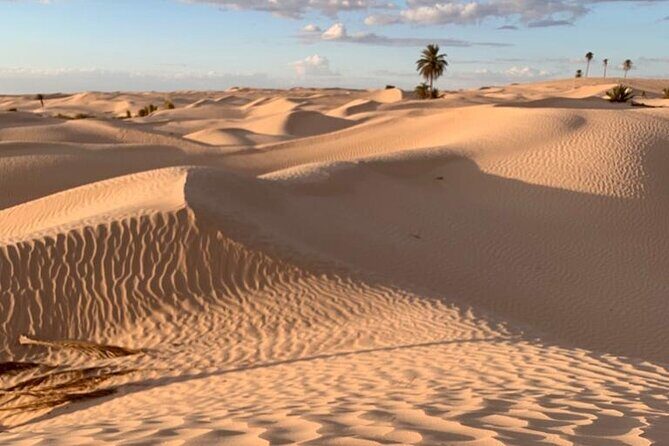
- Day 4: Chebika waterfall, Old Tamerza ruins, and Eriguet dunes
- Day 5: Sbeitla Roman ruins and Kairouan’s center of Islamic learning
- Day 6: Dougga’s preserved Roman city and the Medina of Tunis
- Day 7: Sidi Bou Said and Carthage’s Tophet and Antonine Baths
- Price and value: what $1,858.33 buys you (and what you should plan for)
- The guiding team and why it matters on this route
- Who should book this Tunisia tour
- Should you book it or pass
- FAQ
- Where does the tour start?
- Is pickup offered?
- How long is the tour?
- What meals are included?
- Are entrance fees included?
- What are the operating hours?
- Can I cancel for a full refund?
- Is it a private tour?
- Is the meeting point near public transportation?
Key highlights you’ll actually feel
- Medina-to-desert-to-UNESCO in 7 days without wasting travel days
- El Djem Coliseum and Dougga for a very Roman Tunisia
- Troglodyte Matmata homes and Berber ksour architecture in the south
- Chebika waterfall and Old Tamerza ruins for scenery that changes fast
- Kairouan for a deep, practical look at Islamic learning and city life
- Carthage Tophet and Antonine Baths when you want ancient scale
Why this 7-day route works so well
Tunisia isn’t one vibe. This tour gives you several in a tight loop: coastal medinas, Roman monuments, and the southern desert edge where air, light, and architecture all shift. You get the fun of variety without the stress of planning each day alone.
A key advantage is pacing by “anchor stops.” Big set pieces show up every day, like Sousse’s UNESCO medina feel, El Djem’s amphitheater scale, or Carthage’s burial area and baths. That keeps the week from turning into a string of roadside pull-offs.
You’ll also notice something else: the guiding style matters here. Many people on this route credit their guide team, including Salem and Yassine, for making history understandable and for keeping the group moving smoothly.
You can also read our reviews of more guided tours in Tunis

Pickup, start point, and how to set yourself up
The tour starts at Carthage Airport, Tunis. If you land there, it’s straightforward to join without a complicated day-0 transfer.
Pickup is offered, which is a big deal on a route like this. When you’re covering Sousse to the south and back toward Tunis and Carthage, fewer logistics tasks means more energy for the sites themselves.
The tour uses a mobile ticket, and it runs daily during the stated window (Monday to Sunday, roughly 8:00 AM to 6:00 PM, within the listed date range). Booking earlier can also help you lock in your preferred slot, since the average booking lead time is about 46 days.
Day 1: Sousse Medina, El Djem Coliseum, and Matmata troglodyte houses
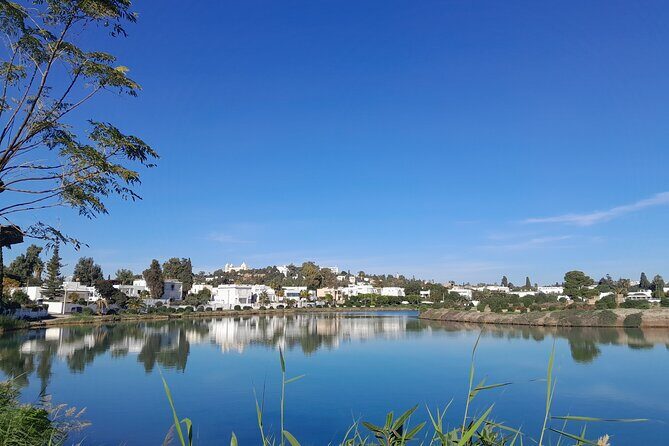
Day 1 is a strong opening because it hits three different “how Tunisia got built” stories.
First comes Medina of Sousse, a UNESCO World Heritage site and one of the best-preserved Islamic city layouts. Expect narrow lanes, courtyards, and a city-scale maze where the architecture does half the explanation for you. Time here is tight, so wear shoes that handle uneven steps and plan to move at a steady walk.
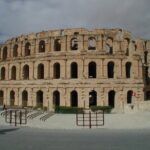
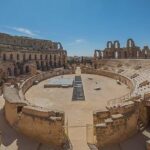
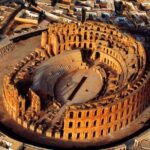
Next is El Djem Coliseum. This amphitheater is one of the most impressive and well-preserved Roman ruins in the world, with seating capacity up to around 35,000. If you’ve ever wondered how Rome felt outside Italy, this is where you get that answer fast.
Then you head to Matmata, famous for troglodyte houses carved into soft limestone. The practical point you’ll appreciate: these homes were designed as a response to desert heat, using the ground for insulation. Even if you’re not touring inside every room, seeing how people adapted their homes to the climate is the kind of “aha” that stays with you.
Watch-out for Day 1: it’s a long day of contrasts—medina walking, amphitheater viewing, then rocky desert terrain. If you’re sensitive to travel fatigue, bring a light day bag and plan to eat the snacks you brought with you.
Day 2: Chenini ksour and Tataouine’s fortified granaries
Day 2 turns your attention from Roman stone to Berber design under pressure—protection, storage, and survival in a harsh environment.
In Chenini, you’ll visit ksour—fortified granaries and village clusters built by the Berber people. The architecture is built into rocky hillsides, so the village feels like it grew out of the terrain. This stop is great if you like reading how people planned for raids and crop protection.
After that comes Ksar Ouled Soltane, near Tataouine. It’s one of the best-known ksars in the region, and it’s often highlighted for how clearly it shows the fortified granary concept: groups of stone structures designed for storage and safety.
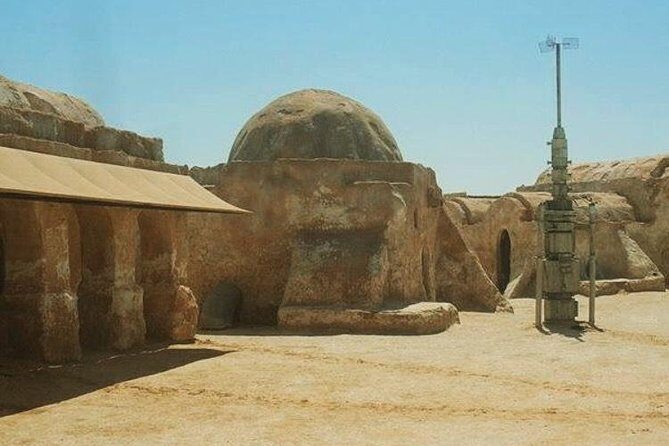
Finally, Ksar Hadada brings you back to the story of Tataouine Governorate’s rocky desert setting and traditional Berber culture. There’s also a Star Wars connection here through inspiration tied to the fictional Tatooine concept—so if you’re a fan, you’ll recognize the vibe even if you don’t hunt for film trivia.
Day 2 tip: take a moment to look at sightlines. Ksour weren’t built only to be pretty; they were built so people could watch, defend, and manage crops and water with limited resources.
Day 3: Douz and the strange beauty of Chott el Jerid
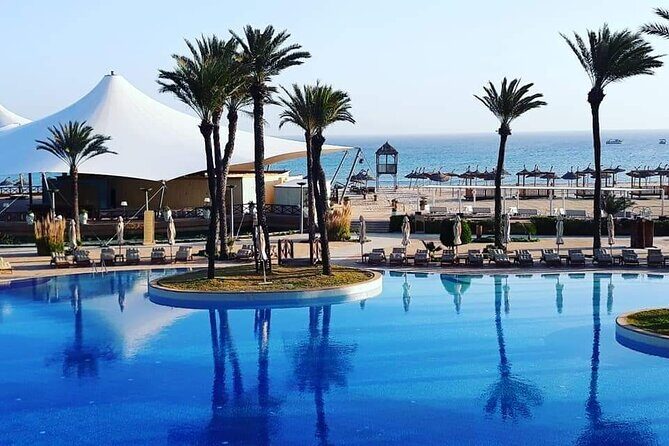
Day 3 is where the tour starts to feel more “Sahara edge” than “city and ruins.”
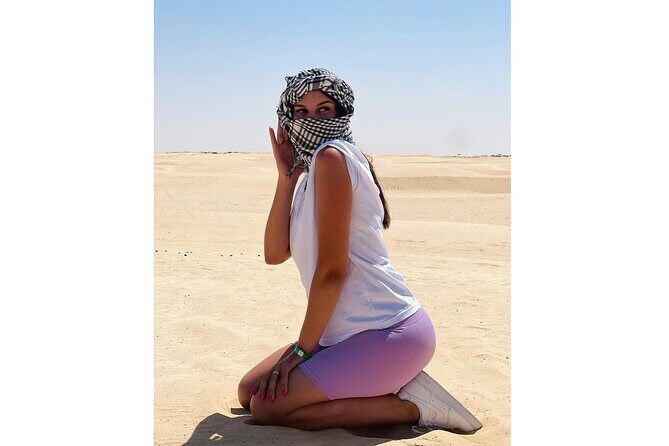
In Douz, you’ll see why the town is often called the Gateway to the Sahara. It’s a common jumping-off point for desert expeditions and camel trekking, and even if you’re not doing a trek that day, the town’s identity is built around the desert rhythm.
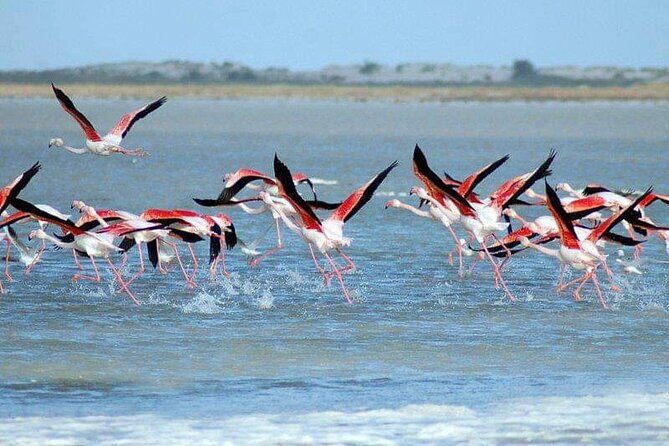
Next is Chott el Jerid, a shallow salt lake with high salt content. In the dry season, you get a wide expanse of salt crusts and mud flats; in rainy conditions, it can temporarily hold water and bird life like flamingos and migratory species. That seasonal shift is the key idea: the same place changes character dramatically.
Practical note: this day can feel visually “open,” which is nice after older-city days, but it also means sun and wind matter. Bring sunglasses and a hat, and use sunscreen even if the air feels cooler.
A few more Tunis tours and experiences worth a look
Day 4: Chebika waterfall, Old Tamerza ruins, and Eriguet dunes
Day 4 is a standout because it combines an oasis moment with abandoned village atmosphere and then finishes in dune country.
At Chebika, the focus is Ain Chebika, a natural spring flowing down the mountainside into cascades and pools. You’ll also see palm trees and rocky cliffs shaping the oasis feel—basically, the desert briefly makes a green pocket.
Then you visit Old Tamerza, an abandoned village whose ruins remain after flooding in the 1960s. The haunting part is not horror-movie haunting, it’s more quiet: narrow streets and crumbling houses that show how fast communities can be pushed aside by extreme weather.
The day ends with Ong Jemel / Eriguet Dunes. This area is tied to Star Wars filming locations and is also about the way dunes look from a human scale—curves, ridges, and that “where did the ground end” sensation.
Day 4 tip: bring a layer. Desert days can shift from bright heat to cooler evenings, and the air can feel different in shade under cliffs and near water.
Day 5: Sbeitla Roman ruins and Kairouan’s center of Islamic learning
Day 5 blends two major chapters of Tunisia: Roman provincial power and Islamic learning that shaped North Africa.
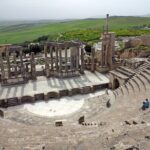
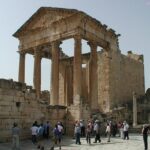
First is Sbeitla, a Roman city that served as capital of the Roman province of Africa Proconsularis. Between the 1st and 6th centuries AD, it grew into a wealthy center with temples, theaters, baths, and residential remains. The three Roman temples dedicated to Jupiter, Juno, and Minerva are the obvious anchors, and they help you understand how religion and civic life were built into the city plan.
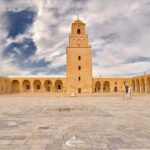
Then comes Kairouan, founded in 670 AD and known for Islamic learning and civilization. It was also a capital of Ifriqiya, covering areas of present-day Tunisia plus parts of Algeria and Libya. This stop works well if you want more than architecture photos; it’s about understanding how ideas traveled and how a city became a reference point.
How to enjoy Kairouan more: don’t rush through the details. Let the scale and layout settle in, and ask your guide to connect what you see to how life worked back then.
Day 6: Dougga’s preserved Roman city and the Medina of Tunis
Day 6 is built for Roman lovers, but it also pivots back toward living Tunisia.
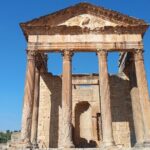
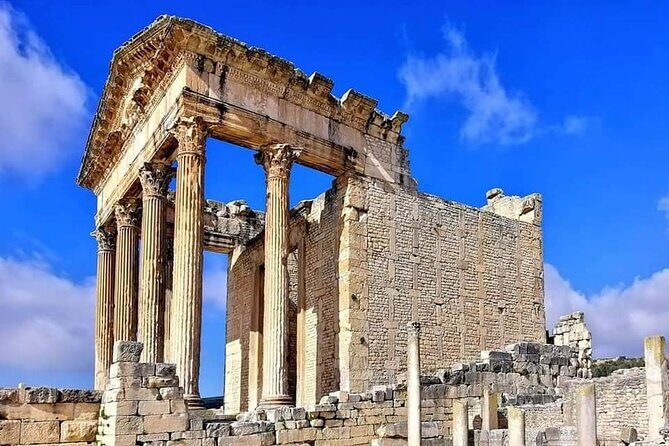
Dougga is a UNESCO World Heritage Site and often described as feeling frozen in time because of how well the ruins have held onto their layout and features. You’ll find ancient temples, theaters, public buildings, and mosaics, which makes this one of the best “walkable Roman cities” type experiences on the trip.
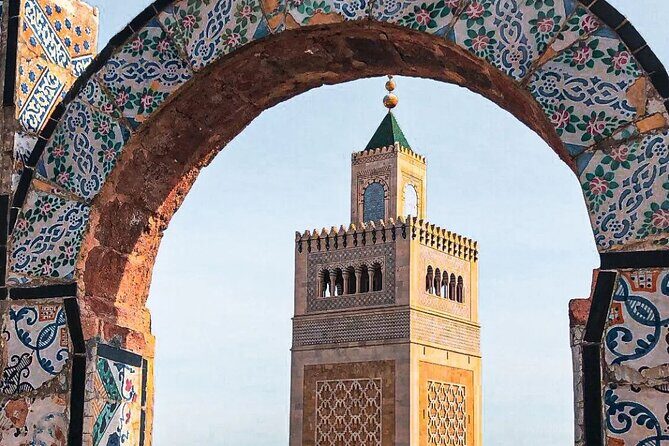
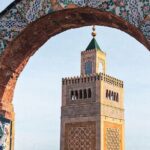
After Dougga, you go to the Medina of Tunis, the historic heart and capital city core dating back to the 9th century. Think walled-city lanes, traditional craftsmanship, and souks where you get a real sense of everyday movement. This medina stop makes a great final “city chapter” before the coastal classics.
Day 6 pacing note: Roman ruins can be deceptively tiring because you keep looking down at details and up at structures. If you’re prone to foot fatigue, take short rests and drink water between stops.
Day 7: Sidi Bou Said and Carthage’s Tophet and Antonine Baths
Day 7 gives you Tunisia’s Mediterranean mood, plus ancient Carthage for the grand finale.
At Sidi Bou Said, you’ll see the iconic whitewashed look with blue accents and Moorish-Andalusian architectural details. The village sits on a hill overlooking the sea, and the views are part of why artists and travelers have always loved it.
Then you head to Carthage, where the ruins spread across a large area. You’ll start at the Tophet, an ancient burial ground tied to Carthaginian religious practices, and then you move to the Antonine Baths, an enormous complex that once served as a social and relaxation hub. The scale here is the point: it’s easy to imagine the daily rhythm of a powerful city.
If you’ve felt Roman ruins mostly as “structures,” Carthage helps you feel them as a living system—ritual, social life, and power in one sweep.
Price and value: what $1,858.33 buys you (and what you should plan for)
At $1,858.33 per person for about 7 days, you’re paying for a full guided loop with pickup and meal support. The built-in value is that someone else handles the sequencing and transport between distant regions.
The tour includes breakfast (6) and dinner (6). That matters more than it sounds. On long driving days, having meals already handled saves time and reduces the chance you end up hunting for food near a closed kitchen.
What you should budget carefully: the tour’s stated “not included” list says all fees and taxes and entrance fees at the monuments. At the same time, the day-by-day plan marks several stops as free or with admissions handled in the schedule. To stay safe, you should confirm which monuments are covered for your departure, so you’re not hit with surprise entrance costs on the ground.
The guiding team and why it matters on this route
This itinerary is the kind that goes from good to great depending on the person holding the thread. In the feedback, guides such as Salem and Ziad are repeatedly described as attentive, enthusiastic about history, and able to adjust when the day needs flexibility.
This matters because the route changes tone fast: Roman ruins to desert villages to Islamic learning to coastal viewpoints. A strong guide helps you connect the dots instead of turning each stop into a separate photo album.
You’ll also benefit from teams that pay attention to the small logistics. People credited not only guides but drivers like Khaled, plus others such as Manuel and Michel, for keeping things smooth and comfortable over long distances.
My practical advice: if you have a language preference, mention it early. Some guides in this operation have been noted for speaking Spanish and Portuguese, which can make the history easier to absorb without translation delays.
Who should book this Tunisia tour
This is a strong fit if you want a guided sampler that covers a lot of terrain in a short window. It’s also ideal if you care about UNESCO sites and want desert areas like Douz and Chott el Jerid without doing the logistics yourself.
It’s less perfect if you want deep, slow museum-time in one city. This route keeps moving, and some days include multiple major stops in one timeline.
Also consider your energy for long-distance driving. A Portuguese review noted the experience covered around 2,100 km, and while not every week will be identical, it’s a reminder that you should pack for comfort and expect more time on the road than on a compact city tour.
Should you book it or pass
Book this tour if you want the best “big-picture Tunisia” week: Sousse and Tunis medinas, Roman giants at El Djem and Dougga, Kairouan’s Islamic learning center, and desert stops like Chebika and Chott el Jerid. With pickup, breakfast and dinner included, and a guiding team known for flexibility and care (including Salem, Yassine, Ziad, and others), it’s a solid value for people who like structure.
Pass or look for a slower alternative if you hate travel days, want fewer driving hours, or prefer spending more time in fewer places. On this route, you’ll see a lot, but you won’t linger the way you might on a countryside stay.
FAQ
Where does the tour start?
The tour start point is listed as Carthage Airport, Tunis, Tunisia.
Is pickup offered?
Yes, pickup is offered.
How long is the tour?
The duration is listed as 7 days (approx.).
What meals are included?
The tour includes breakfast (6) and dinner (6).
Are entrance fees included?
The tour’s not-included list states entrance fees at the monuments are not included. Some stops are marked free or with admission included in the day plan, so it’s smart to confirm what applies to your dates.
What are the operating hours?
The listing shows operating hours as 8:00 AM to 6:00 PM, Monday through Sunday, within 04/12/2024 to 12/28/2025.
Can I cancel for a full refund?
Yes. It says free cancellation is available up to 24 hours before the experience start time for a full refund.
Is it a private tour?
Yes. It states this is a private tour/activity, meaning only your group participates.
Is the meeting point near public transportation?
The additional info says it is near public transportation.
If you tell me your travel month and how many people are in your group, I can also suggest what to prioritize for packing (sun/wind layers, walking shoes, and the kind of day bag that makes desert days easier).