REVIEW · TUNIS
Guided tour in the UNESCO world heritage Medina of Tunis
Book on Viator →Operated by Saber ARRAKI · Bookable on Viator
A walk with Saber ARRAKI can change how you see Tunis. This guided stroll in the UNESCO Medina of Tunis turns confusing lanes into a clear story, with major stops like the Zitouna Mosque and nearby historic madrasas.
I love the fact that this is led by a nationally certified guide approved by the Tunisian National Tourism Office, not a random “someone with a map.” I also love that the route mixes big landmarks with real daily-life streets, from perfumer souks to a classic café. The only watch-out: it’s a lot of walking on uneven medina ground, so comfortable shoes matter.
What makes this tour especially good is the way you get context as you go. You’ll see how places like the Zitouna Mosque connect to the surrounding souks and institutions, and you’ll get a practical sense of where you are and why it matters in Tunisian life.
In This Review
- Key points (what you’ll feel fast)
- Why a guided walk is the smart way to understand the Medina
- Saber ARRAKI: the kind of guide who connects facts to streets
- Starting at La Kasba and aiming your first steps at Zitouna Mosque
- Dar Lasram and the medina’s domestic architecture
- Slimaniya Medersa (and the Bir Lahjar swap you should know)
- Souk Al Attarine, Café du Souk, and the parts that feel less like a maze
- Rue de la Kasbah, goldsmith souks, and hammam street-level reality
- Dar El Jeld and Rue du Pacha: monument street where the medina shows its layers
- Arts center Bir Lahjar: education history you can feel in the walls
- Price, group size, and time on your feet: does it feel like value?
- Should you book this Medina of Tunis guided tour?
- FAQ
- What is the duration of the guided Medina of Tunis tour?
- Where does the tour start and end?
- What time does the tour begin?
- How large is the group?
- Is private transportation included?
- Are entrance fees included?
- Does the tour use a mobile ticket?
- What languages is the tour delivered in?
- Does the tour operate only in good weather?
Key points (what you’ll feel fast)
- Certified guide experience with Saber ARRAKI, approved by Tunisia’s National Tourism Office
- Best-of Medina route: Zitouna Mosque, madrasas, souks, hammams, and major monument streets
- Small group size with a maximum of 15 travelers for better questions and better pacing
- Smart mix of indoor and outdoor stops so you’re not stuck only in crowds or only outside
- Admission pattern that’s easy to plan: some sites are included, some (like Dar Lasram) are not
Why a guided walk is the smart way to understand the Medina
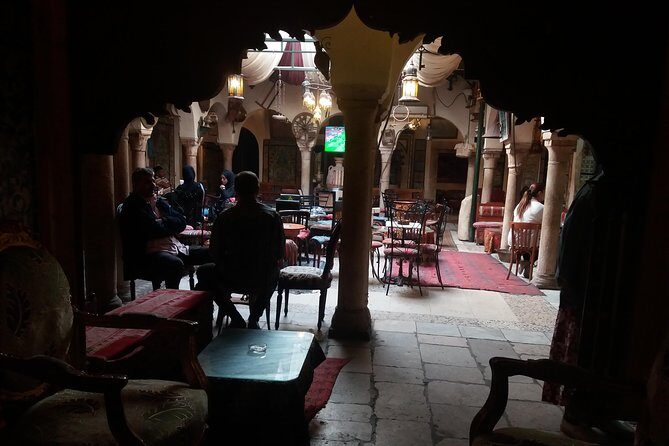
The Medina of Tunis looks simple from far away: narrow streets, bright shops, people moving fast. Up close, it’s a whole city inside the city. Without context, you can end up doing the “souvenir loop” and miss the bigger meaning of what you’re seeing.
This tour helps you get oriented quickly. You’re not just ticking off monuments; you’re learning how religious spaces, education buildings, markets, and domestic architecture sit next to each other and work as one connected system. That’s the difference between seeing sights and understanding a place.
The other big advantage is pacing. The itinerary is built around short segments and frequent stops, which matters in the medina. You’ll spend time on key sites, but you won’t be trapped for hours in a single crowded souk. And because the group is capped at 15 travelers, you can actually ask questions and get answers without feeling rushed.
You can also read our reviews of more guided tours in Tunis

Saber ARRAKI: the kind of guide who connects facts to streets
Saber ARRAKI isn’t just reciting dates. He’s able to explain Tunisia in a way that helps you read the city like a text. That shows up in the way he handles questions and keeps the day flowing even when people want photos, detours, or extra explanations.
From the experience description, he’s a nationally certified guide approved by the Tunisian National Tourism Office. In practical terms, that usually means he knows how to guide responsibly, communicate clearly, and lead you to places that make sense rather than just “nearby.”
Language is also a real value here. The tour has been delivered in both English and French, and people repeatedly note his English quality. If you want to understand what you’re looking at (and not just hear it as trivia), that matters.
Starting at La Kasba and aiming your first steps at Zitouna Mosque
You start at La Kasba, Tunis, with the tour beginning at 9:00 am. That timing helps. Mornings in the medina tend to be easier for walking and photos, and it gives you daylight for the mosque views and the route ahead.
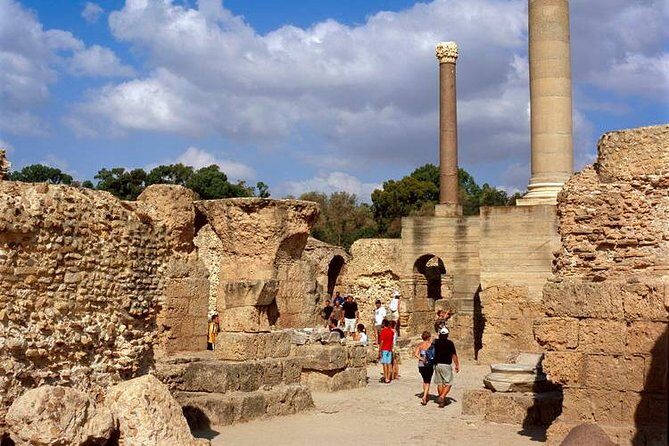
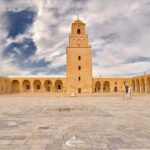
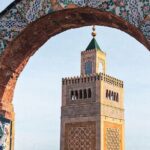
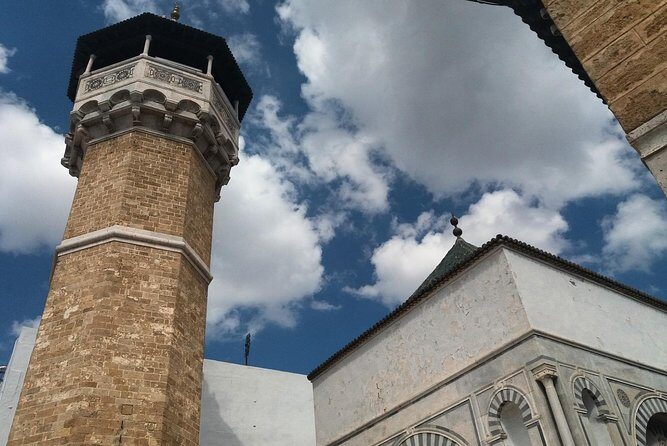
From there, the tour’s main anchor is the Zitouna Mosque, often called the Mosque of the Olive Tree. It’s the main mosque in the medina and the oldest and largest sanctuary in the capital. The scale is part of why it’s such a powerful first stop. You’re looking at a religious complex built on roughly 5,000 m², with nine entrances and 184 ancient columns, many traced back to the Carthage site.
Even if you’re not there for religious practice, it’s a major way to understand Tunis. The Zitouna Mosque sits at the center of the medina’s historical role as a hub of education and learning. Seeing it first also makes later stops feel connected, not random.
Tip: plan to look up and slow down for the details. Columns, entrances, and the way streets funnel toward the mosque are the clues that help you understand the layout.
Dar Lasram and the medina’s domestic architecture
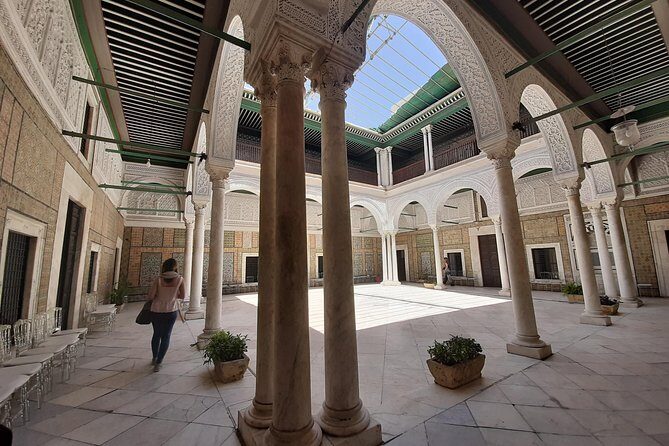
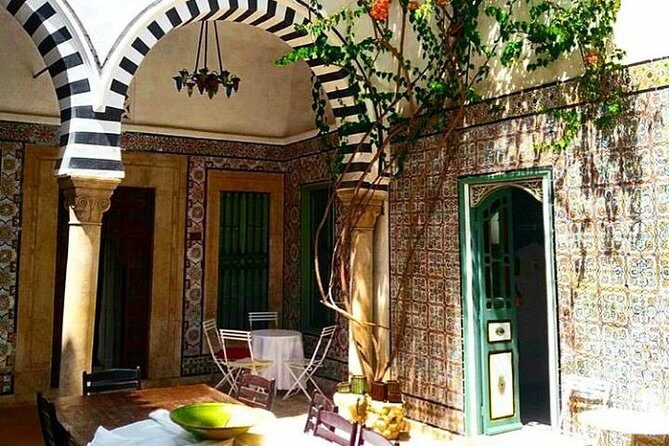
Next comes Dar Lasram, a traditional Tunisian house with about 2,250 m². This stop is valuable because it shifts your focus from public institutions to domestic life—how people actually lived inside the medina’s walls.
The structure is part of the story. On the ground floor, you’ll see the shop and service areas. Upstairs you get the main house, and on the upper level there’s a guest house. That kind of layout explains how the medina functioned as both a home and a working space.
One practical note: admission for Dar Lasram is not included. That means you should factor that cost into your planning if you want to see inside. The payoff is worth it if you like architecture and the way buildings were designed for privacy, daily work, and hosting.
Also, you’ll notice how cultural institutions may share or use these spaces today. In this case, the palace area is divided between the Medina Safeguarding Association and the Tahar-Haddad Cultural Club in the store.
Slimaniya Medersa (and the Bir Lahjar swap you should know)
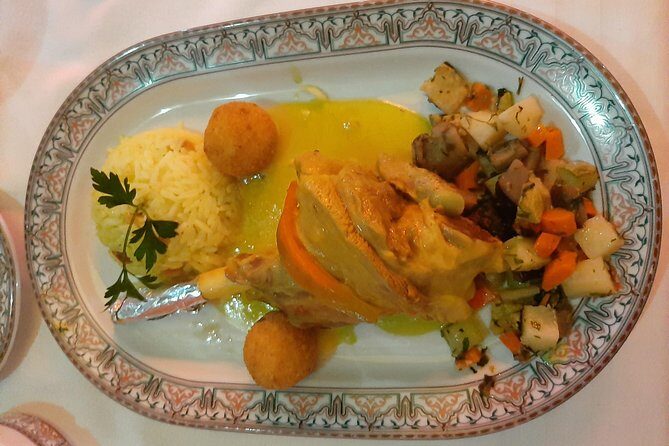
After Dar Lasram, you head to Medersa Slimaniya. This is a historic educational building built in 1754 by Ali I Pasha, in memory of his son Suleiman, who was poisoned by his brother. The medersa sits near Zitouna Mosque, at the corner of souks El Koutbiya and El Kachachine, so it’s not isolated—it’s woven into market life.
This stop is short, about 15 minutes, and admission is included when you visit it. It’s also positioned at a moment in the tour when you’re starting to connect the Medina’s big themes: learning, religion, and commerce all living side by side.
Then there’s an important scheduling detail. The tour description indicates you may have a choice to visit Bir Lahjar or Slimaniya. In other words, your day may swap which medersa you prioritize for the included interior time. I’d treat this as a positive, not a problem. Madrasas are the kind of place where the differences matter, so having a flexible option can make your visit feel more tailored.
You can also read our reviews of more historical tours in Tunis
Souk Al Attarine, Café du Souk, and the parts that feel less like a maze
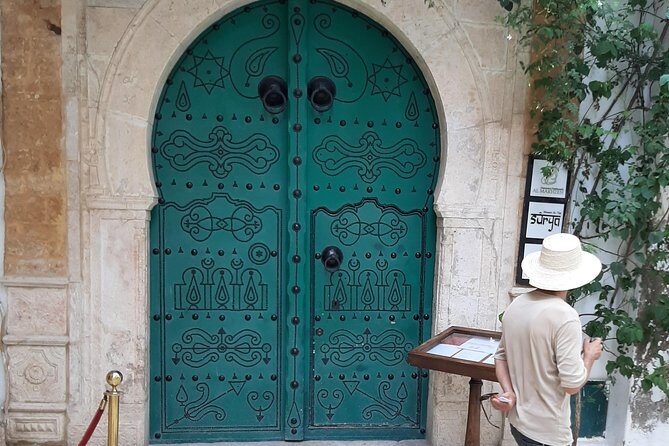
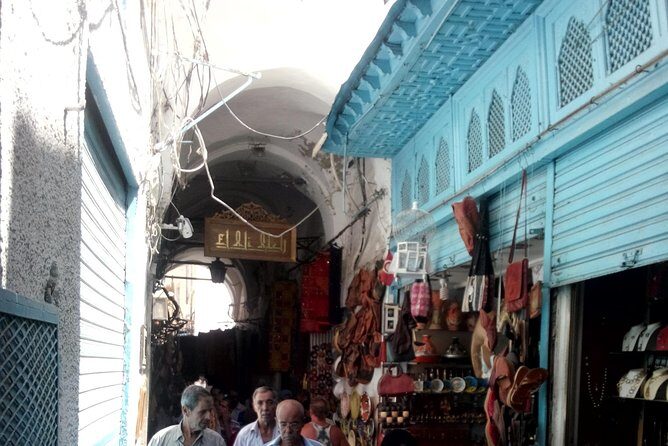
After the architecture, the tour moves into the smells and textures of the medina’s trade. Souk Al Attarine (the perfumers’ souk) is specialized in perfumes and beauty products. Expect a focused, sensory stretch—this is one of those areas where you understand why people have long memories of specific markets.
Then comes Café du Souk. Even though the time here is about 30 minutes, it’s one of the best chances to slow down. A café break in the medina is not just a break from walking—it’s a pause that lets you observe how people move and talk. It also helps your brain make sense of the earlier stops, because you’re not being pulled forward nonstop.
Many parts of the route are free to view from the outside, including nearby market lanes and street-level monuments. The result is a tour where you’re not paying entrance fees every five minutes. It keeps the day from feeling like a museum circuit.
A small planning tip: the medina can get busy, and your best approach is to let the guide handle the route. You’ll still spend time in the lively market areas, but you’ll also get quieter angles rather than only the busiest lanes.
Rue de la Kasbah, goldsmith souks, and hammam street-level reality
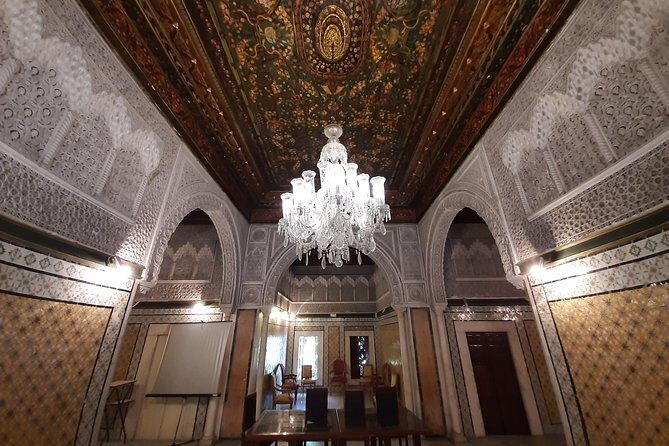
One of the tour’s strengths is how it keeps changing the kind of place you’re in. You’ll move from the perfume trade into street corridors and workshops, including a stop near Hammouda Pasha Mosque on Rue de la Kasbah.
From there, you get quick looks at craft and trade spaces:
- Souk el-Birka, the market of Goldsmiths
- Hammam el Kachachine, where you’ll discover a hammam
These are short segments, around 5 minutes each, and that’s on purpose. You don’t need long visits to grasp the theme: this city runs on craft, routine, and community spaces. A hammam is especially interesting because it reflects how daily life shaped the built environment. Even if you don’t go inside on this tour, seeing the hammam location in the flow of the neighborhood helps you understand why these places were central.
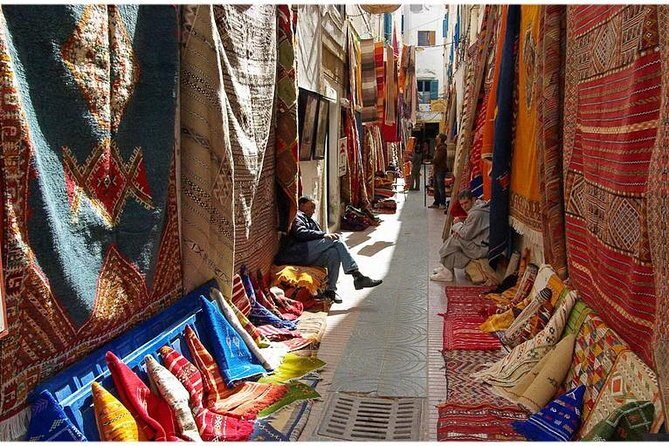
You’ll also visit Grand Souk des Chechias, focusing on traditional Chaouachine craft. This adds a textile-and-trade layer to the day that balances the perfumes and metalwork you saw earlier.
If you like photography, don’t treat it like one big photo stop. This route works better when you’re ready for lots of small photo breaks. You’ll get those rhythms.
Dar El Jeld and Rue du Pacha: monument street where the medina shows its layers
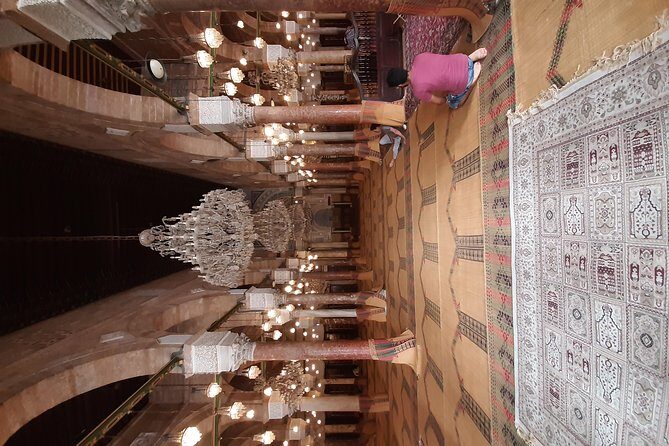
At Dar El Jeld, you’ll take a short photo break near an old residence that’s been converted into a gourmet restaurant. Even if you don’t stop for a meal, it’s a helpful snapshot of how medina buildings can be repurposed while keeping their identity.
Then the tour shifts to Rue du Pacha, a street known for monuments and major landmarks. You’ll spend about 30 minutes here, and it’s one of the better segments for people who love architecture and history you can actually point to.
Along Rue du Pacha, you’ll see key sites including:
- Dar Hammouda Pasha
- Didi Ben Arous mausoleum
- Hammouda Pasha Mosque
This is the part of the day where the medina starts to feel less like shops and more like an organized timeline. Buildings aren’t just decorations here. They’re markers of identity, power, and community roles across different periods.
From the overall experience, there’s also often a chance for a panoramic view from the medina rooftops with sightlines toward Al-Zaytuna Mosque. If you get that angle, take it seriously. Views from above are one of the fastest ways to understand how the streets connect.
Arts center Bir Lahjar: education history you can feel in the walls
The final main stop is Madrasa Bir Lahjar, connected to an arts center. Like other madrasas, it was built for education, and this one hosted Malikite students coming from different regions for decades.
This stop typically lasts about 15 minutes, and admission is included when it’s part of your visit. If your day includes the Bir Lahjar option instead of Slimaniya, you still get the core theme: the medina as a place where learning and religion shaped daily life.
What I like about ending here is that it closes the loop. You began with a major mosque, you explored educational buildings, you walked through craft and trade, and you ended where learning was built into the city’s fabric. The medina doesn’t just sell things. It teaches. It hosts. It organizes people’s lives through architecture.
Price, group size, and time on your feet: does it feel like value?
At $46.53 per person, this tour sits in a very reasonable zone for a guided medina walk that includes time at major landmarks. The big “value” isn’t just the sites—it’s the way the guide saves you time and confusion. In the medina, getting lost costs you more than minutes. It steals your focus from what you came to learn.
Duration runs roughly 2 hours 30 minutes to 3 hours 30 minutes, so it’s long enough to matter but short enough to keep your day flexible. The group size is capped at 15 travelers, which usually means you can ask questions without yelling across the street.
Included in the price: all fees and taxes. A mobile ticket is also used, which simplifies entry at included stops. The main variable for cost is entrance fees on specific sites:
- Dar Lasram admission is not included
- Medersa Slimaniya admission is included when visited
- Madrasa Bir Lahjar admission is included when visited
If you’re the type who likes a clear plan, this is a good fit. If you hate walking, you might feel the medina friction. Think of it as a walking tour with built-in pauses, not a casual stroll where you stop only for cafés.
Should you book this Medina of Tunis guided tour?
Book it if you want your Medina of Tunis visit to make sense fast. This is the kind of tour that helps you spot the big structures, understand why they’re placed where they are, and still enjoy the street-level life between monuments.
I’d especially recommend it if:
- you care about architecture and historic institutions like mosques and madrasas
- you want a guide who can explain Tunisia’s connections, not just point at buildings
- you prefer a small group experience with time for questions and photos
- you want your day to include both major landmarks and quieter pockets, not only the busiest lanes
Skip it (or at least adjust expectations) if you’re extremely sensitive to walking on uneven ground, because the medina is naturally like that. It’s also wise to be ready for changing outdoor conditions, since the experience requires good weather.
FAQ
What is the duration of the guided Medina of Tunis tour?
It runs approximately 2 hours 30 minutes to 3 hours 30 minutes.
Where does the tour start and end?
It starts at La Kasba, Tunis, Tunisia and ends in La Medina, Tunis, Tunisia.
What time does the tour begin?
The start time is 9:00 am.
How large is the group?
The tour has a maximum of 15 travelers.
Is private transportation included?
No, private transportation is not included. The meeting area is noted as near public transportation.
Are entrance fees included?
Some are. Medersa Slimaniya and Madrasa Bir Lahjar list admission as included. Dar Lasram is specifically noted as admission not included. Some souks and street stops are free to visit.
Does the tour use a mobile ticket?
Yes, the tour uses a mobile ticket.
What languages is the tour delivered in?
It has been delivered in English and French.
Does the tour operate only in good weather?
The experience requires good weather, and you’ll be offered a different date or a full refund if it’s canceled due to poor weather.