REVIEW · TUNIS
Private Tour to Kairouan, El Jem and Sousse
Book on Viator →Operated by TUNISIVISION · Bookable on Viator
One day, three sides of Tunisia. This private route ties together Islamic Kairouan, the El Jem Amphitheatre, and a Sahel-style finish in Sousse, all with a guide who makes the stops make sense, not just look impressive. I especially like how the day blends “spiritual Tunisia” with Roman-era scale, so you don’t spend eight hours copying facts off a sign.
Two things I really enjoyed: the way the guide brought the sites to life (I’ve seen guides like Anis, Aymen, and Imed use humor and clear explanations), and the comfort of having your own private driver for the day. The itinerary is tight, but it still feels organized because you’re not constantly negotiating buses or timelines.
One possible drawback: it’s a long day, with about 4 hours of driving in total. And while you’ll have a lunch stop option, lunch itself isn’t listed as included, so budget for it (or bring snack backup if you’re the type who gets hungry fast).
In This Review
- Key Things That Make This Private Day Trip Worth Your Time
- Kairouan, El Jem, and Sousse in One Day: The Route That Works
- Entering the Great Mosque of Kairouan: Art, Study, and 8th-Century Origins
- Bassins Aghlabites and Sidi Sahbi: Islamic Engineering Meets Spiritual Quiet
- Medina of Kairouan in 30 Minutes: How to Use the Clock Without Feeling Rushed
- El Jem Amphitheatre: Roman Scale in North Africa
- Medina of Sousse, the Ribat, and Port el Kantaoui: A Coastal Finish
- Price and Value: Is $150 Per Person a Good Deal?
- Who Should Book This Tour (and Who Might Not Love It)
- Before You Go: Small Planning Choices That Make the Day Easier
- Should You Book This Private Tour to Kairouan, El Jem and Sousse?
- FAQ
- How long is the private tour from Tunis?
- What time does the tour start?
- Do I get pickup in Tunis?
- Is this tour private or shared?
- Which entrances are included?
- Is lunch included?
- How much driving is involved?
- What if the weather is bad or I need to cancel?
Key Things That Make This Private Day Trip Worth Your Time
- Tickets and entrances are covered for the main monuments, so you’re not hunting down cash or lines.
- Great Mosque of Kairouan + El Jem in one day is a strong combo: early North Africa Islamic architecture and Roman spectacle, side by side.
- Short, focused stops keep momentum: 15 minutes at Bassins Aghlabites, then right into the next “wow” moment.
- Your guide matters. In practice, guides like Imed, Aymen, and Anis have a habit of explaining clearly and adding personality (including humor).
- You get medina time in both Kairouan and Sousse, plus a final stroll at Port el Kantaoui.
Kairouan, El Jem, and Sousse in One Day: The Route That Works
This is built as a single, long Tunis day: you leave around 8:00 am with pickup from your place in Tunis, then travel inland to Kairouan, continue to El Jem, and end in the coastal city of Sousse. The total duration lands around 8 to 9 hours, and the actual driving is roughly 4 hours—so yes, expect “seat time.”
What makes the route feel manageable is the stop design. You don’t get stuck for half a day in any one place. Instead, you get timed visits: about an hour for Kairouan’s Great Mosque, a short architectural hit at Bassins Aghlabites, and then a quick but purposeful look at Kairouan’s medina. After that, El Jem’s amphitheater gets the full attention it deserves before you shift toward the coast.
If you’re the type who likes your days to feel full but still meaningful, this format is ideal. If you prefer slow travel—where you linger, wander, and don’t check a watch—consider whether you’d rather split the itinerary into two separate days.
You can also read our reviews of more private tours in Tunis
Entering the Great Mosque of Kairouan: Art, Study, and 8th-Century Origins
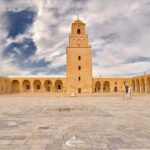
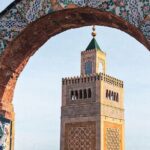
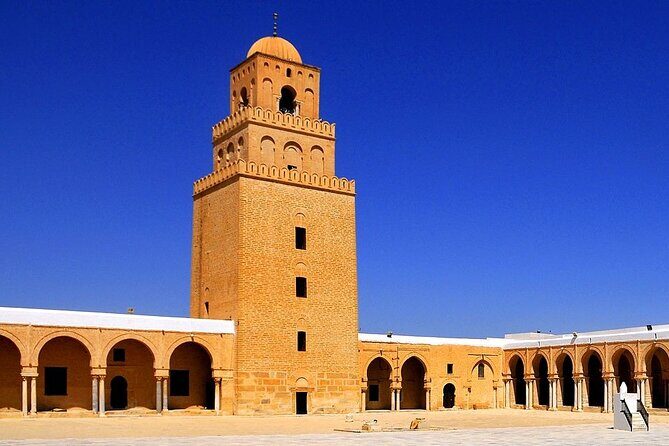
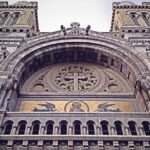
The day’s anchor stop is the Great Mosque of Kairouan, visited for about 1 hour with the admission ticket included. This isn’t just a pretty building. It’s famous as one of the earliest major mosques built in North Africa, with roots dating to the 8th century.
On the ground, what I like about this kind of visit is the mix of scale and detail. You feel the weight of centuries without needing to understand every single architectural term. A good guide helps you notice the right things: the sense of order, the way design signals importance, and the mosque’s role as a place of worship and learning for generations.
Practical tip: arrive ready to pay attention. This stop rewards you for slowing your eyes down. In a place like this, photos can’t replace what you’re seeing in person—especially the architectural rhythm and the calmer mood of the interior (assuming you go at a respectful pace and follow any guidance from the team on site).
If you’re curious about Islamic art and architecture, this is the moment where that interest pays off the most.
Bassins Aghlabites and Sidi Sahbi: Islamic Engineering Meets Spiritual Quiet
After Kairouan’s big flagship mosque, you shift to two very different “less obvious” stops.
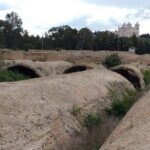
First comes Bassins Aghlabites, a 9th-century pool built by the Aghlabids. You’ll have about 15 minutes here, and it’s ticket included. The key idea: this was not only ornamental. It served as a water reservoir for the city, especially during drought. That’s the kind of detail I appreciate because it turns the site from “photo opportunity” into “smart infrastructure in stone.”
Then you visit Mosque Sidi Sahbi, also called the Mosque of the Barber. This stop lasts around 30 minutes and also includes admission. It’s named for Sidi Sahbi, a companion of the Prophet Muhammad, who is said to have been buried there. The mosque’s appeal is the blend of graceful arches and columns with decorative interior details—and that sense of peaceful contemplation that a smaller stop often offers.
One thing I’d plan for: these are spiritual sites, so keep your pace respectful. If your guide is strong (and the guides on this tour often are—think Anis with humor, Aymen with passion, or Imed with witty explanations), you’ll leave with a clearer understanding of why these places mattered to the people who used them long before tourists arrived.
Medina of Kairouan in 30 Minutes: How to Use the Clock Without Feeling Rushed
You get about 30 minutes in the Medina of Kairouan, and there’s no admission ticket for this section. That short time can be either a waste or a win, depending on your approach.
In a place like Kairouan’s medina, the goal isn’t to “finish the whole maze.” The goal is to get your bearings fast and pick a few things to notice: the feel of narrow lanes, small craft and shopfronts, and the way the medina connects back to the major monuments you just visited.
I suggest treating this as a sensory sampler. Walk a loop, pause once or twice, and let your guide point out what’s most worth seeing in the limited time—especially if the goal is culture rather than shopping.
If you’re hoping to buy lots of souvenirs, 30 minutes is still possible, but you’ll need to move efficiently. If you’re more interested in atmosphere and photos, you can do it comfortably.
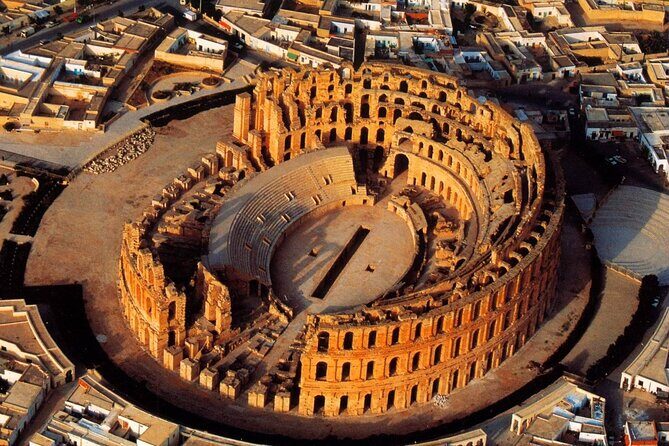
El Jem Amphitheatre: Roman Scale in North Africa
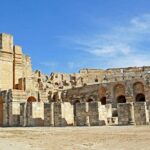
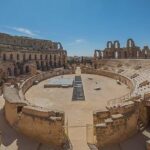
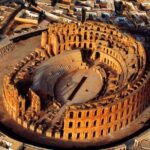
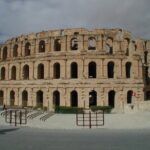
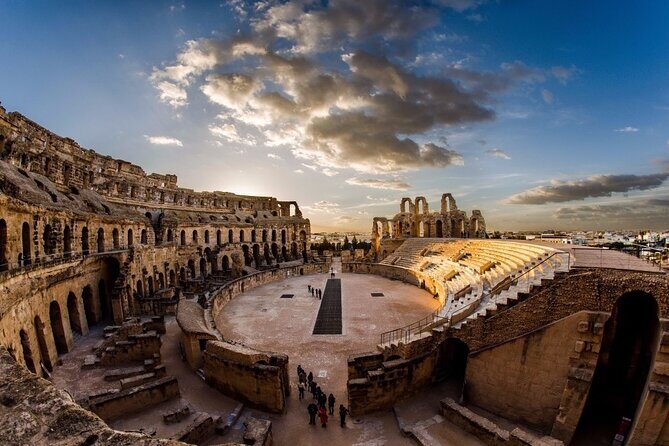
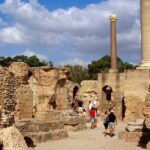
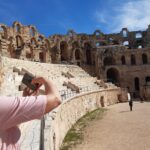
Next up is the main Roman moment: the Amphitheatre of El Jem. You’ll spend about 1 hour, and ticket admission is included.
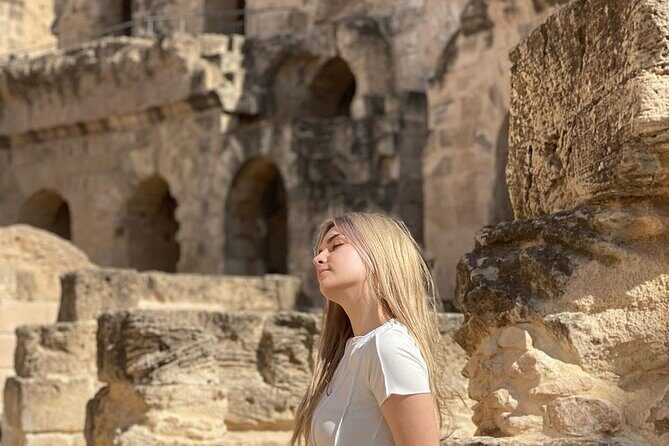
This is one of those sites where a name comparison actually helps. It’s often compared to the Colosseum in Rome, and with good reason: it carries that same idea of mass spectacle—stands for crowds, corridors, and the feeling of a venue designed to impress thousands. In Roman North Africa, gladiator fights and big public events were part of the cultural scene, and this amphitheater tells you that story through sheer size and structure.
The best way to enjoy it in an hour is to focus on perspective. Look at the amphitheater as a whole, then pick a few angles where you can “read” the building: where spectators would sit, where entrances lead, and how circulation worked. A guide can help you place the amphitheater in its historical context without turning it into a lecture.
A heads-up: El Jem is a must-do for history and architecture lovers, but it can also be a strong choice even if you’re not a big Roman buff. The reason is simple—this is one of those places that makes you feel how large ancient plans were, even if you don’t know every technical detail.
Medina of Sousse, the Ribat, and Port el Kantaoui: A Coastal Finish
After El Jem, the day shifts to the coast with Sousse. You’ll have about 1 hour to explore the Medina of Sousse and see its Ribat. Entrance is free for this portion.
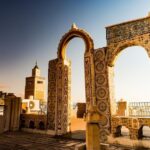
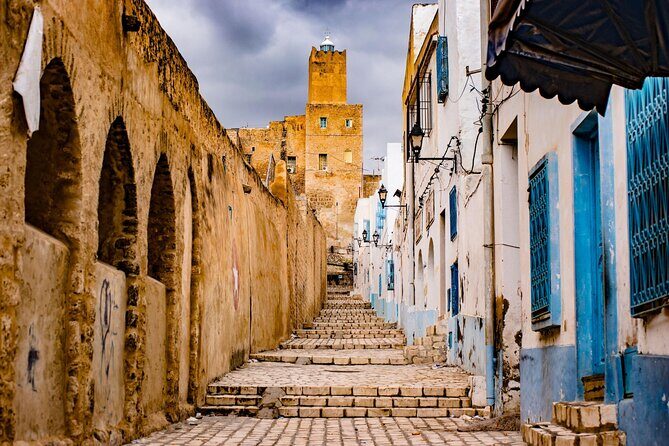
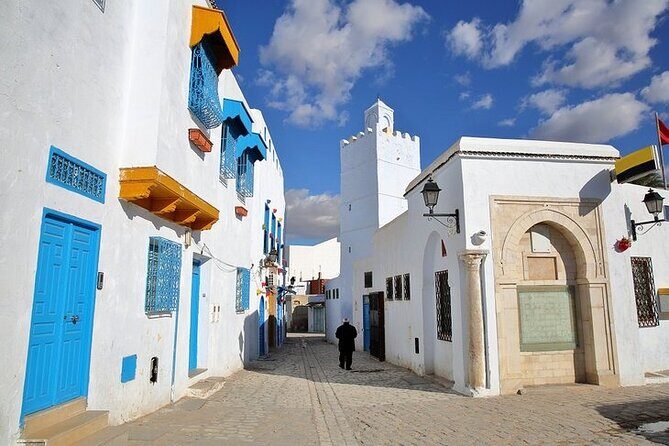
The Medina of Sousse feels different from Kairouan right away. Here you’re surrounded by narrow streets, whitewashed houses, and active markets. The medina is defined by architecture you can read with your eyes: ramparts, minarets, and the layered feel of older city planning. It’s a good stop for practical souvenir browsing too, since the atmosphere supports it—small shops, local products, and daily-life energy.
Then the tour takes you toward Port el Kantaoui for about 30 minutes. This part is more about strolling: quays lined with restaurants, cafes, and boutiques, plus boats and an easy, open-air break after inland walking.
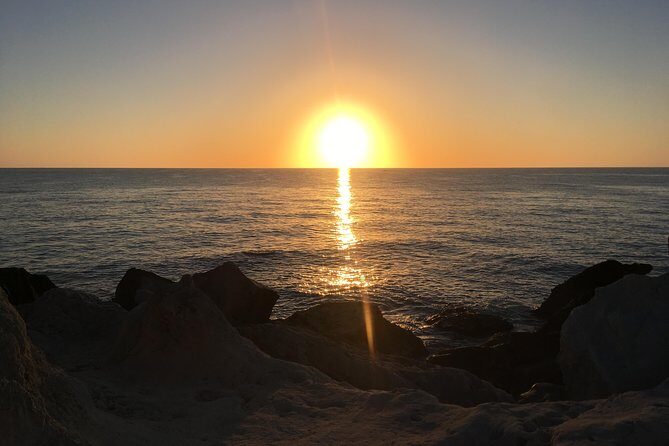
If you want the day’s ending to feel like a reward (not another sprint), this coastal stop does the job. You get a change of scenery and a quick reset before heading back to Tunis.
Price and Value: Is $150 Per Person a Good Deal?
At $150 per person, this isn’t a “cheap and cheerful” excursion—but it’s also not priced like a luxury private chauffeur experience. The value comes from what’s actually included.
You get:
- Private transportation for the day (not shared minivans)
- A professional guide
- Entrances/entrance tickets for the main monuments listed
- All fees and taxes
- Bottled water
- A setup that includes pickup from your place in Tunis
What’s not included: lunch. So in real life, you’ll need to budget for that meal (or at least plan where you’ll eat). That’s the only major “add-on” you should expect.
So is it good value? For me, it is if you want a structured day covering big highlights without the hassle of arranging transport between three cities. If you already have your own car and you’re comfortable navigating timing and tickets, you could do parts independently. But for most visitors—especially first-timers—the private format plus included admissions make this a solid deal.
One more practical note: this tour is often booked in advance (around 36 days on average). That’s a hint to reserve early if your dates are fixed.
Who Should Book This Tour (and Who Might Not Love It)
This is a great fit if you:
- Want major Tunisia highlights in a single day: Kairouan’s mosque heritage, El Jem’s Roman spectacle, and Sousse’s medina and port atmosphere.
- Like having a guide explain what you’re seeing—especially since guides can be funny and clear in the way they teach.
- Prefer private pickup and a dedicated driver, so you’re not coordinating multiple groups.
It might be less ideal if you:
- Get tired fast with long driving and tight stop times.
- Want a lot of free wandering time in medinas (because the medina segments are time-boxed).
- Are strongly focused on one location only and would rather spend a relaxed day there.
If you’re somewhere in the middle—happy with a full day but not obsessed with lingering—this itinerary is a strong match.
Before You Go: Small Planning Choices That Make the Day Easier
A few practical moves will help you enjoy this route more:
- Wear comfortable shoes. You’ll do walking in medinas and at archaeological sites.
- Plan for heat and sun, especially around El Jem and outdoor sections. You’ll have bottled water included, but light layers and sunscreen are smart.
- Keep expectations realistic about timing. There’s about 4 hours of driving, plus scheduled visits. This isn’t a slow “stroll forever” day.
- Use your guide strategically. If your guide is someone like Imed, Aymen, or Anis, take the chance to ask questions. The best tours are the ones where you talk back.
- Have lunch budget ready. Lunch isn’t listed as included, even if lunch is part of the day’s flow.
Also, the tour runs best with good weather. If conditions are poor, you may be offered another date or a refund.
Should You Book This Private Tour to Kairouan, El Jem and Sousse?
Book it if you want one day that hits the big trio: Kairouan’s Great Mosque, El Jem’s amphitheater, and Sousse’s medina plus coastal port time—all with private transport and tickets handled. It’s especially worth it if you like learning as you go and you don’t want to wrestle with logistics.
Skip it (or consider an alternative plan) if you’re sensitive to long drives, hate time-boxed stops, or want lots of unscheduled wandering. For you, a slower split itinerary could feel more relaxing.
My take: if your goal is maximum Tunisia in minimum days, this is a smart booking. Just go in ready for a full, structured day—then you’ll come out with a real sense of how Tunisian culture spans from early Islamic monuments to Roman-era spectacle and back to the Sahel coast.
FAQ
How long is the private tour from Tunis?
The tour lasts about 8 to 9 hours.
What time does the tour start?
The start time is 8:00 am.
Do I get pickup in Tunis?
Yes, pickup is offered from your place of residence in Tunis.
Is this tour private or shared?
It’s a private tour/activity, so only your group participates.
Which entrances are included?
Entrance tickets are included for the Great Mosque of Kairouan, Bassins Aghlabites, Mosque Sidi Sahbi, and the El Jem Amphitheater.
Is lunch included?
Lunch is not listed as included, so you should plan to pay for it.
How much driving is involved?
There is approximately 4 hours of driving as part of the circuit.
What if the weather is bad or I need to cancel?
The experience requires good weather. If it’s canceled due to poor weather, you’ll be offered a different date or a full refund. Cancellation is free up to 24 hours in advance for a full refund.