REVIEW · HAMMAMET
Private Day Trip to Testour, Dougga and Bulla Regia from Hammamet
Book on Viator →Operated by Didon tours · Bookable on Viator
Three ancient stops in one long day. This private trip lines up Testour Moorish-Andalusian architecture, the UNESCO Roman city of Dougga, and the religious remains of Bulla Regia. I like the all-in feel with admission tickets included at the big ruins, and I also like the way the day is structured around key highlights instead of random wandering. Main watch-out: it’s a long drive and it can run late if roads or weather slow things down.
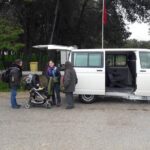
You start around 7:30 am with pickup in Hammamet, then settle in for a day of stone-and-story. In real operation, guides such as Faouzi, Mohamed, and Chaoukni have led groups with a friendly, organized rhythm and a focus on getting you to the best-preserved parts of each site.
Food and small cultural moments matter here. Testour builds in a cheese tasting (and in some departures, a refreshment like pomegranate juice), which breaks up the walking before you hit the Roman scale of Dougga. One more practical note: the itinerary is weather-dependent, so have a light rain plan in your daypack.
In This Review
- Key highlights
- From Hammamet at 7:30 am: the day’s pacing and transportation reality
- Testour: Moorish-Andalusian village views, minaret details, and cheese tasting
- Dougga UNESCO ruins: theater, forums, baths, and the feeling of a complete Roman city
- Bulla Regia: from Numidian royal roots to temples and Christian basilicas
- Price and what you really get for about $133.57 per person
- Timing, walking, and weather: the practical side you should plan for
- Who this private Testour–Dougga–Bulla Regia day trip suits best
- Should you book this Hammamet day trip to Testour, Dougga and Bulla Regia?
- FAQ
- How long is the private day trip from Hammamet?
- What sites are included in the itinerary?
- What time does the tour start?
- Is pickup from Hammamet included?
- Are admission tickets included for the archaeological sites?
- Is this a private tour or a group tour?
- Do I get a mobile ticket?
- Is it suitable for most travelers?
- Can I bring a service animal?
- What happens if the weather is poor?
- Cancellation and rescheduling basics
Key highlights
- UNESCO Dougga for about 2 hours, with time focused on the monumental center and public buildings
- Testour’s iconic 23-meter minaret, octagonal and topped with a mechanical clock whose hands move counterclockwise
- Bulla Regia’s religious layers, from Roman civic spaces to Christian basilicas
- Tickets included for both Dougga and Bulla Regia, so you’re not juggling entry lines
- Private format means only your group is on the schedule, with a guide who can adjust pacing
- A real local-food break in Testour, including cheese tasting (sometimes paired with fruit drinks)
From Hammamet at 7:30 am: the day’s pacing and transportation reality
This is designed as a straight-through archaeology day. You meet at about 7:30 am, then ride north and west toward three very different periods of Tunisia’s past: Moorish-Andalusian village life (Testour), Roman urban planning (Dougga), and a North African site where Numidian, Roman, and Christian history overlap (Bulla Regia).
The “8 hours approx.” timing is a guide, not a promise. One group experience ran closer to 11.5 hours, which usually means the day expanded due to driving time, site pacing, or weather. If you’re trying to squeeze this between other plans, build a little buffer.
The transportation setup is part of the value: pickup is offered, and because it’s private, the vehicle and guide work to your group’s schedule rather than a bigger group’s timetable. You’ll also get a mobile ticket, which helps smooth entry when you’re dealing with multiple sites.
You can also read our reviews of more private tours in Hammamet
Testour: Moorish-Andalusian village views, minaret details, and cheese tasting
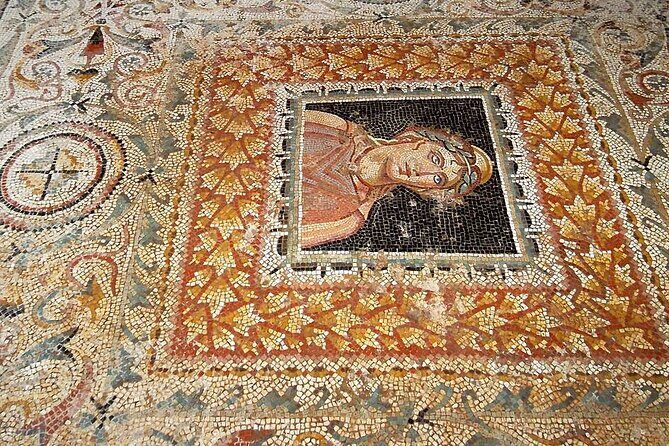
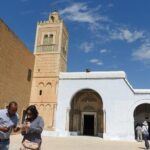
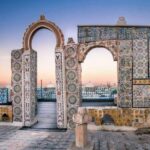
Testour is where the day shifts from Roman stonework to a living village feel. The village was founded by the Moorish community in the early 17th century, and the stop is set up as a panoramic look first, then a closer feel for the signature architecture.
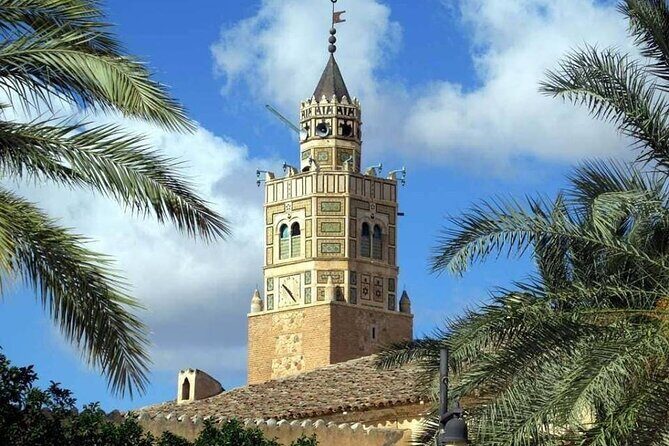
The highlight is the mosque area and the minaret. Expect to focus on details: the minaret is about 23 meters tall, it’s octagonal, and its facade includes small double windows and glazed inscriptions. At the top sits a mechanical clock, with hands that turn counterclockwise. Visually, it’s described as similar to Aragonese bell towers in southern Spain, which makes it a fun cultural bridge—Tunisia here doesn’t just show the past, it shows a style that traveled.
Time at Testour is also meant to be practical. In addition to photos and a short panoramic circuit, you get a cheese tasting. In at least one guide-led day, that stop included pomegranate juice too, which is the kind of simple break that keeps the morning from turning into one long walking session.
What to watch: Testour’s stop is likely shorter than the two major Roman ruins. Don’t assume you’ll have an all-day wander here. If you care about architectural details, bring your phone camera for close-ups and be ready to pause for minaret and inscription viewing.
Dougga UNESCO ruins: theater, forums, baths, and the feeling of a complete Roman city
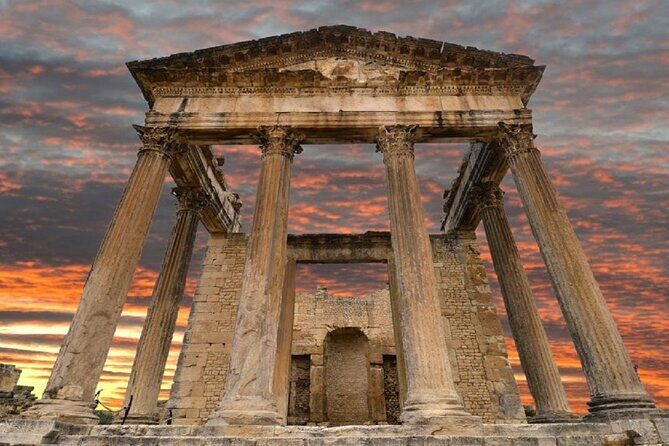
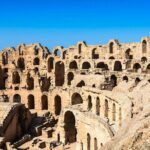
Dougga is the anchor of the whole trip. It’s classified as a UNESCO World Heritage Site (since 1997), and it’s often described as the best-preserved small Roman city in North Africa. That matters because when a site is well preserved, you can read it—not just look at it.
You typically get about 2 hours here, and the visit is structured around the parts that help you understand how the city worked. Think monumental center and public life: the capitol, forum, markets, and the place of the rose of the winds. Then move to entertainment and civic spectacle—like the theater—and you start to feel how Rome organized daily life around major buildings.
Public baths are also part of the classic Dougga picture. If you like architecture, you’ll appreciate how the thermal baths sit within the city layout, not off to the side. Add in houses and the triumphal arch, and you start seeing Dougga as a full urban plan rather than a few scattered ruins.
There’s also a Libyco-Punic Mausoleum included in the wider site story. That’s useful if your interest is broad: Dougga isn’t just Roman; it preserves layers of different periods within the same boundaries.
One practical upside from real guiding: in some departures, guides speed up sequencing when weather turns bad so you can still see what’s expected. That tells you something about the tour style: you’re not left to drift. You’re guided through key zones in a way that helps you cover the big highlights in limited time.
Bulla Regia: from Numidian royal roots to temples and Christian basilicas
Bulla Regia is your “layers of faith and rule” stop. The location is a few kilometers north of Jendouba, in Tunisia’s northwest, and the site is presented as a major cultural tourism stop for the region.
The story begins earlier than Roman times. The agglomeration is described as founded by the Numidians, at least by the end of the 6th century BC, and it quickly became a royal residence. Then Roman political structure comes in phases: it was autonomous early in the Roman period, became a municipality under the Flavians, and later a Roman colony under Emperor Hadrian (117–138).
Religious history adds another layer. By the end of the 5th century, its inhabitants were judged as bad Christians by Augustine. That’s not just a footnote; it gives context to what you’ll see on the ground.
Expect about 2 hours here, with a focus on major religious and civic remains. Key named highlights include the capitol, the temple of Apollo, two Christian basilicas, and the church of Alexander. This stop feels different from Dougga because it’s more about sacred architecture and belief systems than about the showpiece of civic entertainment. If you like connecting history to specific building types, this is a strong ending to the day.
What to watch: Bulla Regia is still a ruin site. You’ll be on uneven ground and walking between structures, so wear shoes with grip and plan to spend energy.
Price and what you really get for about $133.57 per person
At $133.57 per person, this tour sits in the “serious day trip” category, but the value is tied to what’s included and how efficiently the day is run.
First, tickets are included for the two major sites: Dougga and Bulla Regia. That’s a real cost saver and removes friction. Second, you’re covering three locations in one day: Testour plus two major archaeology stops. Doing that independently means coordinating transport across distances, entry timing, and guide interpretation if you want it.
Third, the private format changes the experience. You’re not being rushed to match a large group’s pace. It also means the guide can help with small adjustments—one guide-led day included extra help for a guest with walking issues. That’s not a guarantee for every departure, but it reflects the tour style: active assistance when needed.
The one financial caution is time. If you’re buying a full-day experience, don’t book it against tight evening plans. Even one delay (traffic or a road incident) can push the schedule later than expected.
Overall, I think the price makes sense if you care about interpretation, not just selfies. If you want an unstructured drive with minimal explanations, you might feel you’re paying extra for guiding. But if you like having a person point out the right buildings and explain how the whole site fits together, this is a good match.
A few more Hammamet tours and experiences worth a look

Timing, walking, and weather: the practical side you should plan for
This trip is weather sensitive. It’s stated as requiring good weather, and if it’s canceled due to poor weather, you’ll be offered another date or a full refund. On a borderline day, you can still find rain changing the pace on the ground, and you may end up seeing everything faster to avoid a downpour.
Plan for a long day physically. Even though Dougga and Bulla Regia are each about 2 hours, you’ll still walk between points, pause for views, and climb or step across uneven surfaces.
Bring the usual ruin-day kit: good walking shoes, water, sun protection, and a light layer for early morning. If you’re visiting when rain is possible, a compact umbrella or waterproof shell can save your route.
Accessibility: the tour says most travelers can participate, and real guide behavior has included help for someone with walking issues. If you have specific mobility needs, tell the operator ahead of time so the guide can plan pacing and stops.
Who this private Testour–Dougga–Bulla Regia day trip suits best
This is best for people who want ancient Tunisia without the stress of stitching logistics together. If you’re a history fan, this route is tightly themed: Moorish-Andalusian architecture, Roman city structure, and Christian-era basilicas layered over earlier rule.
It’s also a good choice if you like a guided “see the key parts” approach. In several experiences, guides focused on thorough coverage, and that matters at Dougga, where it’s easy to wander and miss the buildings that help you understand how the city worked.
Families and couples can enjoy it, especially in private format, where the schedule is calmer. If you’re traveling as a smaller group and want a more custom feel than a bus tour, this fits nicely.
If you hate long car rides or you need a short outing, you might find it too much. This is an all-day archaeology mission with a lot of movement.
Should you book this Hammamet day trip to Testour, Dougga and Bulla Regia?
I’d book it if you want a focused route that hits three major Tunisia history themes in one day, with tickets handled and a guide leading you through the important pieces. Dougga alone is worth a solid chunk of time, and the way Bulla Regia adds religious context makes the pairing feel smart rather than repetitive.
I wouldn’t book it if you’re planning a very packed schedule or if you’re not comfortable with a long day of driving plus walking on uneven ground. Also, if weather is unpredictable on your trip, be ready for schedule changes or a refund-and-reschedule scenario.
FAQ
How long is the private day trip from Hammamet?
The tour is listed at about 8 hours, though in practice it can run longer depending on conditions.
What sites are included in the itinerary?
You visit Testour, Dougga (Thugga), and Bulla Regia.
What time does the tour start?
Start time is 7:30 am.
Is pickup from Hammamet included?
Yes, pickup is offered.
Are admission tickets included for the archaeological sites?
Yes. Admission tickets are included for Dougga and Bulla Regia.
Is this a private tour or a group tour?
It is private, meaning only your group participates.
Do I get a mobile ticket?
Yes, the tour includes a mobile ticket.
Is it suitable for most travelers?
The tour indicates that most travelers can participate.
Can I bring a service animal?
Yes, service animals are allowed.
What happens if the weather is poor?
This experience requires good weather. If it’s canceled due to poor weather, you’ll be offered a different date or a full refund.
Cancellation and rescheduling basics
You can cancel for a full refund if you cancel up to 24 hours in advance of the start time.