REVIEW · HAMMAMET
Private and Guided Tour to Kairouan and El Jem and Monastir
Book on Viator →Operated by Didon tours · Bookable on Viator
A day like this hits big history fast. You’ll start at the Great Mosque of Kairouan, then get real breathing room in the medina, and finish at El Jem’s UNESCO amphitheatre and Monastir’s Ribat. The best part is how the route stitches together Islam’s spiritual capital with Roman-era spectacle and early Arab coastal defenses. The only drawback is the long day and lots of time on the road.
I also like that the tour builds in ticketed stops, not just drive-bys, and you’re covered with an air-conditioned vehicle plus included entrance fees for the main sights. If you want a relaxed pace, know this plan is tight around the clock and includes a fair amount of walking and stairs.
In This Review
- Key highlights you should care about
- A long-day route that makes sense: Kairouan, El Jem, Monastir
- Getting from Hammamet: pickup, transport comfort, and pace
- Stop 1: The Great Mosque of Kairouan, where architecture does the talking
- Stop 2: Medina of Kairouan, souks plus a real food moment
- Stop 3: Aghlabid Basins, Muslim-world water engineering you can actually see
- Stop 4: El Jem Amphitheatre, the Roman colosseum scale in Tunisia
- Stop 5: Ribat of Monastir, warrior-monks, prayer rooms, and a 100-step view
- Timing, comfort, and what to pack for an 8-hour circuit
- Price and value: what $98.72 really covers
- Who this private Kairouan–El Jem–Monastir tour fits best
- So, should you book it?
- FAQ
- What time does the tour start?
- How long is the tour?
- Is pickup included?
- Is this a private tour?
- What’s included for entrance tickets?
- Is lunch included?
- Do I get a ticket on my phone?
- Is the vehicle air-conditioned?
- What is the cancellation policy?
- What if the weather is bad?
- Are service animals allowed?
Key highlights you should care about
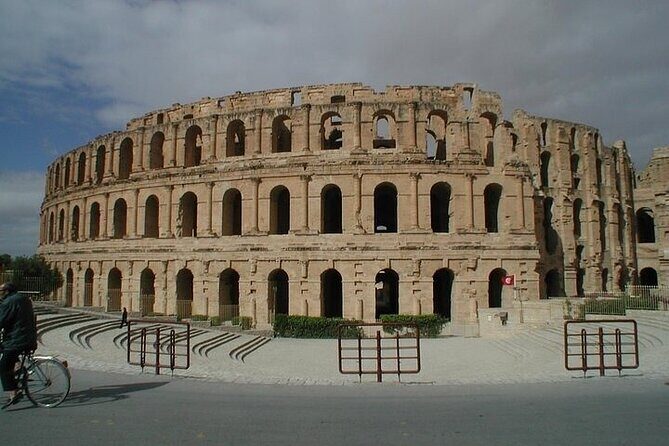
- Great Mosque of Kairouan: cedar doors, marble prayer columns, and a courtyard built for serious visitors
- Medina free time: time to roam souks and try Kairouan pastries like Les Mekroudhs
- Aghlabid basins: 9th-century hydraulic works tied to Muslim-world engineering
- El Jem amphitheatre: UNESCO-listed Roman colosseum-scale drama with 30,000-seat scale
- Ribat of Monastir: a watchtower climb with views plus warrior-monk rooms and prayer spaces
A long-day route that makes sense: Kairouan, El Jem, Monastir
This is the kind of tour that works well when you have limited time in Tunisia but still want variety. You’re not only seeing one theme. You’re moving through three very different layers of the country’s story: early Islamic architecture in Kairouan, Roman engineering and performance at El Jem, then early Arab coastal defense and spiritual life at Monastir.
I like how the timing targets the headliners without pretending you’ll get “slow travel” all day. If your travel style is practical—see the big monuments, learn what makes them special, then use the free time to wander—you’ll probably enjoy this format.
The tradeoff is obvious: it’s an all-day loop from Hammamet. That means you should expect some fatigue, especially in warm weather. Comfortable shoes and water help a lot.
You can also read our reviews of more guided tours in Hammamet
Getting from Hammamet: pickup, transport comfort, and pace
The tour is scheduled to start at 8:00 am, with pickup offered from your hotel. It runs about 8 hours total, and the itinerary includes a series of ticketed stops plus set time for exploring.
Because this is a private tour for your group, you don’t have to fight for space or wait on strangers. That said, your day still depends on road time between cities. The plan’s built around efficient blocks at each location: for example, the Great Mosque stop is about 45 minutes, the medina visit about 1 hour, and the El Jem stop about 1 hour.
Here’s what I’d watch for before you go: confirm your vehicle’s comfort at pickup. Even with air-conditioning included, a long day feels better if the seats are comfortable and the windows work well. Some tours on this route can vary by vehicle condition, so if something feels off at the start, mention it right away.
Stop 1: The Great Mosque of Kairouan, where architecture does the talking
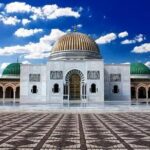
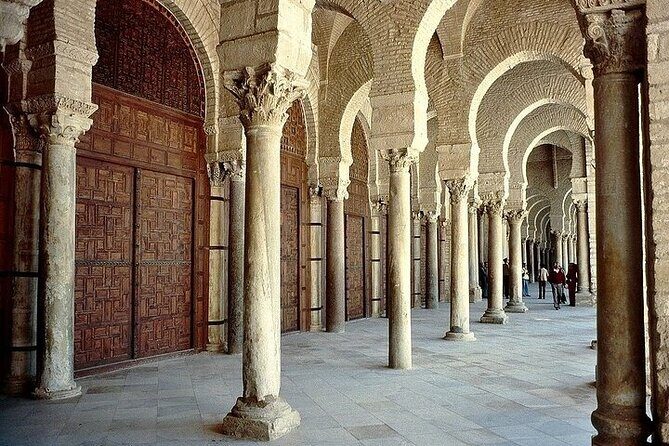
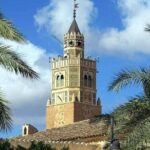
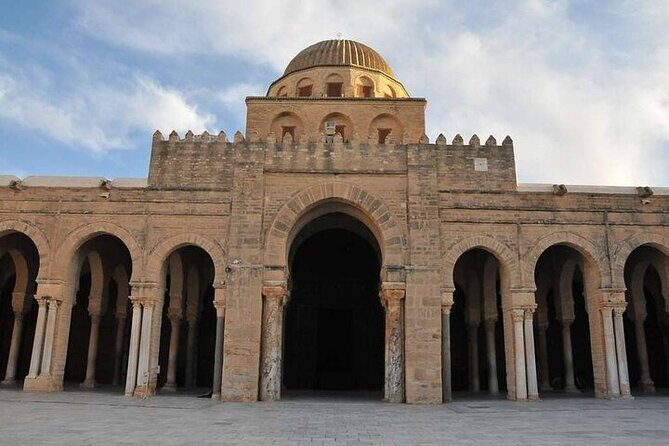
The Great Mosque of Kairouan is the symbol of the city, and the way the monument is described tells you why it matters. Built in 670, it’s one of the oldest religious buildings in the Muslim West. The “wow” factor isn’t only size—it’s the feel of the place, like an adobe fortress with serious walls and strong geometry.
You’ll spend around 45 minutes here with admission included. What you’ll likely notice first is the imposing minaret and the majestic courtyard. The courtyard is surrounded by arcades and includes a sundial. Then come the doors: tall cedar wood doors that open onto prayer rooms filled with dozens of marble columns.
Practical advice: dress for a mosque visit. Choose something that covers your shoulders and knees. Even if you’re not there to pray, you’ll be standing and walking in a religious space that expects respect.
The value of this stop is simple: Kairouan’s importance in Tunisia isn’t a marketing slogan. It’s built into the architecture. You’ll understand the city’s reputation faster than you would reading about it later.
Stop 2: Medina of Kairouan, souks plus a real food moment
After the mosque, the tour shifts gears to everyday city life. The Medina of Kairouan is described as one of the most preserved and authentic medinas in Tunisia, so you’re not only looking at monuments—you’re getting atmosphere.
You get around 1 hour of medina time. There’s admission included, and the idea is to use your guided introduction, then roam the souks at your own pace. This is where Kairouan’s small pleasures show up. You can look at traditional craft work, including carpet manufacturing, and it’s also an easy place to hunt for local pastries like Les Mekroudhs.
I like this stop because it gives you a break from “big monument time.” It’s also a good chance to reset your legs before the long drive onward.
Quick tip: if your schedule allows, arrive at this hour ready to snack. That pastry mention isn’t random. It’s the kind of food that’s easy to miss if you skip the medina wandering.
Stop 3: Aghlabid Basins, Muslim-world water engineering you can actually see
Right outside the medina ramparts, you’ll visit the Aghlabid basins. The tour frames them as one of the most important hydraulic works in the history of the Muslim world, and the details explain why: they date to the beginning of the second half of the 9th century.
This is a shorter stop—about 20 minutes with admission included—but it’s worth treating it as a “pause and look” moment. Water systems tell a different kind of history than walls and statues. They show what a society prioritized and how it managed a city’s daily survival.
If you like technical history—how systems worked, not just who ruled—this stop is a nice change of pace between Kairouan and El Jem.
You can also read our reviews of more private tours in Hammamet
Stop 4: El Jem Amphitheatre, the Roman colosseum scale in Tunisia
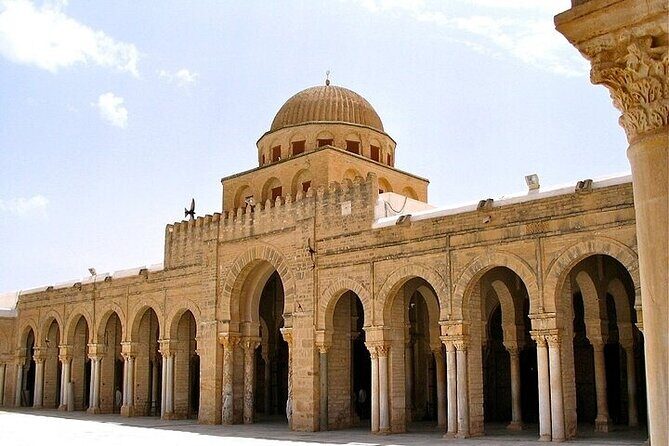
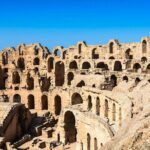
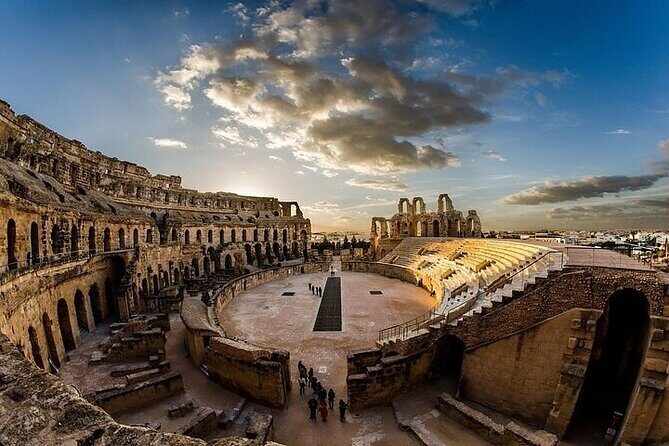
Then comes the headliner for many visitors: the Amphitheatre of El Jem. It’s often described as a Roman colosseum, founded in the 3rd century AD, and it’s listed as World Heritage since 1972. The scale is huge: it could hold 30,000 spectators and is described as the third biggest in the Roman world after Rome and Capua.
You’ll have about 1 hour here, and entrance is included.
I like how this site is presented as more than a photo stop. You’re stepping into a real arena shape—one that was built for crowds, spectacle, and control. Roman architecture in Tunisia has a particular punch because it’s not what people expect to find in North Africa, and El Jem gives you that contrast in a physical way.
A practical note: if you’re the type who also cares about the smaller museum or archaeological pieces that often sit around major sites, ask ahead. The plan clearly includes the amphitheatre entrance, but the on-site museum area can be a separate decision depending on how your ticket is handled. If you want that extra layer, confirm it before you arrive.
Stop 5: Ribat of Monastir, warrior-monks, prayer rooms, and a 100-step view
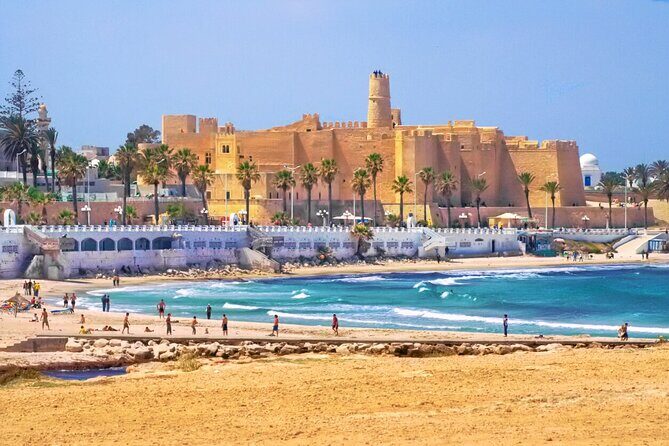
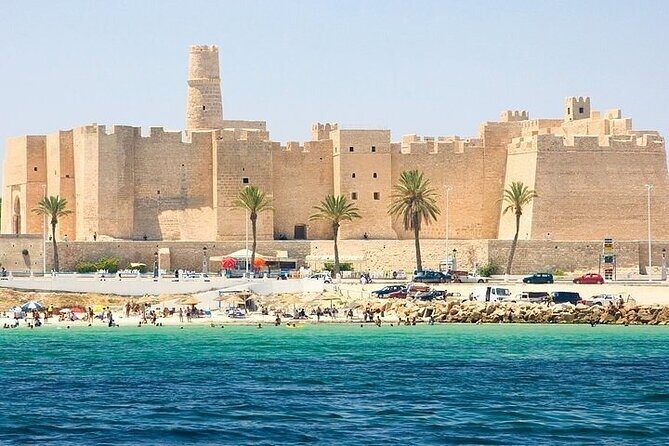
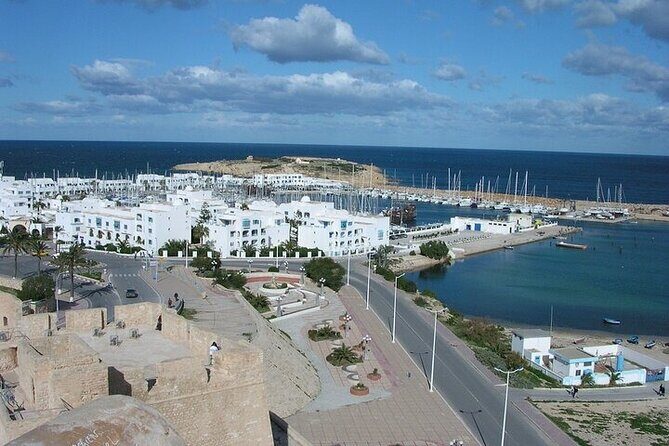
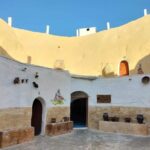
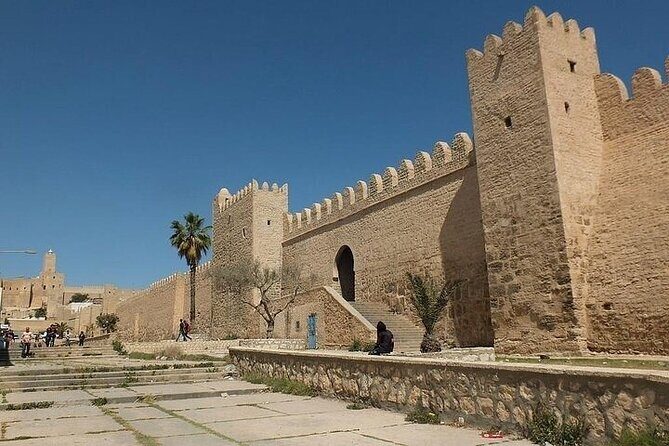
To wrap the day, the tour finishes at the Ribat of Monastir. This is Tunisia’s oldest and most important defensive structure along the Maghreb coast made by Arab conquerors at the dawn of Islam. It was founded in 796 and was later renovated in medieval times.
You’ll get about 45 minutes here, with admission included. The design is explained clearly: it was originally a quadrilateral, made of four buildings opening onto two interior courtyards. Inside are small cells tied to the “warrior monks” idea—people carrying out military functions while also dedicating themselves to prayer and contemplation.
The ribat isn’t just walls. It includes two prayer rooms, and the larger one is noted for today’s displays of rare cult collectibles and medieval crafts.
Then there’s the watchtower climb: it takes access via a hundred spiral steps. From the top, you get views over Monastir and the surroundings, and the description adds a fun detail: at night, light messages could be exchanged with neighboring ribats via their towers. It’s one of those moments where architecture quietly explains the communication network of the coast.
If you have mobility limits or you don’t love stairs, consider this part carefully. The rest of the day is mostly short walking blocks, but the ribat watchtower climb is real.
Timing, comfort, and what to pack for an 8-hour circuit
This tour is built around compact visits. That’s great for seeing a lot, but it also means you’ll want to travel smart.
I’d pack:
- Comfortable walking shoes (medina ground can be uneven)
- A light layer for the mosque and any indoor prayer areas
- Sunscreen and a hat, especially for El Jem and the road time
- Water for the day (lunch isn’t included)
Lunch is not included, so you’ll need a plan for food breaks. The tour description doesn’t mention lunch timing, so don’t assume you’ll have a long sit-down meal at a restaurant. Think snack-friendly: something easy to grab during your medina hour and a more substantial option near Monastir after the main sights, if your schedule allows.
On comfort: the vehicle is air-conditioned and that matters in Tunisia’s midday heat. Still, a long day can feel long if your seat position isn’t great. When pickup happens, take 30 seconds to check the seat comfort and air flow, then settle in.
Price and value: what $98.72 really covers
At $98.72 per person, this isn’t a budget bus tour price, and it shouldn’t be treated like one. It works best if you value three things the price appears to deliver:
- Transport from Hammamet in an air-conditioned vehicle
- Entrance fees included for the main monuments: Great Mosque of Kairouan, Aghlabid basins, El Jem amphitheatre, Medina of Kairouan, and the Ribat of Monastir
- A guided, private setup for your group, with free time built into the plan (especially the medina)
When entrances are included, you don’t waste time buying tickets, and you avoid the “did we get the right entrance?” uncertainty at each stop. It also makes the day feel more structured, which helps on a route with a lot of driving.
Could it be expensive? Sure, if you mainly want one site or you’re hoping to spend hours in a single place. If your goal is to hit multiple UNESCO-level and landmark sites in one day, the value is easier to justify.
There’s also a note for planning: the experience is often booked about 27 days in advance on average. If your dates are fixed, I’d book earlier rather than later, especially during peak seasons.
Who this private Kairouan–El Jem–Monastir tour fits best
This tour is ideal if you:
- Want a single-day “greatest hits” loop without doing logistics yourself
- Like history that shows up in buildings and engineering, not only in museums
- Appreciate a guide for context, then time on your own (the medina hour is the proof)
It’s less ideal if you:
- Want a slow pace or lots of extra time in one city (Monastir gets less time than the other major stops)
- Have strong mobility limits due to walking and the ribat’s spiral steps
- Prefer lunch included or a more structured meal stop
If you do this with the right expectations, you’ll likely come away with a fuller sense of Tunisia’s range: faith monuments, Roman entertainment scale, and early coastal defense in one connected route.
So, should you book it?
I’d book this private day trip if you’re based in Hammamet and you want a high-impact day with included entrances and a clear order of sights. The Great Mosque sets the tone, the medina gives you breathing space and local flavor, El Jem supplies the big Roman punch, and Monastir’s ribat adds a very different ending with stairs and coastal views.
Before you confirm, do one small checklist:
- Make peace with the day being long and road time being real
- Plan for lunch since it’s not included
- If the El Jem museum area matters to you, ask ahead whether it’s included along with the amphitheatre entrance
If those points work for you, this is a solid way to see three major Tunisian stops without the hassle of self-planning.
FAQ
What time does the tour start?
The tour start time is 8:00 am.
How long is the tour?
The duration is listed as 8 hours (approx.).
Is pickup included?
Yes, pickup is offered.
Is this a private tour?
Yes. It’s described as private, with only your group participating.
What’s included for entrance tickets?
Included entrance fees cover the Great Mosque of Kairouan, Medina of Kairouan, Aghlabid basins, El Jem Amphitheatre, and the Ribat of Monastir.
Is lunch included?
No, lunch is not included.
Do I get a ticket on my phone?
Yes, the experience includes a mobile ticket.
Is the vehicle air-conditioned?
Yes, the tour includes an air-conditioned vehicle.
What is the cancellation policy?
There is free cancellation. You can cancel up to 24 hours in advance for a full refund.
What if the weather is bad?
This experience requires good weather. If it’s canceled due to poor weather, you’ll be offered a different date or a full refund.
Are service animals allowed?
Yes, service animals are allowed.