REVIEW · HAMMAMET
Kairouan, El Djem and Monastir Guided Excursion from Hammamet
Book on Viator →Operated by taximami · Bookable on Viator
Kairouan, Roman ruins, and seaside time—one long day.
This guided excursion strings together Tunisia’s spiritual heart, a jaw-dropping Roman amphitheater, and a calmer modern stop in Monastir, with an air-conditioned ride and a pro guide keeping the whole day organized.
I especially like two things here: the on-the-ground guidance (including well-rated guides such as Mtir and Taib) that turns famous monuments into something you can actually picture, and the private group format for up to 2 people, so your schedule doesn’t feel like it’s trapped in someone else’s timeline.
One consideration: the big ticket sights in El Djem are not included (the amphitheater and the archaeological museum), and lunch isn’t included either. That means you’ll want to budget a bit for entrances and a meal.
In This Review
- Key highlights you’ll care about
- A 10-hour tri-city plan: Kairouan, El Djem, Monastir
- Bassins Aghlabites: Tunisia’s early water engineering stop
- Mosque Sidi Sahbi (the Barber’s Mosque): a powerful free visit
- The Medina of Kairouan: UNESCO streets and market energy
- El Djem amphitheater: the Roman coliseum that steals the day
- El Djem Archaeological Museum: mosaics and the everyday Roman world
- Monastir marina and Bourguiba: the modern finish with real downtime
- Price and value: paying for a private guide, not just transport
- Logistics that actually matter on a long day
- Who this tour suits best
- Should you book this Kairouan, El Djem and Monastir guided excursion?
- FAQ
- Is pickup from Hammamet included?
- How long is the excursion?
- What’s included in the price?
- Are entrance fees included for El Djem sites?
- Is lunch included?
- How much time is spent at each main stop?
- Is this a private tour?
- Is there free cancellation?
Key highlights you’ll care about
- Bassins Aghlabites: a look at early hydraulic engineering outside Kairouan’s medina walls
- Mosque Sidi Sahbi: the Barber’s Mosque, free to visit and historically meaningful
- UNESCO Medina of Kairouan: narrow streets, markets, and the sacred feel of Tunisia’s fourth holy city
- El Djem Amphitheatre: a 30,000-seat Roman coliseum and one of Africa’s most impressive Roman monuments
- El Djem Museum mosaics: Roman villa setting with mosaics and everyday objects like glass and perfume items
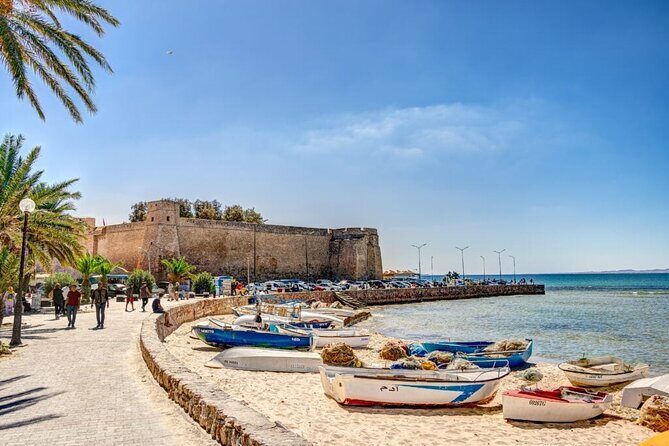
- Monastir break: marina time plus Bourguiba’s mausoleum and the chance to wander the ribat area
A 10-hour tri-city plan: Kairouan, El Djem, Monastir
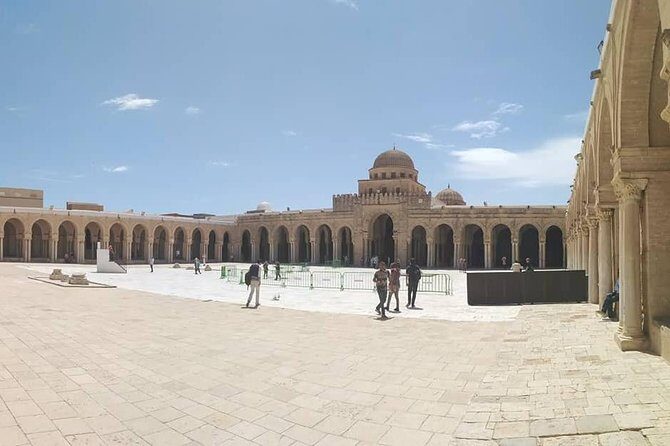
This tour is built as a full-day “three eras in one loop” from Hammamet. You start in Kairouan, where Islam’s early history shaped the city’s identity, then head to El Djem for the star attraction: a Roman amphitheater that still feels huge even when you know what it is. Finally, you land in Monastir for a coastal modern-day finish with some breathing room.
The day runs about 10 hours, and the pacing works best if you’re okay with a long itinerary and you want to see a lot in one shot. You get bottled water, an air-conditioned vehicle, and a professional guide. It’s also set up as a private experience for your group (up to 2), so the guide can keep explanations focused instead of doing the usual “everyone, listen up” routine.
You can also read our reviews of more guided tours in Hammamet

Bassins Aghlabites: Tunisia’s early water engineering stop
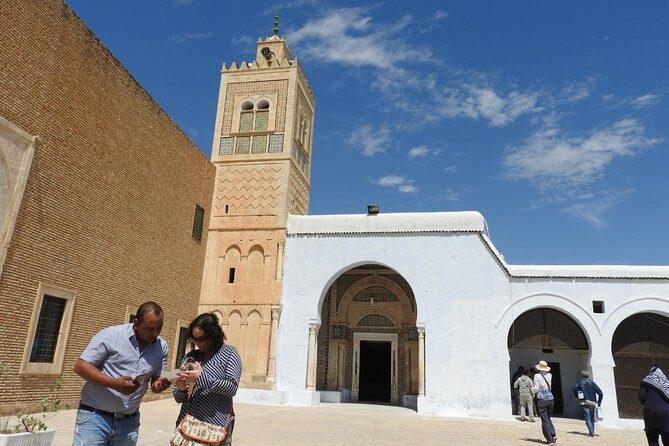
The first stop is Bassins Aghlabites, outside Kairouan’s medina. These date to the early part of the second half of the 9th century and are described as some of the most important hydraulic works in the Muslim world. That’s a mouthful, but here’s the value: early water systems are one of those details you’d miss on your own, even in a major heritage city.
You get about 30 minutes here, and it’s free. In real terms, that’s long enough to understand what you’re looking at (the purpose, the design logic, how water moved) without turning the first stop into a time sink before the big sights.
Tip for your comfort: even if this is the “quick” stop, Kairouan can feel hot and dry. Pace yourself and drink your water early so the rest of the day stays enjoyable.
Mosque Sidi Sahbi (the Barber’s Mosque): a powerful free visit
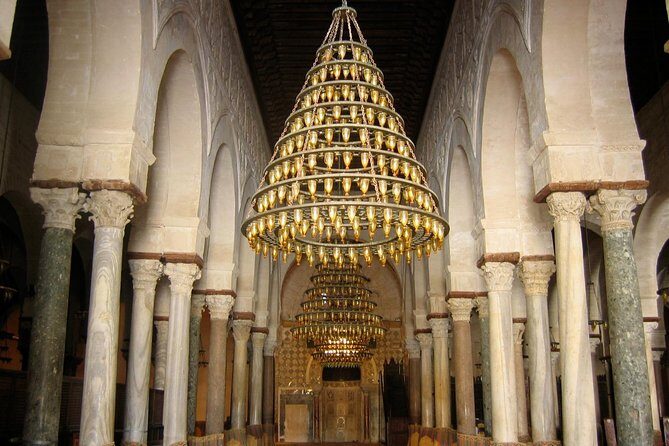
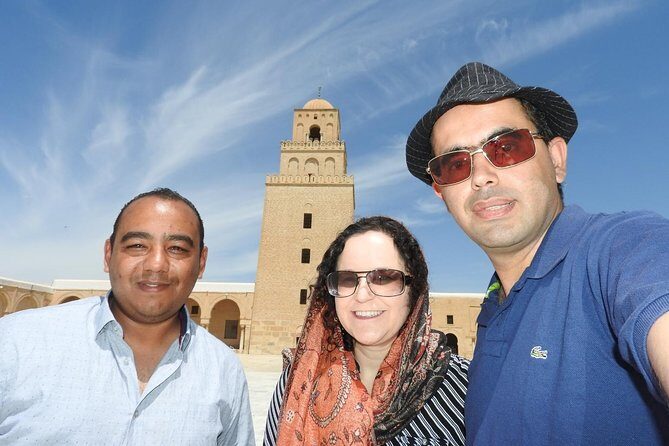
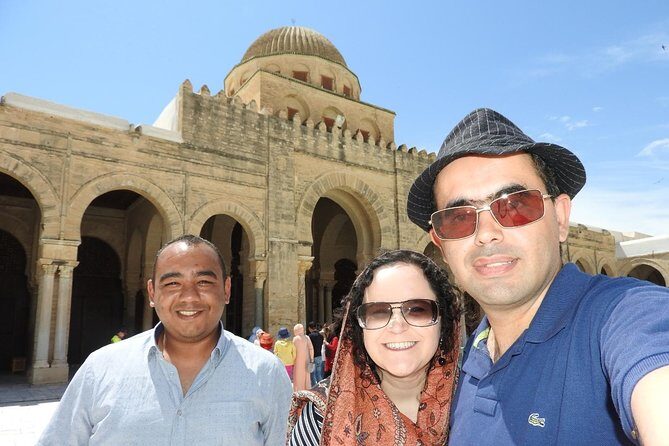
Next comes Mosque Sidi Sahbi, often called the Mosque of the Barber. It’s located in Kairouan outside the medina walls and tied to the mausoleum of Sidi Sahbi. You’ll have about 1 hour, and again the admission is free.
What I like about this stop is that it gives you a shift in tone right after the technical story of water engineering. You’re moving from systems and infrastructure into meaning: sacred space, memory, and how the city’s religious importance shows up in architecture and place.
If you want to photograph, do it without rushing. Religious sites reward slow looking: notice the space, then the small cues that make it feel local rather than staged for tourists.
The Medina of Kairouan: UNESCO streets and market energy
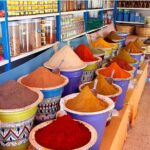
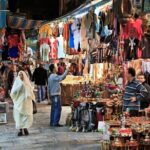
After Sidi Sahbi, you’ll enter the Medina of Kairouan for about 1 hour. This is one of the biggest highlights of the spiritual side of Tunisia’s story. The medina’s significance is recognized through UNESCO World Heritage status (it meets five of six evaluation criteria), and you’ll be walking narrow lanes lined with markets.
The medina visit includes time to see the mosque with three gates and then wander the streets and shopping areas. Free admission is listed, so you’re not paying extra to walk through the real lived-in city texture.
How to make this hour work well
- Keep your pace steady. It’s a maze, and trying to sprint through it kills the point.
- If something grabs your attention in a shop, pause. This is where Kairouan feels like Kairouan.
- Save your biggest shopping decisions for later, when you’re calmer and not rushing to meet the group.
El Djem amphitheater: the Roman coliseum that steals the day
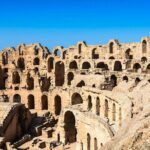
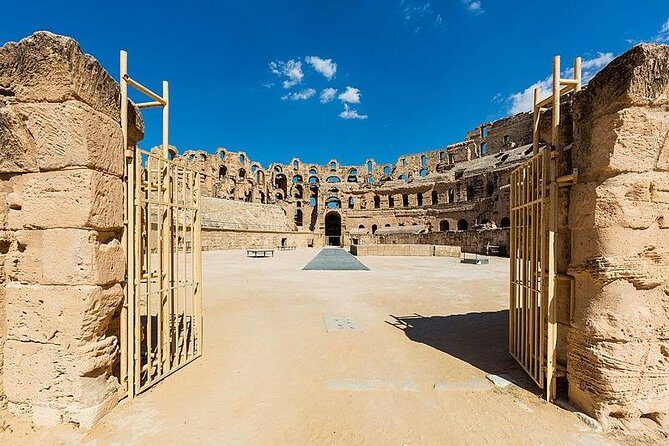
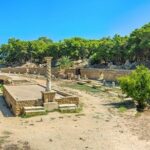
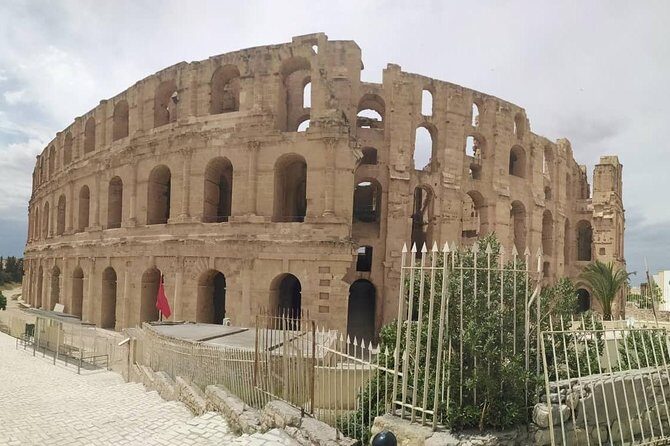
Then the trip flips from medieval/spiritual Tunisia to Roman spectacle at Amphithéâtre d’El Jem. You arrive in El Djem, and the amphitheater visit is about 2 hours. This is the stop you plan your day around.
A few details that help you appreciate what you’re seeing:
- Founded in the 3rd century AD
- Classified as a World Heritage site in 1972
- Could accommodate around 30,000 spectators
- Listed as third in size in the Roman world after Rome and Capua
- Often described as the most impressive Roman monument in Africa
Also important: entrance is not included. So if you’re budgeting, assume you’ll pay for admission here.
What makes it worth the time
Even if you’ve seen Roman ruins in Europe, El Djem hits differently because it feels intense and close. You’re not just looking at fragments—you’re standing in a structure built for drama: crowds, noise, and a kind of public theater Rome did so well.
If you like taking photos, do one wide shot early, then come back for the details. The scale can trick your brain at first.

El Djem Archaeological Museum: mosaics and the everyday Roman world
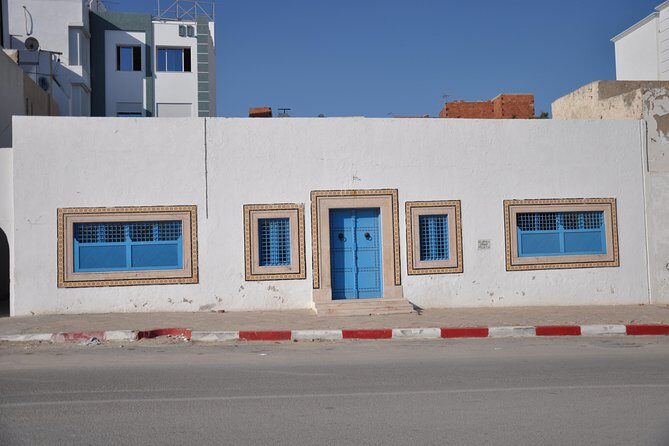
After the amphitheater, you’ll visit the Archaeological Museum of El-Djem, installed in a reconstructed Roman villa. Plan about 1 hour here, and like the amphitheater, admission is not included.
This museum is where the day becomes more than monuments. You’ll find an important collection of Roman mosaics, spanning from the 11th century to the 5th century as described in the tour notes, plus statues, terracotta statuettes, perfume-related items, and glasswork.
That matters because amphitheater visits can turn into a “wow” moment followed by, okay, but what life actually looked like. The museum helps connect the big Roman public stage to more personal objects—things people touched and used.
A simple way to approach the museum: pick one mosaic area, then walk outward to connect the style and materials. It’s not about seeing everything; it’s about training your eye to notice what’s distinctive.
Monastir marina and Bourguiba: the modern finish with real downtime
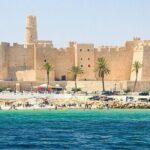
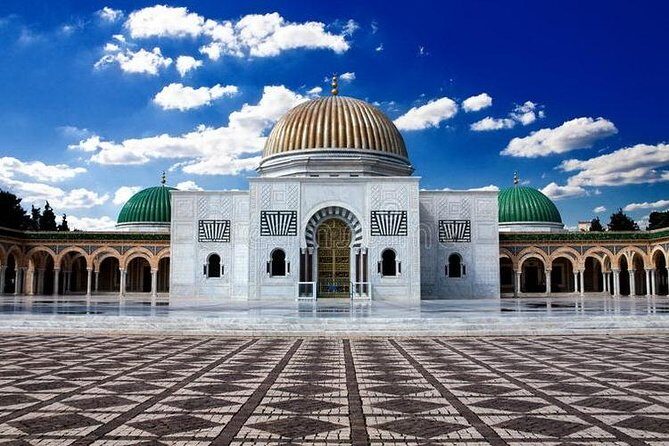
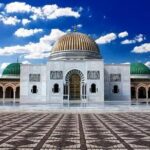
For the last stop, you head to Monastir. The tour takes about 1 hour and includes time to pass by the birthplace of Habib Bourguiba, Tunisia’s first president, then visit his mausoleum. You also get free time to explore the ribat and the marina.
A coastal finish is a smart choice after two heavy history stops. It gives you a change of pace: less museum logic, more walking, looking, and letting your brain cool down.
One more practical point: since this is a free-time section, it’s a good moment to decide what you want more of—views along the marina, or a quieter feel around the ribat area.
Price and value: paying for a private guide, not just transport
The price is $292.47 per group (up to 2 people). It’s booked on average about 28 days in advance, and the format is private—your group rides with you only.
So how do you judge value?
- If there are two of you, the per-person cost can feel reasonable for a full-day route that includes a pro guide, air-conditioned vehicle, bottled water, and all fees and taxes that are listed as included.
- If it’s just one person, you’re paying more like a classic private day rate. In that case, the best value comes from using the guide time well: ask questions, slow down at the places you care about, and treat the day like a guided learning experience rather than a quick checklist.
Also note what’s included vs not:
- Included: bottled water, air-conditioned vehicle, private transportation, all fees and taxes, professional guide
- Not included: lunch, entrance fees to museums or exhibitions, personal expenses
That split is important. A tour can be “in the price” and still cost extra if the big entrances aren’t included—which is exactly how El Djem works here.
Logistics that actually matter on a long day
This is about how the day feels in your body, not just the attractions on paper.
Pickup is offered, and one of the strongest themes from people who loved this style of outing is the punctual pickup and the smooth operation of the day. The group size is tight (up to 2), which generally means less waiting and fewer “hold on, where did everyone go?” moments.
The itinerary is also staged with logical flow:
- Kairouan first (you’re fresher)
- El Djem second (the big anchor site)
- Monastir last (downtime and a calmer finish)
The tour uses a mobile ticket and you receive confirmation at the time of booking. Also, service animals are allowed, and most travelers can participate.
Who this tour suits best
This excursion fits best if you want:
- A high-effort, high-coverage day that hits three major areas (religious Tunisia, Roman Tunisia, modern coastal Tunisia)
- A guide who explains instead of just pointing
- A private format where you can move at your own speed within the schedule
It might not be ideal if:
- You only want one or two sights and prefer slow travel
- You strongly dislike entrance fees you need to add on yourself (because El Djem amphitheater and museum are not included)
Should you book this Kairouan, El Djem and Monastir guided excursion?
I’d book it if you’re the type who gets excited by contrasts: sacred city streets in Kairouan, then sudden Roman scale at El Djem, then an easier coastal finish in Monastir. You’re not just buying a ride—you’re buying a guide-led day that helps you make sense of what you’re seeing.
If your main goal is the amphitheater only, you could technically stitch together a cheaper plan on your own. But if you want Kairouan explained, El Djem’s mosaics connected to the amphitheater, and Monastir wrapped into the same day with proper timing, this is a practical way to do it.
Also, the private setup and strong emphasis on punctual pickup are the kind of details that make or break a long day. It’s the difference between a stressful whirlwind and a day you can actually enjoy.
FAQ
Is pickup from Hammamet included?
Yes. Pickup is offered, and the tour is designed to start from your area in Hammamet.
How long is the excursion?
The duration is about 10 hours.
What’s included in the price?
It includes bottled water, an air-conditioned vehicle, private transportation, all fees and taxes, and a professional guide.
Are entrance fees included for El Djem sites?
No. Entrance fees to museums or exhibitions are not included, including the amphitheater and the archaeological museum in El Djem.
Is lunch included?
No. Lunch is not included.
How much time is spent at each main stop?
The schedule lists approximately: Bassins Aghlabites (30 minutes), Mosque Sidi Sahbi (1 hour), Medina of Kairouan (1 hour), Amphitheatre d’El Jem (2 hours), Archaeological Museum of El-Djem (1 hour), and Monastir (1 hour).
Is this a private tour?
Yes. It’s private, and only your group participates (up to 2 people).
Is there free cancellation?
Yes. You can cancel up to 24 hours in advance for a full refund.
If you tell me your travel dates and whether it’s just one person or two, I can help you figure out whether the entrance-fee add-ons for El Djem will keep the total in a sweet spot for your budget.