REVIEW · TUNIS
Bulla Regia and Beni Mtir Cascade Daytrip from Tunis
Book on Viator →Operated by Tunisia Guided Tours · Bookable on Viator
One day, two time periods. You’ll see Roman grandeur and Berber-era daily life in the same stretch of Tunisian north. This private tour from Tunis takes you through the Medjerda Valley to Bulla Regia for its ruins and mosaics, then over to the village of Beni M’Tir in the Kroumirie region to see the dam that shaped the place.
I like that the day is built around two very different kinds of “old,” so you don’t just rack up sights—you start connecting the dots. Another win is the comfort factor: door-to-door pickup by an A/C vehicle with Wi‑Fi, plus commentary in English, French, or German.
The only real drawback to plan for is timing and food: the tour runs about 7 to 8 hours, and lunch isn’t included, so you’ll want to decide how you want to handle that before you go.
In This Review
- Key things to know before you go to Bulla Regia and Beni M’Tir
- Why this daytrip hits harder than a typical ruins run
- Setting off from Tunis: the ride, the pace, and what comfort buys you
- Bulla Regia: mosaics, thermal baths, and a site built for layers
- What you’ll actually focus on once you’re inside
- The main trade-off
- The Medjerda Valley drive: why the scenery matters even when you’re headed to ruins
- Beni M’Tir: a Berber village shaped by a dam
- Why the village was built
- What to look for when you arrive
- The main trade-off
- Timing and how to plan your lunch without stress
- Price and value: what $141.36 buys you (and what it doesn’t)
- Who this tour is best for
- A few smart tips before your booking day
- Should you book Bulla Regia and Beni M’Tir from Tunis?
- FAQ
- How long is the Bulla Regia and Beni M’Tir daytrip from Tunis?
- Is pickup from Tunis included?
- Is this tour private?
- What sites do you visit during the day?
- Are admission tickets included?
- What language is the commentary available in?
- Do you provide air-conditioned transportation?
- Is lunch included?
- What is the price per person?
- Is the tour affected by weather?
- What’s the cancellation window?
Key things to know before you go to Bulla Regia and Beni M’Tir
- Bulla Regia ruins are the star: thermal-bath areas, an amphitheater, and mosaics from multiple eras
- You get included admission for Bulla Regia and Beni M’Tir is listed as free entry
- A/C and Wi‑Fi matter on a full-day drive out of Tunis, especially in warmer months
- Your guide will switch the past into something you can picture with detailed explanations tied to the site
- Beni M’Tir is not just a viewpoint: the village was built in 1948 for the dam engineers and workers, and the architecture still shows it
Why this daytrip hits harder than a typical ruins run
If you only do one historical stop in Tunisia, you’ll miss the way layers stack up here. Bulla Regia is a proper archaeological site with Roman, Carthaginian, and Byzantine footprints, so you see how power and culture shifted over centuries in the same location. Then Beni M’Tir shows how a 20th-century project can still define a community’s shape, skyline, and even building style.
For me, the payoff is how quickly you move from “big empire stuff” to “human-scale place.” At Bulla Regia, you’re reading architecture and floor patterns. At Beni M’Tir, you’re looking at facades—black shutters with red frames—and a town that grew to support the dam.
You’ll also appreciate that the tour is private. Only your group participates, so you’re not stuck listening to other people’s pace, bathroom breaks, or half-silence.
You can also read our reviews of more tours and experiences in Tunis.
Setting off from Tunis: the ride, the pace, and what comfort buys you
This is a full-day private excursion starting in Tunis with pickup offered. You travel in a Wi‑Fi-equipped air-conditioned vehicle, which sounds like a small detail until you realize how long you’re out for. About 7 to 8 hours total means you want your transport to be easy, not a stress test.
The format is simple: ground transfer to the Medjerda Valley, time at Bulla Regia, then onward to Beni M’Tir. Commentary is provided in English, French, or German, so you can pick what matches your comfort level before you start.
One practical note: expect a day that moves, not a slow hangout. The stops are each around 2 hours, so you’ll want to arrive ready to walk and look.
Bulla Regia: mosaics, thermal baths, and a site built for layers
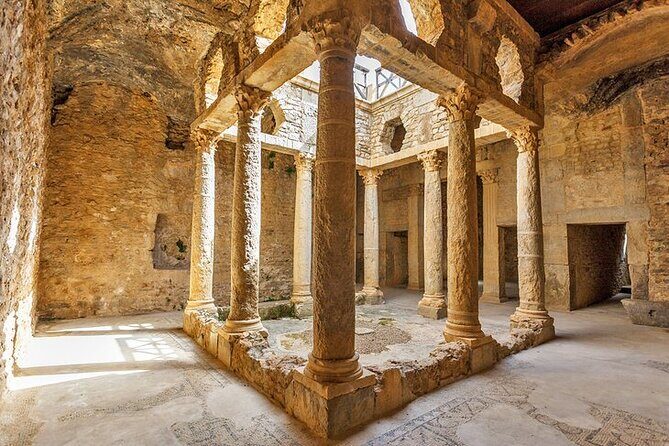
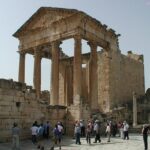
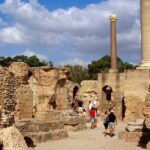
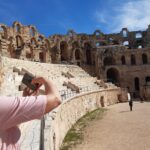
Bulla Regia sits north of Jendouba in the Medjerda Valley, in cereal plains that drew people for ages. The name is often translated as the beautiful city, and you can feel why it stuck: multiple civilizations claimed it, remodeled it, and left enough material to make the story readable.
This is one of those sites where the details help you do mental archaeology. You’ll hear about how it became one of the famous cities across the Carthaginian, Roman, and Byzantine periods, and how the timeline matters. The city was created in the 4th century BC, then Romans invaded in 203 BC and it shifted under Roman control by 156 BC. Later, it’s tied to the Numidians as the capital under Massinissa, Rome’s ally.
What you’ll actually focus on once you’re inside
At Bulla Regia, the big draws are the things you can see with your own eyes:
- Millennia-old mosaics that show you wealth and craftsmanship
- Thermal baths, which tell you how daily life and public leisure worked
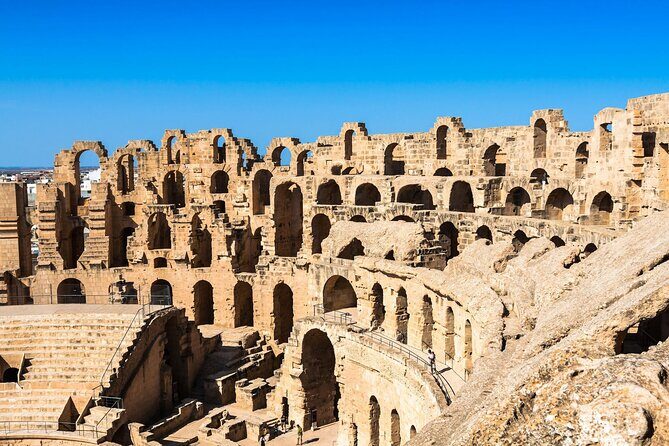
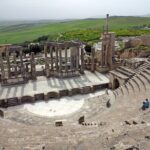
- An amphitheater and civic structures that point to public culture
- The way the ruins reflect changing eras instead of one single snapshot
The feedback I’ve seen is consistent: when the guide explains the site clearly, you stop thinking of it as dead stones and start picturing what it looked like in Roman times. One common theme is how the explanation makes it feel almost time-warped—down to how people might have moved through rooms and courtyards.
The main trade-off
Bulla Regia is powerful, but it’s still an outdoor archaeological site. You’ll want solid walking shoes and basic sun protection. If the weather turns rough, the tour may be rescheduled since the experience requires good weather.
The Medjerda Valley drive: why the scenery matters even when you’re headed to ruins
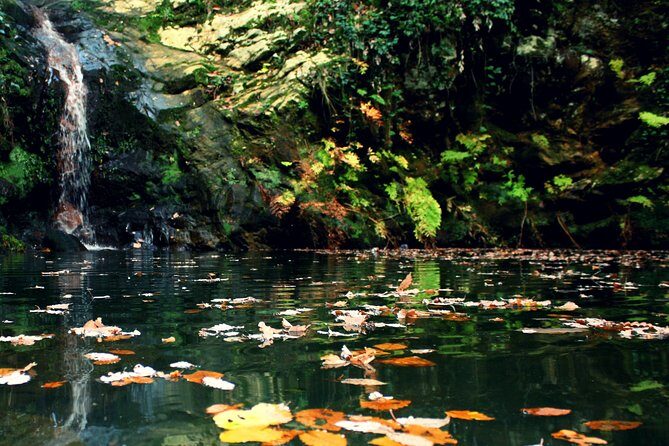
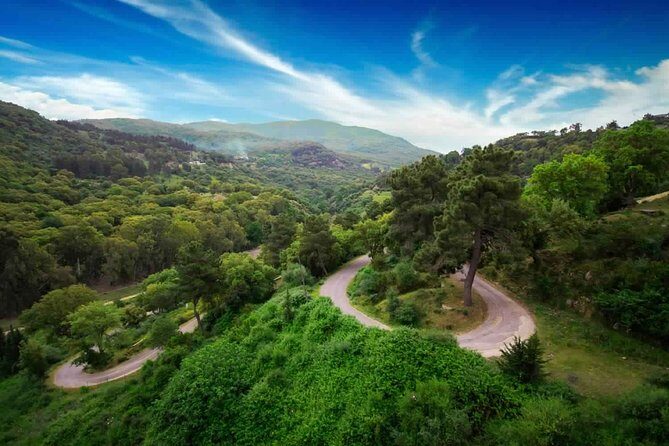
You’re not just commuting—you’re traveling through the Medjerda Valley, tied to the story of why Bulla Regia mattered in the first place. These are the lands that fed populations and supported the kind of settlements empires loved to control.
On a practical level, the drive also breaks the day into two clear chapters. Once you’re out of Tunis, the shift is real: the road gives you time to settle in, and your guide’s commentary can set up what you’ll see next.
Beni M’Tir: a Berber village shaped by a dam
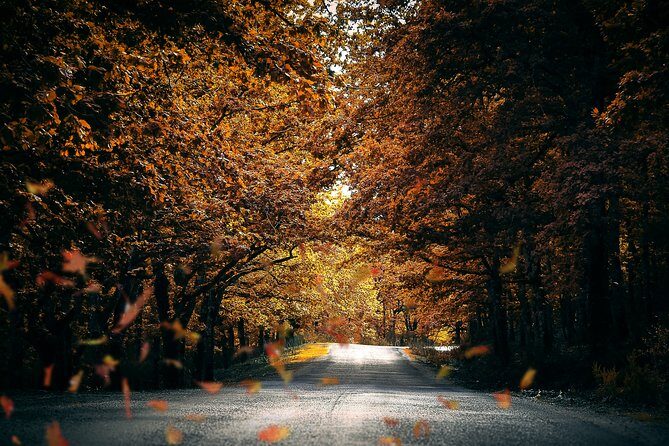
After Bulla Regia, you head to Beni M’Tir, a village in north-western Tunisia in the Kroumirie mountainous region. It’s only a few kilometers from Bulla Regia and Aïn Draham, so you’re not making a huge leap—this is more like moving from one kind of story to another.
Beni M’Tir is associated with the confederation of Berber tribes of the Kroumirs, and that cultural framing matters because it helps you understand the village as a place with continuity—not just a stop for photos.
Why the village was built
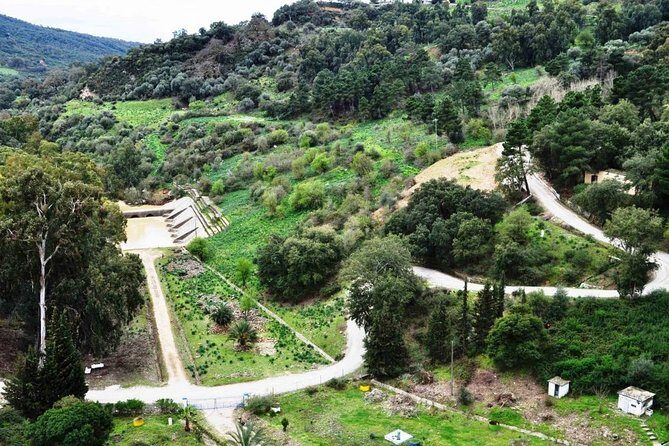
Here’s what makes Beni M’Tir feel especially grounded: it was built in 1948 to house the engineers and workers who came to construct the Beni M’Tir dam. You’ll overlook the dam from the village, and that connection is the point. This is not an ancient ruin where you imagine everything. It’s a living town whose layout and buildings reflect a real construction era.
What to look for when you arrive
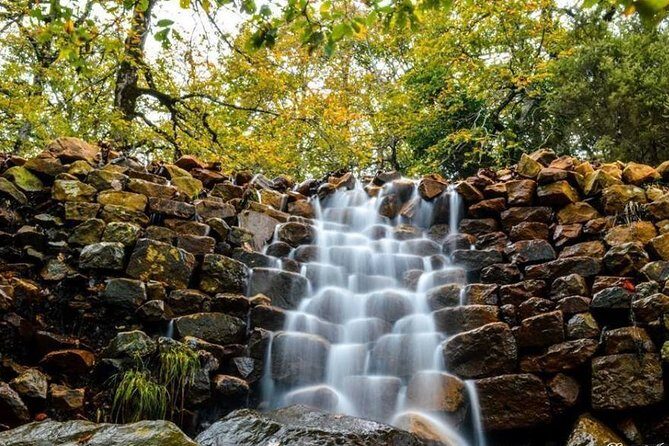
You’ll have about 2 hours here, and the focus tends to be on how the architecture communicates identity and function. The village retained typical features through a municipal decree: tiled roofs, identical facades, black shutters, and red frames. That combination makes it easy to see the village as designed, not random.
The namesake dam also changes the feel of the landscape. Even if you’re not a hydrology person, you’ll understand the logic fast: the village exists because of water management, and the surrounding geography shapes how the community looks and lives.
The main trade-off
This stop is more about atmosphere and built character than it is about big-ticket monument hunting. If you’re expecting another museum-level ruin, you might find it calmer. But if you like learning how communities take on a major project and keep a distinct style, it clicks.
Timing and how to plan your lunch without stress
Lunch isn’t included. That’s not a dealbreaker, but it does mean you should have a simple plan. Because the stops are each around 2 hours and the overall day runs 7 to 8 hours, you don’t want to improvise too late.
If you’re the type who likes to eat close to where you’re walking, ask your guide how they’d handle lunch that day. Based on how guides operate on this kind of route, you’ll usually get practical suggestions for a nearby local meal rather than a tourist trap.
Also, bring water. Even with comfortable transport, you’ll spend time outdoors at the archaeological site.
Price and value: what $141.36 buys you (and what it doesn’t)
The price is $141.36 per person, and for that you get a private daytrip with admission included for Bulla Regia, plus private door-to-door transportation in an A/C vehicle with Wi‑Fi. You also get guided commentary in English, French, or German, and all fees and taxes are listed as included.
Here’s the value logic: you’re paying not just for access to ruins, but for time, transport, and interpretation. Without a guide and organized transfers, it’s harder to connect the history across Carthaginian, Roman, and Byzantine layers in a meaningful way. And without comfort transport, a long day from Tunis can feel like a chore.
What you don’t get: lunch. You also won’t get unlimited time at each site since the schedule is set for a full day. So the value is best if you want a structured day with a clear narrative and you’re okay managing meals on your own.
Who this tour is best for
This trip works well if you want history with context, not just a checklist. I’d especially recommend it if:
- You’re excited by Roman-era sites and mosaics
- You like when a guide helps you visualize life in the past, not just recite dates
- You want one ancient stop plus one modern-shaped community stop
- You prefer private pacing and don’t want to share your day with random strangers
If you’re traveling with kids, it can still work, but you’ll want to keep expectations realistic: it’s two walk-and-look stops in one day, not a playground-heavy outing.
A few smart tips before your booking day
- Wear shoes you can trust on uneven ground. Ruins are not flat floors.
- Bring sun protection. You’ll be outside at Bulla Regia.
- Choose your commentary language before you go, so you can follow without straining.
- If you’re picky about meals, plan lunch timing and bring a water bottle.
Should you book Bulla Regia and Beni M’Tir from Tunis?
If your dream day is part archaeology, part real-life village style, then yes, book it. The best version of this tour is when the guide turns the ruins into scenes you can picture—mosaics, baths, and amphitheater spaces become understandable, not just impressive. Add the shift to Beni M’Tir, and you get a day that feels more like a story than a drive-by.
Skip it only if you want a purely ancient itinerary with lots of monuments in a tight area, or if you strongly need lunch included in the price. Also consider the weather requirement: if conditions are poor, the experience can be moved or refunded.
FAQ
How long is the Bulla Regia and Beni M’Tir daytrip from Tunis?
It lasts about 7 to 8 hours.
Is pickup from Tunis included?
Yes, pickup is offered.
Is this tour private?
Yes. It’s a private tour, and only your group participates.
What sites do you visit during the day?
You visit Bulla Regia and Beni M’Tir.
Are admission tickets included?
Admission to Bulla Regia is included. Admission to Beni M’Tir is listed as free.
What language is the commentary available in?
Commentary is available in English, French, or German.
Do you provide air-conditioned transportation?
Yes. You travel in an air-conditioned vehicle with Wi‑Fi on board.
Is lunch included?
No, lunch isn’t included.
What is the price per person?
The price is $141.36 per person.
Is the tour affected by weather?
Yes. The experience requires good weather, and if it’s canceled due to poor weather you’ll be offered a different date or a full refund.
What’s the cancellation window?
You can cancel up to 24 hours in advance for a full refund.
If you want, tell me your travel month and whether you prefer lots of walking or a slower pace, and I’ll suggest how to time your day and lunch for comfort.