REVIEW · TUNIS
Full-Day Kairouan and El Jem Tour from Tunis
Book on Viator →Operated by Batouta Voyages · Bookable on Viator
Kairouan and El Jem is a one-day history overload—in a good way. You get the big-ticket stops: Kairouan’s sacred sites plus El Jem’s Roman amphitheater, all with air-conditioned transport and a guide who keeps the story straight. Two things I really like: the small group size (max 8) for a calmer pace, and the built-in chance to roam the medina on your own.
The itinerary also works for real life. It starts with waterworks, then moves through mosques and courtyards, and finally lands at El Jem with time to focus on the amphitheater and museum before heading back. One possible drawback: you’ll be on the move for a full 8 hours, so if you hate long days or tight schedules, this may feel like a lot.
In This Review
- Key points to know before you go
- How This Full-Day Combo Tour Feels in Real Life
- Getting From Tunis to Kairouan: The Day’s Setup
- Aghlabid Basins: Waterworks That Explain Kairouan
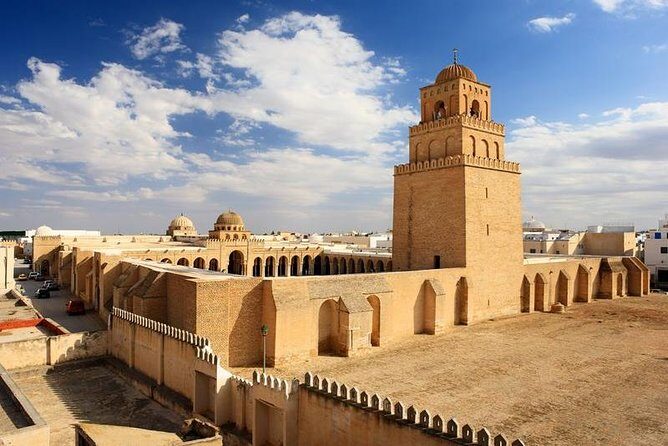
- The Great Okba Mosque: A 7th-Century Name, With 9th-Century Impact
- Sidi Sahbi: Courtyards, Minaret, and Tilework
- Walking Kairouan’s Medina: Guided Up Front, Free Time to Follow Your Nose
- Lunch in Kairouan: Included, Keep It Simple
- El Jem by Road: The Jump to Roman Country
- El Jem’s Amphitheater: The Main Attraction You Can’t Ignore
- El Jem Museum: Context That Makes the Stones Mean More
- Transport, Group Size, and the Blue Badge Guide Advantage
- Price and Value: What $151.92 Gets You
- Who This Tour Best Fits
- Should You Book This Tour?
- FAQ
- FAQ
- What time does the tour start?
- How long is the tour?
- Where does the tour end?
- Is lunch included?
- Are drinks included with lunch?
- How many people are in the group?
- What kind of guide will I have?
- What are the main stops during the day?
- What’s the transport like between cities?
- Can I cancel and get a full refund?
Key points to know before you go
- Max 8 travelers keeps the day personal without turning it into a crowded bus tour
- Blue Badge guide means you’ll get clear context, not just names and dates
- Two medinas worth of time: guided walk in Kairouan, plus independent wandering afterward
- El Jem’s Roman amphitheater is the main event, paired with the museum for stronger context
- Lunch is included, so you can plan your day around food instead of searching
How This Full-Day Combo Tour Feels in Real Life
This tour is built for travelers who want two major worlds in one day: early Islamic Kairouan and Roman El Jem. It runs about 8 hours starting at 8:00 am, with hotel pickup and drop-off in an air-conditioned minivan. If you’re in Tunis and want to make the most of limited time, this is one of the most efficient ways to do it.
The day is also structured so you don’t only “listen and look.” You get a guided portion where the guide leads you through the meaning of what you’re seeing, then you get time to shop and wander in the medina at your own pace. I like that balance because it helps you reset your brain between landmarks.
Group size matters more than people think. With a maximum of 8 travelers, you’ll generally spend less time waiting and more time actually seeing. It also makes questions easier—especially when you’re trying to understand why a mosque or palace-like courtyard looks the way it does.
A few more Tunis tours and experiences worth a look
Getting From Tunis to Kairouan: The Day’s Setup
After pickup from your Tunis accommodation, you head to Kairouan by road. The focus from the start is not just “tourist sights,” but the city’s foundation—especially its water systems.
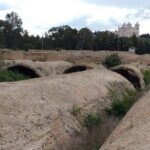
You begin with the Aghlabid Basins, specifically the last two 9th-century Aghlabite basins. You’ll view them from the top of the Tourist Information Building, which is a practical way to get perspective on a site that connects to how the city grew. It’s a strong opener because it explains something visitors often miss: Kairouan’s early power wasn’t only religious. It was also engineering.
From there, the tour transitions into the sacred heart of the city. You’ll move from those waterworks into major religious architecture, so the story shifts from how a place functioned to how it expressed faith.
Aghlabid Basins: Waterworks That Explain Kairouan
Kairouan is famous for sacred buildings, but the Aghlabid Basins are where you learn why the city mattered. These basins were among the greatest waterworks of the Middle Ages, and that scale really changes how you interpret later monuments.
One smart detail is that you don’t just see a random ruin. You’re shown the basins in a way that connects to the city’s foundation and glorious age. Even if you’re not the type who loves infrastructure, the basins help you understand why a major city could thrive in this region.
If you’re the type who likes to take photos, this opener gives you a “big picture” view before you get close to smaller details like tiles and doorways.
The Great Okba Mosque: A 7th-Century Name, With 9th-Century Impact
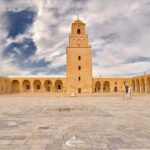
Next comes the Great Okba Mosque, described as the oldest mosque in North Africa. It’s a 7th-century foundation, but the building’s look reflects later work, including powerful 9th-century influence.
The main value here isn’t only religious importance. It’s how the architecture communicates confidence and seriousness. When a building has survived and remained central for centuries, you can often feel the continuity in the design choices—even if you’re not an architecture specialist.
Practical tip: plan to slow down. In places like this, the “best photos” aren’t always the most interesting ones. I’d prioritize your time on what you can actually understand—materials, layout, and how worship spaces are organized—rather than just collecting pictures.
Sidi Sahbi: Courtyards, Minaret, and Tilework
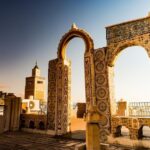
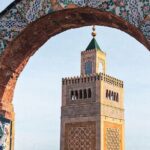
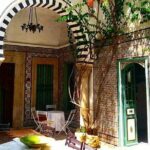
After the mosque, you visit Sidi Sahbi, a building dating to the 17th–19th centuries. What draws the eye is the minaret and the courtyard spaces, including the green-blue tilework and white plaster stucco.
This stop is a nice change of pace from larger religious spaces. Instead of focusing on scale, you’re moving toward texture: surface color, courtyard design, and the way ornamentation frames movement through the building.
If you like “small moments” on tours—corners where the light hits the tiles, doorways, and quiet courtyard edges—this is one of your best chances of the day.
Walking Kairouan’s Medina: Guided Up Front, Free Time to Follow Your Nose
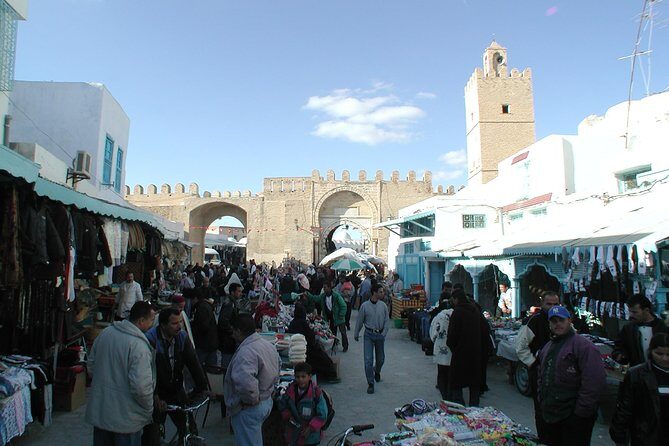
The tour then enters the Medina and includes a guided walk through the main street. The walk takes you up to Bir Barrouta, and the idea is to give you enough orientation that you can actually enjoy the wandering afterward.
After the guided section, you get free time for individual discovery and shopping. I like how that’s built in: you can go where your curiosity pulls you. If you want to focus on small shops, you have time. If you just want to slow-walk the streets and watch daily life, you can do that too.
A helpful mindset here: treat this free time as your chance to connect the dots between the buildings you saw and the living city around them. Even if you’re only buying a small souvenir, the value comes from moving through the place at a human pace.
Lunch in Kairouan: Included, Keep It Simple
Lunch is included at a local restaurant. Since drinks aren’t included, it’s smart to budget for beverages if you want them with your meal.
I like included lunch on tours like this because it removes decision fatigue. You can spend your energy on the sights instead of trying to guess which restaurant is best after a morning of walking.
For most travelers, the best strategy is straightforward: eat something you can handle easily, then don’t overstuff yourself before El Jem. Your afternoon will be more enjoyable when you’re not feeling heavy or rushed.
El Jem by Road: The Jump to Roman Country
From Kairouan, you transfer to El Jem, a drive of about 70 km (around 1 hour 15 minutes). This travel time matters because it creates a natural break in the day. You’re switching from a medieval religious city rhythm to an open-air Roman monument moment.
On days like this, I find that a short buffer helps. If you can, use the ride to rest your feet and reset your eyes for a completely different style of architecture.
El Jem’s Amphitheater: The Main Attraction You Can’t Ignore
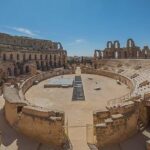
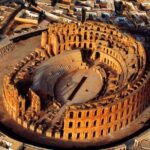
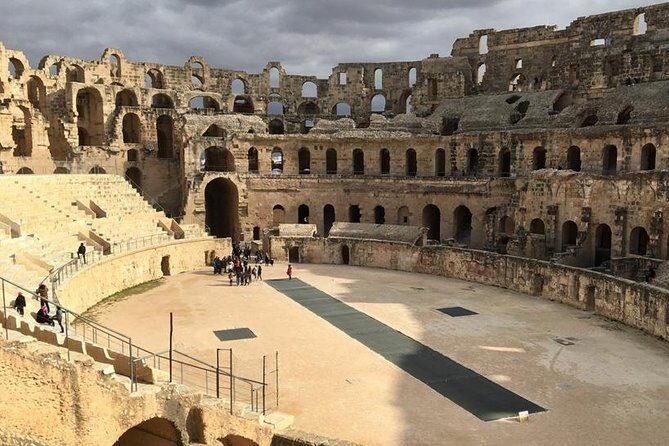
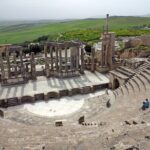
El Jem’s Roman amphitheater is the centerpiece of the afternoon. It was built in the mid 3rd century AD (around 230–240 AD) and is described as the largest Roman monument left in Africa. It also ranks 3rd in the empire after those of Rome and Verona.
What makes it compelling isn’t only the age. The architectural design is an improvement over the Coliseum of Rome, though not much smaller. That comparison matters because it gives you a framework for what you’re looking for: how Roman architects kept refining crowd space, structure, and visibility.
Even if you’ve seen amphitheaters before, this one is worth the effort. It’s the kind of place where your brain starts mapping what the site would have felt like—noise, movement, and sheer scale—even without extra explanation.
Practical tip: if you’re sensitive to heat, protect yourself. You’ll spend time standing and looking around, so plan for sun and water needs (drinks aren’t included, so think ahead).
El Jem Museum: Context That Makes the Stones Mean More
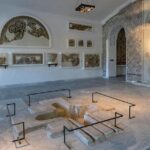
The tour pairs the amphitheater visit with the museum. This is a smart pairing because an amphitheater can feel like just “big stone walls” if you don’t know what life around it looked like.
The museum helps turn the amphitheater from a photo-op into a coherent site. You’ll likely come away with better understanding of the Roman presence in this region and why El Jem’s monument became such a major reference point.
If you’re short on time and tempted to rush, resist it. Even a partial museum visit can make the amphitheater stop feel much more complete.
Transport, Group Size, and the Blue Badge Guide Advantage
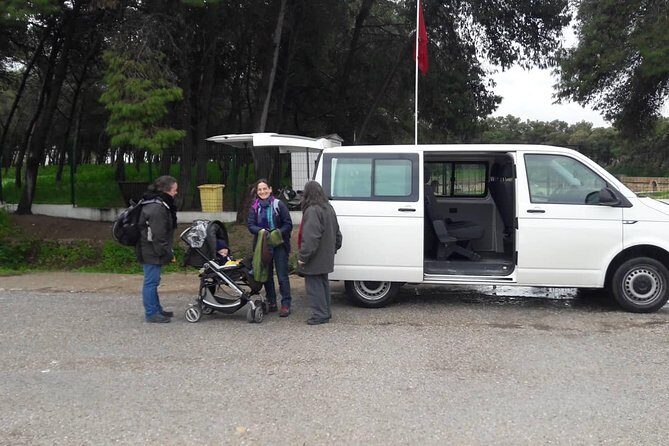
This tour is run with a professional guide and transport by an air-conditioned minivan. The group is kept small—max 8 travelers—and the guide is Blue Badge (with the note that the tour may be operated by a multi-lingual guide).
That matters because interpretation is the difference between a checklist tour and a “I get what I’m seeing” day. A good guide will help you understand why certain details stand out—like how tilework and courtyard layout create mood in Sidi Sahbi, or why Kairouan’s early water systems shaped the city’s development.
One review detail I found especially reassuring: during the last days of Ramadan and Eid-al Fitr, a traveler had a private-tour experience with guide Mr. Lamjed and the driver. Even with social activity changes and date adjustments, the tour still worked well. That suggests the operator knows how to keep the experience functioning when local rhythms shift.
Price and Value: What $151.92 Gets You
At $151.92 per person, you’re paying for more than entrance-style sightseeing. You’re covering a full-day run from Tunis with transportation, a professional guide, and included lunch. For many travelers, the value is the convenience: you don’t have to arrange separate transport between Tunis, Kairouan, and El Jem, and you get expert context for multiple sites.
This price also makes more sense when you consider the itinerary “density.” You’re not just seeing one attraction—you’re ticking through:
- Kairouan’s waterworks focus (Aghlabid Basins)
- a major sacred site (Great Okba Mosque)
- a decorative courtyard stop (Sidi Sahbi)
- a guided walk plus personal medina time
- El Jem’s amphitheater and museum
If you were doing those stops on your own, the biggest costs are usually transport coordination, lost time, and less-than-clear interpretation. This tour pays those costs for you.
Who This Tour Best Fits
This day trip works best if:
- you want a high-value itinerary without changing plans
- you like guided context but still want independent wandering in the medina
- you prefer small group touring over large coach days
- you’re comfortable with an 8-hour schedule and lots of walking
It’s also a good match if you’re the kind of traveler who enjoys architecture and city layout—because Kairouan’s basins and courtyards, plus El Jem’s amphitheater scale, give you multiple ways to “read” a place.
Should You Book This Tour?
I’d book it if your priority is a well-paced, guided combo day that hits the key monuments without leaving you stuck figuring out transport. The small group size, Blue Badge guidance, included lunch, and air-conditioned transfer add up to a day that feels efficient without feeling rushed.
I’d think twice if you’re looking for a super relaxed day with lots of downtime. This is a full itinerary with major stops and time on your feet. You’ll get free time in the medina, but the overall structure is still built for seeing a lot.
If your travel dates are flexible, you may also enjoy that the operator appears able to adapt around local holiday rhythms, which can matter in Tunisia.
FAQ
FAQ
What time does the tour start?
It starts at 8:00 am.
How long is the tour?
The duration is listed at about 8 hours.
Where does the tour end?
It ends back at the original meeting point.
Is lunch included?
Yes. Lunch is included at a local restaurant.
Are drinks included with lunch?
No. Drinks are not included.
How many people are in the group?
The tour has a maximum of 8 travelers.
What kind of guide will I have?
You’ll have a Blue Badge guide (the tour may operate with a multi-lingual guide).
What are the main stops during the day?
You’ll visit Kairouan sites (Aghlabid Basins, Great Okba Mosque, Sidi Sahbi, and medina walk to Bir Barrouta), then El Jem (Roman amphitheater and museum).
What’s the transport like between cities?
You’ll travel in an air-conditioned minivan. The drive from Kairouan to El Jem is about 70 km (around 1 hour 15 minutes).
Can I cancel and get a full refund?
Yes. Free cancellation is available, with a full refund if you cancel at least 24 hours before the experience start time.