REVIEW · TUNIS
Bardo Museum , Oudhna and the roman aqueduct
Book on Viator →Operated by Tunisia cultural tours · Bookable on Viator
Roman water and mosaics in one day. This private loop links the National Bardo Museum to Carthage’s cisterns, then follows the water route toward Zaghouan and ends at Oudhna’s Roman ruins. You get two of Tunisia’s biggest “wow” categories back-to-back: mosaic masterpieces indoors and a real-world engineering story outside, with the aqueduct’s long line of water playing the main character.
I especially like how the day feels structured: you’re not bouncing randomly, you’re moving along a clear theme from collection to infrastructure to ruins. The other strong point is the pace: it’s long enough to matter (about 6–7 hours) but not so long that you lose your attention. One consideration is weather and comfort: the experience requires good weather, and since lunch isn’t included, you’ll want a plan for a meal break before or after.
In This Review
- Key highlights you’ll care about
- How the day flows: Bardo, Carthage cisterns, Zaghouan, and Oudhna
- Entering the National Bardo Museum’s Roman mosaic world
- Carthage’s Malaga Cisterns: where the aqueduct story lands
- The Aqueduct of Hadrien near Zaghouan: tracing 132 km of water
- Oudhna Archaeological Park: the amphitheatre, the Capitol, and Villa Laberii mosaics
- Transport, pickup, and comfort in a 6–7 hour private tour
- Price and value for a small group (up to 2)
- Who this tour is best for (and who should think twice)
- Should you book this Bardo + aqueduct + Oudhna day?
- FAQ
- How long is the Bardo Museum, Oudhna and the Roman aqueduct tour?
- What’s the meeting and pickup setup?
- Is admission included in the price?
- Is lunch included?
- Is this tour private?
- What’s the group size?
- Do I need a mobile ticket?
- What if the weather is bad?
- Are service animals allowed?
Key highlights you’ll care about
- The Bardo’s top-tier Roman mosaics in an Ottoman-era royal palace setting
- Carthage’s Malaga cisterns with 18 water containers holding up to 32,000 litres per day
- The aqueduct route explained through the Aqueduct of Hadrien / Zaghouan connection (132 km total)
- Oudhna’s amphitheatre at 16,000 seats plus more mosaics to keep the theme going
- Free admission at Oudhna and the aqueduct stop, so your money mainly goes into the core museum time
- Private tour for up to 2 with pickup and A/C, which is a big deal in Tunis heat
How the day flows: Bardo, Carthage cisterns, Zaghouan, and Oudhna
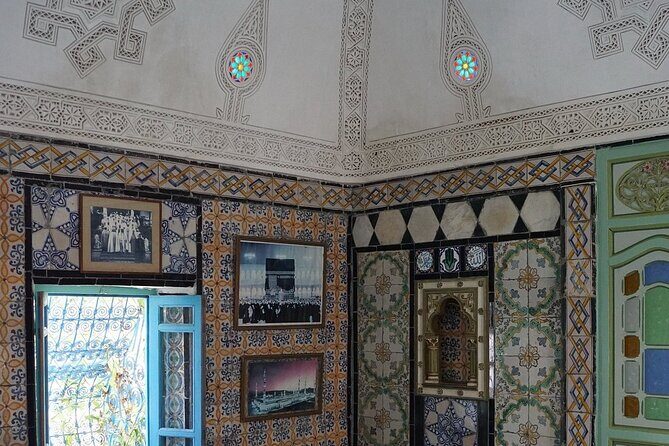
This is a theme-tour in the best way: you start with the Roman art that people actually used to live with, then you follow the infrastructure that kept those cities running, and you finish in a site where Roman public life is still visible.
The order matters. The Bardo Museum gives you context for the Romans’ eye for detail. Then Carthage shows you water storage, not just architecture. After that, the aqueduct stop turns the story into a physical line you can imagine stretching over distance. Finally, Oudhna brings it all together with public spaces and mosaic floors.
Timing-wise, you’re looking at roughly:
- about 2 hours at the Bardo
- about 30 minutes at Carthage’s cisterns
- about 30 minutes at the Zaghouan aqueduct stop
- about 2 hours at Oudhna
It’s a lot of “see,” but the theme prevents it from turning into museum fatigue. If you’re the type who likes a story thread more than a checklist, this format works.
You can also read our reviews of more museum experiences in Tunis
Entering the National Bardo Museum’s Roman mosaic world
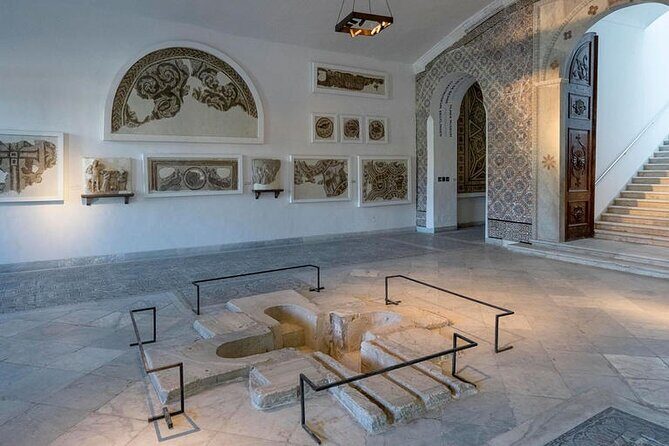
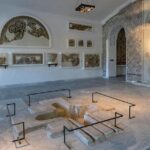
The National Bardo Museum is the main event for people who love Roman mosaics. This collection is described as the biggest of its kind, and you’ll feel it the moment you’re surrounded by floor art at museum scale.
What makes this stop especially worth your time is the setting. The mosaics aren’t just displayed in plain rooms. They’re housed in a majestuous palace-style building from the Ottoman era, which gives the whole experience a more dramatic frame than you’d expect from a standard museum visit.
How to enjoy it without rushing:
- Pace yourself. Look for repeating patterns and different styles before you decide which floors you like most.
- Pay attention to how mosaics are arranged and grouped. Even if you don’t read every label, you’ll start to notice the curators’ logic.
- If you’re coming from the medina area, keep an eye on your belongings while you’re moving through busy streets. One review-style takeaway that’s worth repeating: bustle plus tight spaces means you should hold onto your valuables.
Possible drawback: the Bardo is a museum, so you’ll spend time indoors with crowds or school groups depending on the day. If you’re sensitive to crowds or need quiet time, arrive with your expectations set for a lively public space, not a private gallery.
Carthage’s Malaga Cisterns: where the aqueduct story lands
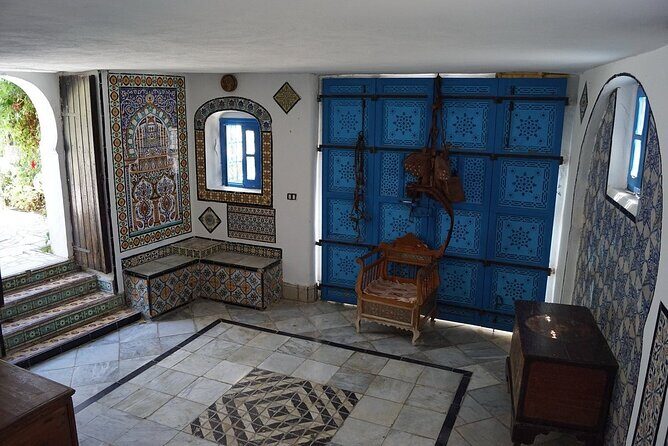
Carthage adds a different kind of wonder: practical engineering made visible. The stop here is at the end of the aqueduct route, known for the Malaga Cisterns and their water storage system.
The key details that make this stop click:
- There are 18 water containers
- They’re associated with a capacity of up to 32,000 litres per day
That number helps you picture how a city worked. You’re not just looking at Roman remains as decoration. You’re seeing how water flow was managed so Carthage could keep going day after day.
The time allocation is about 30 minutes. That’s enough to walk the main area, orient yourself, and take in the big idea without turning it into a full dig-site marathon. Still, if you’re the kind of person who loves reading every panel, you might wish you had more time. The solution is simple: take a fast first pass, then go back to your favorite area for a second look if time allows.
Practical consideration: this is outdoors, so sun and heat can influence how long you linger. Bring water and plan to slow down in the hottest part of the day.
The Aqueduct of Hadrien near Zaghouan: tracing 132 km of water
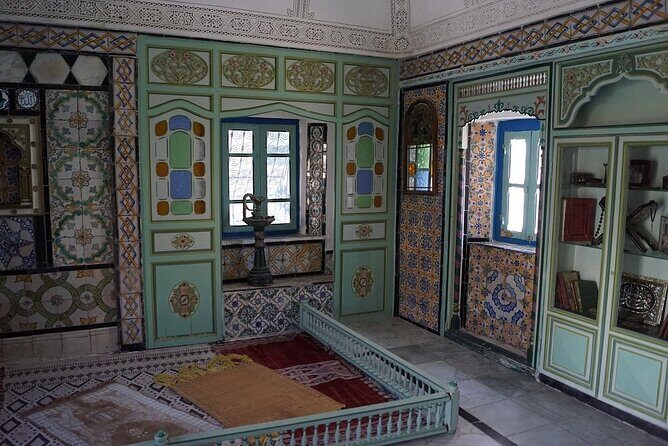
Now you leave the storage end and follow the water source angle. The aqueduct stop is associated with the Aqueduct of Hadrien and the connection between Carthage and the mountainous springs of Zaghouan.
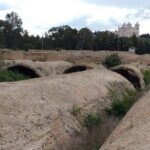
The headline is the scale: the aqueduct is described as the world’s longest, with a 132 km channel running from Carthage toward Zaghouan’s water sources.
Here’s what I think makes this stop memorable, even though it’s only about 30 minutes:
- You can stand near surviving sections and mentally stretch the line across the distance.
- It reframes the Roman world as infrastructure builders, not just sculptors and mosaic artists.
- You get a reminder that ancient cities were engineered systems, powered by water.
The drive component also matters. You travel roughly 30 minutes south of Carthage to reach the aqueduct area, described as about 6 km from Oudhna, on the road between Mhammedia and El Fahs. Even if you’re not focused on the route, that movement gives your brain time to switch from indoor mosaic focus to outside “how it worked” focus.
Possible drawback: since the time here is short and the visit is brief, you’ll want to be ready to learn fast. Don’t expect a full lecture at each step. This is a stop to recognize and connect ideas, not a long, detailed engineering museum.
Oudhna Archaeological Park: the amphitheatre, the Capitol, and Villa Laberii mosaics
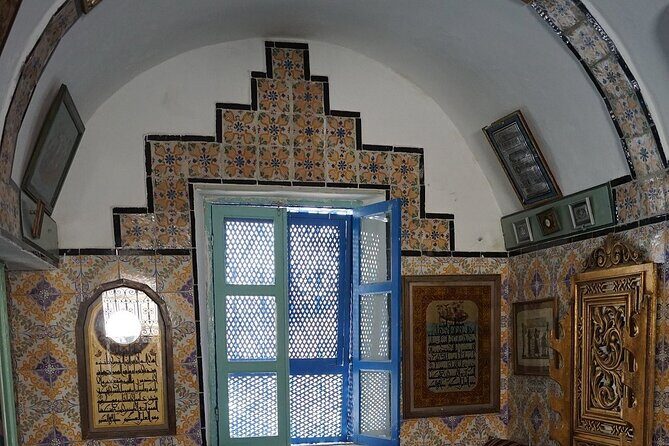
Oudhna is where the Roman theme shifts from water and art into public life and monuments.
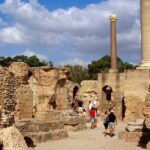
This is an archaeological park with multiple major stops, and you’ll spend about 2 hours here. Admission is described as free for this tour, so you’ll be spending time more than money at the site itself.
The standout structures you’ll want to know before you arrive:
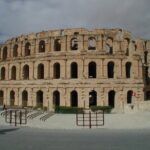
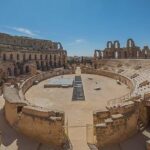
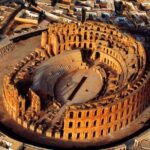
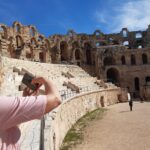
- The Colosseum-type amphitheatre, designed for about 16,000 spectators
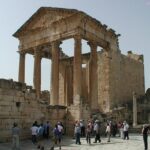
- The Capitol, noted for its mosaics and underground vaults dating back to the Byzantine era
- Villa Laberii mosaics, another strong mosaic highlight
What makes Oudhna feel special is the mix. Many sites give you one star attraction. Here, you get a public venue (the amphitheatre), plus mosaic spaces, plus evidence of later periods through the underground vaults linked to the Byzantine era.
That Byzantine connection is a neat reminder that ruins weren’t always abandoned and forgotten. People built on top of older Roman spaces, reused them, and left a second layer of story behind.
Possible consideration: as with most Roman parks, outdoor time can mean more walking than you expect. If you come in with comfortable shoes and water, you’ll enjoy it. If you come in with flip-flops and a tight schedule, you’ll feel it fast.

Transport, pickup, and comfort in a 6–7 hour private tour
This is a private tour/activity with only your group participating, up to 2 people. You’ll also get an air-conditioned vehicle and pickup offered. For a day that combines indoor museum time and outdoor archaeology, that A/C matters more than you’d think, especially during hot afternoons.
The tour is built for a small group pace:
- Less waiting around
- More flexibility in how you move through each stop
- A more personal rhythm than big-group bus tours
One more practical point: the day includes busy public areas and common tourist zones in and around Tunis. One review-style takeaway worth taking seriously is that even when harassment is low, you should still keep an eye on your valuables. People brush by in crowded moments, and you don’t want to lose track of your phone or wallet.
Also plan for a day with mixed environments:
- museum indoor lighting and seating (if you need breaks, look for moments to rest)
- outdoor sun where shade can be limited
Price and value for a small group (up to 2)
The price is listed at $258.49 per group for up to 2 people, and the duration is 6–7 hours.
How I judge value for a tour like this is simple:
- What’s included?
- How many “anchors” do you get for your time?
- Are you paying mostly for transportation and admissions, or for the storytelling structure?
Here, you get solid value ingredients:
- All fees and taxes are included
- Air-conditioned vehicle is included
- Admission tickets are included for the Bardo Museum and Carthage’s stop
- The aqueduct stop is admission free
- Oudhna admission is free
So your cost isn’t just “getting driven around.” You’re paying for the full day’s access points, with the museum and cisterns already covered.
If you’re traveling as two people, the per-person cost becomes more reasonable than many museum-and-drive days where admissions are extra. If you’re solo, it’s still a fair private option if you want control over pace and pickup, but you’ll feel the cost more.
Who this tour is best for (and who should think twice)
This experience suits you if you:
- love Roman culture, especially mosaics
- like engineering stories and want to see water infrastructure in real place
- prefer a small-group private day with pickup instead of a crowded bus
- want a route that connects art and architecture with how cities functioned
You might think twice if:
- you need a long lunch break, because lunch isn’t included
- you get uncomfortable with outdoor heat and walking during the middle of the day
- you’re hoping for a slow museum-only day; this is a mix of indoor and outdoor stops, with short dedicated time at some sites
Should you book this Bardo + aqueduct + Oudhna day?
I’d book it if your goal is a day with real “wow” moments that connect: a famous mosaic collection, then the water system behind Carthage, then Roman public architecture at Oudhna. The structure helps. You’re not just seeing random ruins; you’re following a theme that makes each stop make more sense.
Book it soon if you’re visiting Tunis with limited time. With pickup, A/C transport, and key admissions already covered, it’s efficient. And if you care about value, the free admission at the aqueduct stop and Oudhna helps keep the day from feeling like constant add-ons.
One final callout: keep an eye on weather expectations. Since good weather is required, choose a day when the forecast looks stable, or be ready to accept a date change or full refund offer if it’s canceled due to poor weather.
FAQ
How long is the Bardo Museum, Oudhna and the Roman aqueduct tour?
The tour lasts about 6 to 7 hours.
What’s the meeting and pickup setup?
Pickup is offered, and you’ll travel by air-conditioned vehicle.
Is admission included in the price?
Yes. Admission is included for the National Bardo Museum and the Carthage archaeological site stop. The aqueduct stop and Oudhna are free for this experience.
Is lunch included?
No. Lunch is not included.
Is this tour private?
Yes. It’s private, and only your group participates.
What’s the group size?
The group size is up to 2 people per group.
Do I need a mobile ticket?
You’ll use a mobile ticket.
What if the weather is bad?
The experience requires good weather. If it’s canceled due to poor weather, you’ll be offered a different date or a full refund.
Are service animals allowed?
Yes, service animals are allowed.