The Medina of Tunis is a maze with meaning. In just a couple hours, a private guide helps you connect the sights to the bigger story of this city—romans, Spanish, Italians, and more—right in the UNESCO-listed Medina center. You’ll see how everyday life, religion, and trade all shaped Tunis over centuries.
Two things I really like: you get the right starting point with Ez-Zitouna Mosque, and the tour slows down at a rooftop tea stop where you can actually see what you’ve been walking through. One thing to keep in mind: timing can be affected by real-world stuff like rain and traffic, so give yourself a little buffer and plan to arrive ready to start.
In This Review
- Key highlights I’d circle first
- Why a guided Medina of Tunis tour beats wandering alone
- Starting with Ez-Zitouna Mosque: the right mental anchor
- Bab Bhar, souks, and the Great Mosque area (plus the trick of turning back)
- Rooftop tea in an old palace: the viewpoint that makes sense of it
- Marche central de Tunis and Fondouk El Ghala: the city’s food pulse
- Medersa Slimaniya: Quran school architecture you can read with your eyes
- Souk Al Attarine: perfumers’ streets and sensory browsing
- Arts center Bir Lahjar and Medressa Bir Lahjar: more learning in stone
- Rue du Pacha: beautiful street walking plus a snack break
- Price and timing: what you’re really paying for
- Who should book this Medina of Tunis tour
- Should you book The Medina in Tunis?
- FAQ
- Where does the tour start?
- How long is the Medina tour?
- Is this a private tour?
- What are some of the main stops?
- Do I need a printed ticket?
- What happens if the weather is poor?
Key highlights I’d circle first
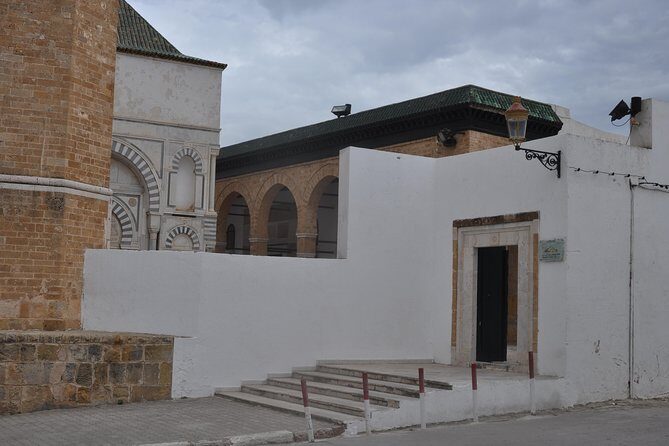
- Ez-Zitouna Mosque: the first campus and a cornerstone of Islamic culture in North Africa and the Maghreb
- Bab Bhar to the Great Mosque area: a guided route through gates and souks so you don’t wander aimlessly
- Tea on the roof of an old palace: panoramic views that help you orient fast
- Medersa Slimaniya (18th century): Quran school architecture and ornamentation you can’t really appreciate from a distance
- Souk Al Attarine: the old perfumers’ market vibe, ideal for sensory browsing
- Rue du Pacha: one of the most beautiful streets in the medina, with street coffee and local snacks
Why a guided Medina of Tunis tour beats wandering alone
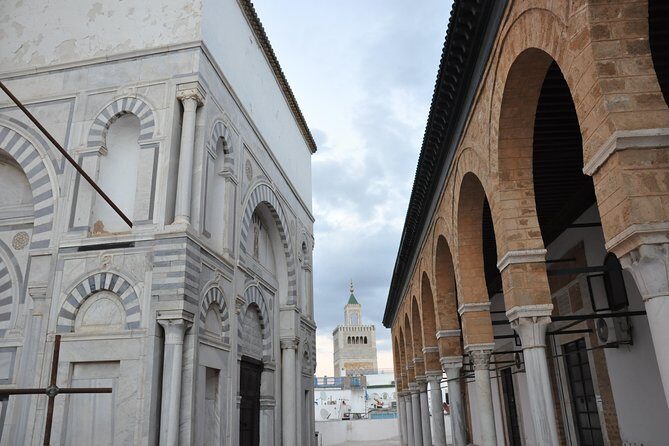
If you’ve only got a short window in Tunis, the Medina can feel like you’re stepping into a living maze. That’s the charm. It’s also the problem. Without context, it’s easy to miss what you’re looking at—why a doorway matters, what a school building tells you, and how the markets tie into the city’s economy.
This is where a private guide changes everything. You’re not just walking from one photo spot to the next. You’re getting a clear thread through the medina: its cultural role, its historic layers, and the way empires left their fingerprints on monuments, palaces, mosques, and the trading streets around them.
And because it’s a private experience, the pace feels more adjustable. If you want time for a shop stop or you’d rather stay longer around a view, you’re not stuck in a rigid group rhythm.
You can also read our reviews of more tours and experiences in Tunis.
Starting with Ez-Zitouna Mosque: the right mental anchor
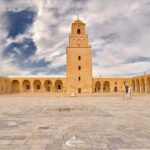
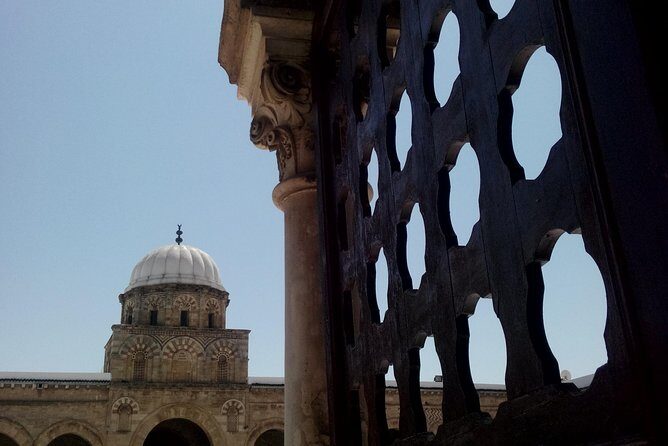
The tour’s first stop is Ez-Zitouna Mosque, right at the heart of the medina. This place matters beyond its walls. It’s described as the first campus and a keystone of Islamic culture in North Africa and the Maghreb, which gives you a useful lens for everything else you’ll see afterward.
You’ll walk in with the sense that you’re not only entering a religious site. You’re entering an educational and cultural hub—one that shaped learning and community life for a long time. Even if you only spend around half an hour there, starting here gives the whole medina route a clearer logic.
Practical note: the admission is free here, so you’re spending time on the experience, not tickets.
Bab Bhar, souks, and the Great Mosque area (plus the trick of turning back)
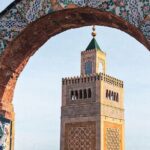
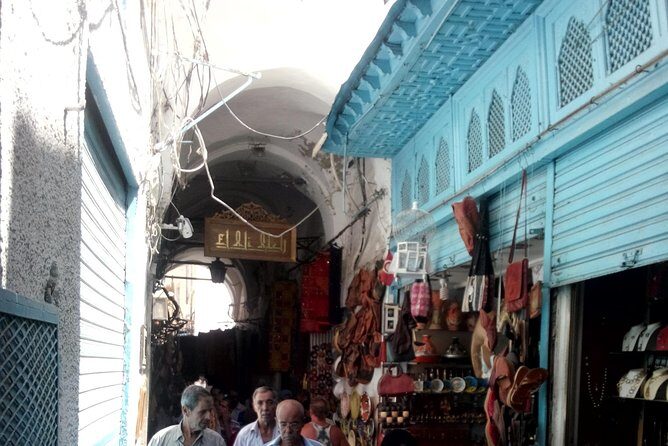
After Ez-Zitouna, you move into the walking core of the medina: Bab Bhar, souks, and onward toward the Great Mosque area. What I like about this part is that it’s not just straight-line sightseeing. You move through market streets, then you turn around to see a different slice of the medina.
That turn matters. In a place built like a patchwork of alleys, looking back can show you patterns you wouldn’t notice if you keep pressing forward. You get a chance to spot things like medressas, hammams, souks, and even marabouts as part of the same city system—religion, hygiene, commerce, and community all stacked together.
If you’ve ever felt overwhelmed in old city centers, this is the fix: the guide gives you a route that helps you get your bearings fast, then uses that route to explain what you’re seeing.
Rooftop tea in an old palace: the viewpoint that makes sense of it
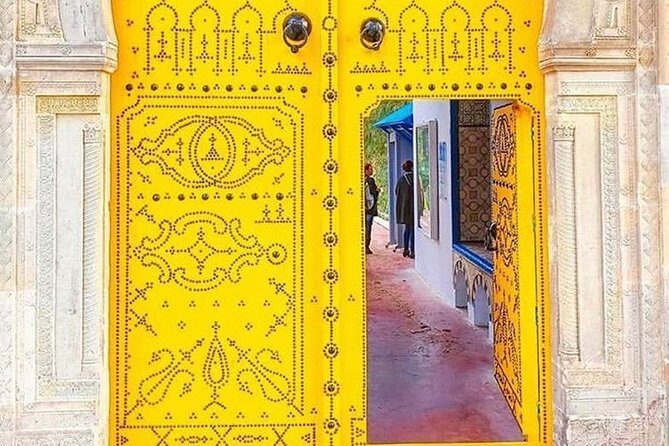
One of the smartest moments in this tour is the tea stop on the roof of an old palace. This is where the medina becomes understandable.
On the streets, everything feels tight and winding. From up top, you can take a breath and connect the dots. You’ll get an exceptional panoramic view of the place—exactly the kind of perspective that helps you remember what you walked through.
The tea experience also gives you a gentle break. You’re not rushing; you’re regrouping. And in a market-heavy city, that pause can be more valuable than another monument photo.
Marche central de Tunis and Fondouk El Ghala: the city’s food pulse
Next comes a stop at Marche central de Tunis (Fondouk El Ghala), which is positioned like a food basket of Tunis. This is where you shift from architecture to daily life.
Fondouk spaces are traditionally tied to trade, storage, and the movement of goods. In a medina context, that matters because it explains why the markets feel so central—this isn’t just browsing; it’s part of how Tunis works.
Even if you don’t buy much, this stop is useful. It helps you understand the economic side of the medina story that you’re hearing from the guide. It also gives you a break from the religious sites and classrooms you’ve been seeing.
Admission is listed as free, so you’re paying in time only—spent on observing and getting a feel for the city’s flavors and energy.
Medersa Slimaniya: Quran school architecture you can read with your eyes
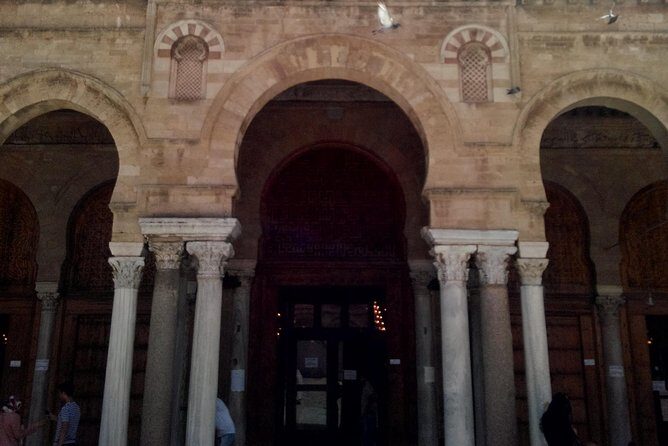
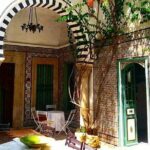
Then you head to Medersa Slimaniya, described as an 18th-century Quran school and a masterpiece of local architecture and ornamentation. This stop is ideal if you love buildings that look detailed up close, because the design isn’t just decorative—it’s functional and symbolic.
A madrasa in a medina is also a statement: this was where education was organized and funded, not just where religious ideas were practiced. So it fits perfectly with the early start at Ez-Zitouna. Together, they give you a clearer picture of how learning and faith lived side by side in the city.
The guide experience helps here too. When someone can explain what you’re looking at—patterns, layout cues, ornament styles—you notice more than you would alone.
Admission is free for this stop.
Souk Al Attarine: perfumers’ streets and sensory browsing
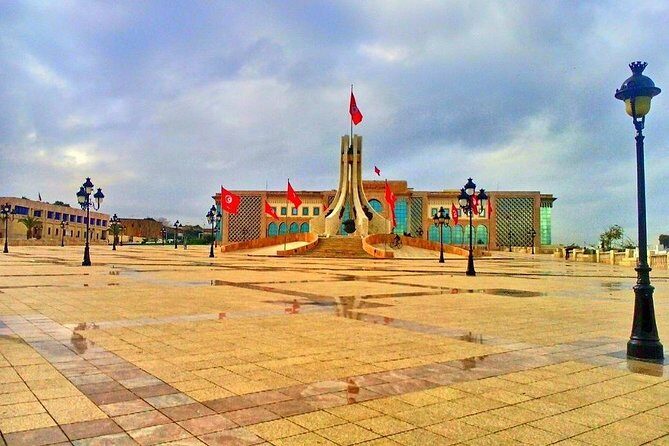
After medressas, hammams, and educational spaces, you switch to Souk Al Attarine, the old souk des parfumeurs (perfume sellers). This is one of those streets where smell and color do a lot of the work.
The attraction here isn’t only products. It’s the atmosphere of a market built around a trade. You’ll see how goods move and how sellers present items in a space made for closeness and conversation.
If you’re the type who likes practical souvenirs—things you can use right away—this is a strong stop. If you’re more cautious about buying, no problem. You can enjoy it as a cultural and sensory moment without committing to a purchase.
Admission is listed as free, and the stop is short enough (about 15 minutes) to keep you from getting stuck in decision fatigue.
Arts center Bir Lahjar and Medressa Bir Lahjar: more learning in stone
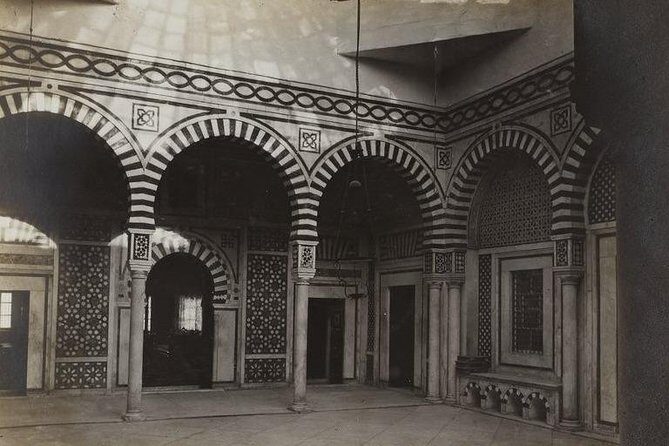
You’ll also pass through Arts center Bir Lahjar, described as an old medressa of Quran. Even though the labels can vary (arts center today, learning-focused in the past), the core value is the same: it’s another example of how education buildings shaped the medina’s physical layout.
Then the route continues with Medressa Bir Lahjar as part of the surrounding street experience. You get the feel that these buildings aren’t isolated. They’re threaded into the daily flow of alleys, markets, and community streets.
This is a good moment to slow down and notice the details. Ornamentation and layout cues often become more meaningful once you’ve already seen Ez-Zitouna and Medersa Slimaniya earlier. The guide’s context makes those details easier to decode.
This stop is short (about 15 minutes), so think of it as a visual “bookmark”—enough time to appreciate what you’re seeing without turning the tour into a museum marathon.
Rue du Pacha: beautiful street walking plus a snack break
One of the most beautiful streets you’ll hear about is Rue du Pacha. It’s the kind of medina street where the geometry and building frontages start to feel like a designed experience rather than random wandering.
This is also where the tour adds the human touch: street coffee and a local snack. Those tiny breaks are what stop a guided walk from feeling like homework. They keep the experience warm and grounded.
If you’re doing this in the afternoon, this snack-and-coffee pause can feel like a reset button. If you’re doing it in the morning, it’s a welcome rhythm shift before you head back through the lanes on your own.
Price and timing: what you’re really paying for
The price is $49.33 per person, for a tour that runs about 2 to 3 hours. That sounds simple, but the value comes from the mix: a private guide plus entry coverage at key points (and free admission at most stops), plus the tea pause where you get a top-down view.
Also, you get choice in timing: the tour is offered in either the morning or afternoon slot. That matters in Tunis because the light and temperature can change how comfortable the street walking feels.
Group size is also capped, with a maximum of 20 travelers. In a private tour context, that usually means you get more attention than a mega-group walking tour.
One more practical point: you’ll use a mobile ticket, and the activity is described as near public transportation. That’s helpful if you’re combining it with other plans around the city center.
Who should book this Medina of Tunis tour
I’d put this on your shortlist if:
- You’re visiting Tunis for the first time and want the medina explained so it clicks.
- You want a guided mix of religious sites, schools, and market life, not just a souk walk.
- You like architecture and details, especially when someone connects them to a bigger story.
- You prefer a small-scale guided experience over a large group shuffle.
This is less ideal if you already know the medina well and just want to “go your own way.” In that case, you might not benefit as much from the context and route support.
Should you book The Medina in Tunis?
Yes, I think you should—with one simple mindset: treat it as a guided way to understand the Medina of Tunis, not just a list of sights.
If you take advantage of the rooftop tea view and let the guide explain what you’re seeing around Ez-Zitouna, Medersa Slimaniya, and the souks, you’ll come away with a real sense of how Tunis works. And if your timing is sensitive, keep expectations flexible in case rain or traffic causes delays.
If you want a first organized look that also leaves room to enjoy the streets afterward, this private guided walk is a smart use of a few hours in Tunis.
FAQ
Where does the tour start?
The meeting point is at the I Love Tunis sign (Q5XH+RG3, Tunis, Tunisia).
How long is the Medina tour?
It runs about 2 to 3 hours.
Is this a private tour?
It’s a private guided tour. The group size is capped at a maximum of 20 travelers.
What are some of the main stops?
You’ll visit Ez-Zitouna Mosque, walk through Bab Bhar and the souks toward the Great Mosque area, stop near Marche central de Tunis / Fondouk El Ghala, and see Medersa Slimaniya, Souk Al Attarine, and Bir Lahjar, plus Rue du Pacha.
Do I need a printed ticket?
No. It uses a mobile ticket.
What happens if the weather is poor?
The experience requires good weather. If it’s canceled due to poor weather, you’ll be offered a different date or a full refund.