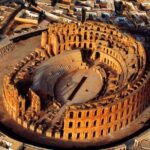
Roman stone and Fatimid gates in one day. This private day from Tunis links Mahdia’s Skifa El Kahla ramparts to the UNESCO El Jem Amphitheatre, so you see two big worlds without hopping around all week. I especially like the way the day balances architecture you can touch with sea-breeze breaks and photo stops, and I like that the program pairs major monuments with museum time rather than rushing straight from stop to stop.
The possible drawback is timing sensitivity. It’s a long day with multiple scheduled sites, and if access changes, you could lose time; one published report flagged two sites as closed and said the on-the-spot access guidance was unclear. In other words: go in ready to ask one simple question early—what’s definitely open today?
In This Review
- Key Points to Know Before You Go
- Skifa El Kahla: Mahdia’s Fortified Gateway, Not Just a Pretty Gate
- Mahdia Museum and Old Town: Punic, Roman, Byzantine, Islamic—All in One Setting
- Borj El Kebir Ottoman Fortress: A Kasbah Built for Control
- Great Fatimid Mosque: A First Mosque With Spanish-Era Layers and Bourguiba-Era Repairs
- El Jem Amphitheatre and Tythdrus Mosaics: When Roman Spectacle Meets Stone Reality
- Price and Logistics: Is $152.69 Good Value for an 8-Hour Private Day?
- Quick self-check
- Who Should Book This Tour—and Who Might Not
- Should You Book the Colosseum of El Jem and Fatimid Medina Mahdia Tour?
- FAQ
- How long is the tour?
- What is the price per person?
- Does the tour include pickup and transportation?
- What’s included in the price?
- Is lunch included?
- Can I cancel for free?
Key Points to Know Before You Go
- Skifa El Kahla (10th-century gate, later Turkish rebuilds) gives you a real sense of Mahdia’s defensive layout.
- Mahdia Museum mixes eras from Libyco-Punic and Roman-African objects to Byzantine and Islamic pieces.
- Borj El Kebir Ottoman fortress sits on the footprint of an earlier Fatimid palace, so layers are the whole theme here.
- Great Fatimid Mosque is historically important, yet the building’s story includes Spanish-era reuse and later restoration under President Bourguiba.
- El Jem Amphitheatre is the headline: UNESCO scale, strong preservation, and a guided look at how Romans built spectacle into stone.
- Included admissions and air-conditioned transport help the day feel efficient, even though lunch is not provided.
Skifa El Kahla: Mahdia’s Fortified Gateway, Not Just a Pretty Gate
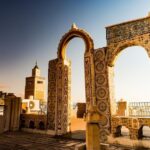
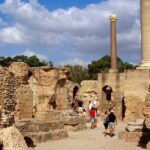
Skifa El Kahla is the kind of stop that rewards slow looking. This is a huge gate dating originally to the tenth century, and it’s still used as a key access point into Mahdia’s historic core. What makes it more than a landmark is the defensive logic: it was part of the old city walls system, and later the Turks rebuilt the ramparts at the end of the 16th century. You can actually feel the difference between what a gate looks like in photos versus how it works when you’re standing by it.
I like that you’re not just ticking off a name. You learn how the gate acted as a barrier in the city’s layered defenses—specifically as part of the second line designed to slow or stop access. That context makes the rest of the day click, because Mahdia’s other big structures—fortress, mosque, and fortress-like medina edges—follow the same theme of protection and power.
Practical tip: Skifa El Kahla is quick (about 25 minutes), so treat it like orientation. Take a few photos, but also glance at how the approach funnels you toward the older core. It helps when you later walk through the Ottoman and Fatimid sites.
You can also read our reviews of more tours and experiences in Tunis.
Mahdia Museum and Old Town: Punic, Roman, Byzantine, Islamic—All in One Setting
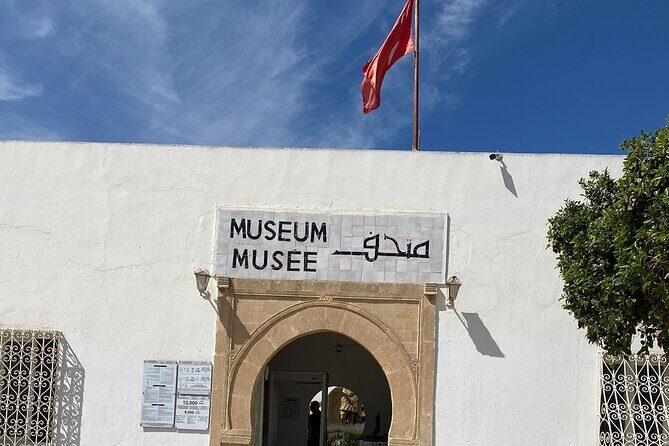
Mahdia Museum sits near the old town entrance in renovated town hall premises, which means you’re not walking into a museum after you’ve already lost the thread of the city. You’re stepping into that thread right away.
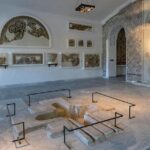
On the ground floor, the museum covers objects dating to Libyco-Punic and Roman-African antiquity. You’ll also see parts of the collection dedicated to Byzantine and Islamic periods. One detail I find especially worth your attention: Greek civilization is represented by two marble columns, partly gnawed by mollusks, said to come from a Roman wreck that was loaded with war booty and recovered in the 1940s off Mahdia. Even without technical museum notes, that kind of physical evidence connects sea, trade, conflict, and archaeology in a single glance.
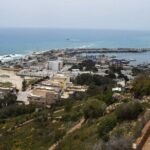
After the museum, you shift to the old town itself. Mahdia is built flush with rock on a thin peninsula, and that geography is part of why the place feels distinctive. You’ll get a sense of how the city sits with its sapphire-colored sea, plus the day-to-day character of a smaller coastal town—fishermen and silk weavers, not just postcard scenery. Even if you only have about an hour, this stop gives you the human scale. It makes the bigger monuments feel earned rather than dropped into your day.
Possible drawback: Old Town time can feel open-ended if the group pacing is fast. If you’re the kind of person who wants to wander slowly, you might want to ask your guide where the best photo angles are before you’re let loose.
Borj El Kebir Ottoman Fortress: A Kasbah Built for Control
Borj El Kebir (also known as a kasbah) is one of those stops where the building language is clear: this place was built to command movement. It was erected at the end of the 16th century on the site of an ancient Fatimid palace, which gives the fortress a layered identity from the start.
Architecturally, it’s described as a quadrangular plan with bastions at the angles. Around it is a powerful wall, originally pierced with a single entrance. Later, after the fortress was reassigned for prison use, another access was created in the 19th century. That kind of historical reuse matters because you can read it in the structure—how spaces are shaped for control, movement, and restricted access.
You’ll go through a vaulted and bent passage into a courtyard, and from there the rooms are vaulted too. There’s even an oratory of earlier construction that was saved and integrated into the building. That’s a detail I love: you can see how regimes and functions change, yet traces remain.
This stop is about 30 minutes, including the walking inside. It’s enough time to understand the plan without turning it into an all-day dig. And because it’s indoors-and-outdoor style architecture, it works well even if the light shifts and the weather changes.
Photo note: The courtyard edges and the internal passage shapes are great for photos that show scale. If your phone camera tends to flatten perspective, stand a little back and aim for symmetry.
Great Fatimid Mosque: A First Mosque With Spanish-Era Layers and Bourguiba-Era Repairs
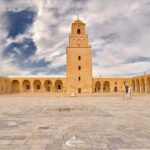
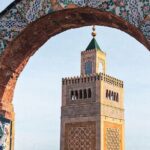
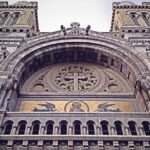
The Great Fatimid Mosque is not a minor stop. It was built by Obeid Allah el Mehdi between 909 and 934 and is considered the first Fatimid mosque. The lack of a minaret is part of its character: instead, the call of the imam is from one of the two towers. That’s the kind of small detail that makes you realize these sites aren’t just copies of a template.
Then the building gets a later life. Under Spanish occupation, it was transformed into a sanctuary. Only the northern part is said to date from the 10th century, and the rest reflects later redesign based on the original plan. Restoration work initiated by President Bourguiba in 1964 plays a role too, including restoration on land reclaimed from the sea. That reclaimed-land detail can matter for how you picture the mosque’s setting in the past.
So what do you actually take from it as a visitor? I think it’s the way the mosque tells multiple chapters without needing you to be an expert. You see a first-era foundation, then later reuse, then modern restoration. It’s a living history of control, faith, and rebuilding.
What to watch for: The stop is short (about 25 minutes), so if you want deeper explanations, position yourself where the guide can keep your group together and ask one follow-up question. If your group pacing is quick, the mosque can feel like a spotlight rather than a slow read.
El Jem Amphitheatre and Tythdrus Mosaics: When Roman Spectacle Meets Stone Reality
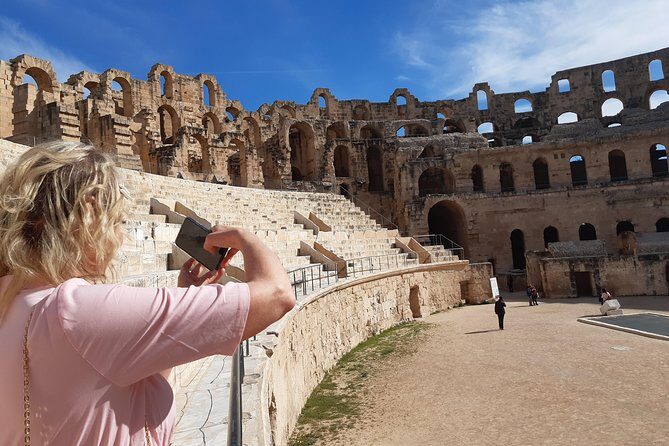
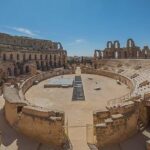
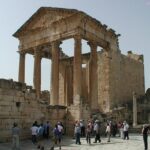
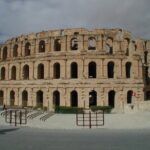
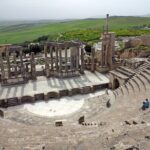
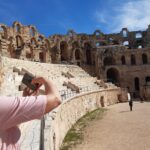
El Jem is the headline. The amphitheatre is a UNESCO World Heritage Site, and the impact is immediate: standing there, you grasp how Romans built entertainment into durable architecture. This isn’t only about beauty. It’s about structure—how the walls hold the arena, how the scale controls what the crowd experiences.
You’ll get a guided tour here (about 1 hour, with admission included). The guide perspective is the difference between seeing an old building and understanding what it was for. Even if you’re not a gladiator-history person, you can feel how the spectacle was staged. The amphitheatre’s strong preservation makes it easier to imagine the roar and the crowd movement without relying purely on imagination.
After El Jem, the day continues with an archaeological mosaic museum at Tythdrus. This is a smart pairing because mosaics shift you from big Roman engineering to intimate Roman artistry. You go from the arena’s scale to the eye-level details of decorative work. If your brain likes both sides—architecture and craft—this combination works.
One practical warning: Because this is the most famous stop, it’s also the one where crowds and heat can catch up to you. Wear something that handles sun, and if you’re prone to rushing, take 30 seconds at key viewpoints just to breathe and reset. It makes the guide’s explanation stick.
On what can go wrong: One documented complaint about this tour type involved multiple sites being closed and access guidance not being reliable. For that reason, I strongly recommend asking your guide early in the morning what’s confirmed for today. If anything changes, you’ll know fast—and you won’t waste your energy second-guessing.
Price and Logistics: Is $152.69 Good Value for an 8-Hour Private Day?
Let’s talk money in a real way. At $152.69 per person, you’re paying for a full-day combo with an air-conditioned vehicle, WiFi onboard, and admissions/fees covered across the included sites. Pickup is offered, the schedule starts at 8:00 am, and the total time is about 8 hours.
That matters because you’re not just touring. You’re traveling between Mahdia and El Jem, and you’re doing it with the stress removed. You don’t need to plan transport between monuments, and you also don’t need to manage separate ticket buying at every stop. For a private tour model, that’s real value if you hate logistics days.
The one clear missing piece is lunch. It’s not included. That means you should plan for snacks or budget time and money to eat on your own. If you’re sensitive to long gaps between meals, bring a small something—bars, nuts, fruit—so the day stays comfortable, especially in warmer months.
Group discounts are listed, and it’s a private tour activity, meaning only your group participates. That mix can be a nice deal if you’re booking with friends or a small group and want both the privacy and a chance at better pricing.
Quick self-check
- If you want a guided, structured day where admissions are handled, the price feels easier to justify.
- If you prefer fully self-paced museum wandering, you might find the day’s tempo slightly strict.
- If you’re traveling with a tight meal schedule, plan for lunch separately.
Who Should Book This Tour—and Who Might Not
I think this tour fits best if you like the idea of seeing Mahdia’s layered Fatimid and Ottoman landmarks and then switching gears to a UNESCO Roman monument in the same day. It’s also a good match for first-timers who want strong “major sites” coverage without building a DIY route.
It might feel less ideal if you:
- hate long car days and would rather split this into two separate mornings,
- need lots of free time for independent wandering,
- or get frustrated when even one stop changes due to closures.
If you’re flexible and you ask the right question early—what’s definitely open today—you’ll likely enjoy the pacing and the structure.
Should You Book the Colosseum of El Jem and Fatimid Medina Mahdia Tour?
If you want a one-day hit of Roman spectacle plus Fatimid-era architecture and Ottoman military design, I’d say it’s a solid booking. The value is strongest when you appreciate guided interpretation and when you’re okay handling lunch on your own.
Just go in with two practical habits: wear sun-ready gear for El Jem, and confirm site access early because this kind of multi-stop day can be vulnerable to closures. With that mindset, you get a memorable cross-era day that feels far more purposeful than a grab-bag excursion.
FAQ
How long is the tour?
It’s approximately 8 hours, starting at 8:00 am.
What is the price per person?
The price is $152.69 per person.
Does the tour include pickup and transportation?
Yes. Pickup is offered, and the tour uses an air-conditioned vehicle with WiFi onboard.
What’s included in the price?
Air-conditioned vehicle, WiFi on board, all fees and taxes, and private transportation are included.
Is lunch included?
No, lunch is not included.
Can I cancel for free?
Yes. You can cancel up to 24 hours in advance for a full refund.