REVIEW · MONASTIR
Kairouan Holy City and El Jem Colosseum Tour from Sousse
Book on Viator →Operated by TUI Tunisia S.A. · Bookable on Viator
Mosques and Rome, in one long day. I love the contrast between Kairouan’s sacred sites and the sheer scale of El Jem’s amphitheatre, plus the way a good local guide turns landmarks into lived-in history. The big catch is time: it’s a packed day, so some stops can feel like quick chapters rather than slow pages.
This is the kind of tour that works because the pieces connect. Kairouan is a spiritual center with standout architecture, and the Aghlabid Basins show how medieval engineering kept life moving—then you’re thrown into the Roman world with an arena that can still make your imagination sprint.
If you hate tight schedules, or you want long wandering time in town, keep expectations realistic. And note one wrinkle I picked up from past guests: some mosque entry rules may be different for non-Muslims.
In This Review
- Key highlights to know before you go
- A 7:00 am start from Sousse-area hotels: how the day runs
- Kairouan’s Great Mosque: what makes it special (and what to plan for)
- Sidi Sahbi (Mosque of the Barber): the zaouia stop outside the medina
- Aghlabid Basins: medieval water engineering you can still picture
- Lunch after the mosques: buffet food that keeps you moving
- El Jem Amphitheatre: seeing Roman scale at full force
- Museum time and your own pace at the arena
- Price and value: what $85.96 really covers
- Carpet shop detour: one potential snag to consider
- Who this tour is best for
- Tour guide vibe: why it matters here
- Should you book this Kairouan and El Jem day trip from Sousse?
- FAQ
- What time does the tour start?
- How long is the tour?
- Is hotel pickup and drop-off included?
- What’s included for food and drinks?
- Does the ticket include El Jem admission?
- Is there a mobile ticket?
Key highlights to know before you go
- Great Mosque of Kairouan: courtyards and the minaret you can spot from far away
- Mosque Sidi Sahbi (Mosque of the Barber): a revered zaouia outside the medina area
- Aghlabid Basins: medieval water reservoirs with real engineering logic
- El Jem Amphitheatre + Museum: one of Tunisia’s best-preserved Roman arenas, plus the on-site museum
- Guides like Fares/Faris and Aida: praised for being friendly, question-friendly, and great at explaining context
- Time pressure: a long day with limited walking free time at each stop
A 7:00 am start from Sousse-area hotels: how the day runs
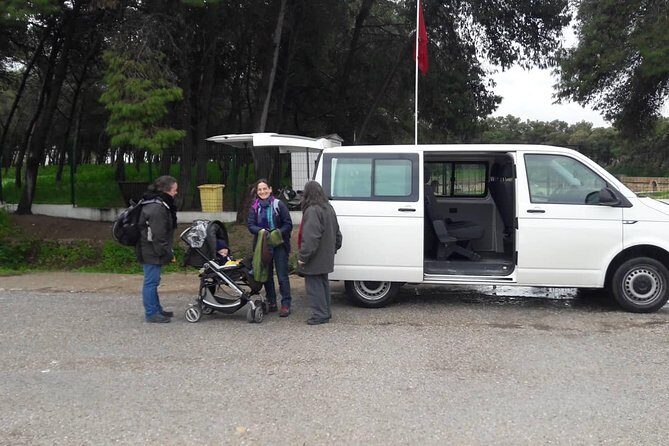
The tour begins at 7:00 am, so you’ll want to treat breakfast like it’s part of the plan, not an afterthought. Hotel pickup and drop-off are included, which is a big value when you’re crossing between regions on a single-day schedule.
At around 8 hours total, you’re not moving at a relaxed sightseeing pace. That’s not a deal-breaker, but it does mean you should go in with a clear goal: see the key monuments, learn what connects them, and enjoy the ride through Tunisia’s cultural layers.
Group size tops out at 50 travelers, which usually keeps things social without feeling like a school trip parade.
You can also read our reviews of more tours and experiences in Monastir.
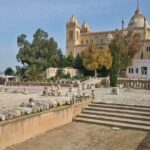
Kairouan’s Great Mosque: what makes it special (and what to plan for)
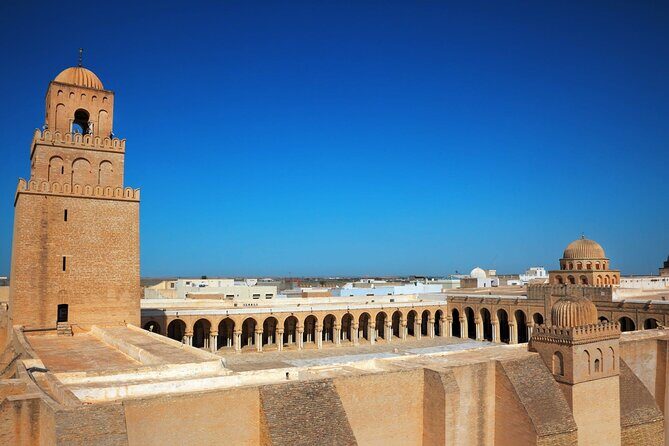
The Great Mosque of Kairouan is the star. You’ll get a guided visit and admission ticket included, and what stands out isn’t just age—it’s the atmosphere. Expect serene courtyards and dramatic architecture, including the towering minaret that gives the whole complex a strong, grounded presence.
This is also where mosque-entry rules matter. One past guest noted that non-Muslims were not allowed inside the mosque, so you should plan for possible restrictions depending on your group and local practice. If you’re visiting as a non-Muslim, come ready to observe from permitted areas.
Practical move: wear something easy to manage for modest dress. Even with a guide, you’ll have the best experience if you don’t spend the first ten minutes figuring out clothing logistics.
Sidi Sahbi (Mosque of the Barber): the zaouia stop outside the medina
Next up is Mosque Sidi Sahbi, often called the Mosque of the Barber. It’s a beautifully decorated zaouia dedicated to a revered companion connected with Islamic tradition, and it’s located just outside the ancient medina area.
This stop is shorter—about 1 hour—but it’s a good rhythm shift. You go from a monumental mosque complex to a more intimate, commemorative space where the decoration and spiritual significance feel personal rather than massive.
If you like religious architecture that tells a story through design, you’ll probably enjoy this one more than you expect. And if you’re hoping for lots of extra walking in the old lanes, you’ll want to know this tour doesn’t build in long, free wandering time.
Aghlabid Basins: medieval water engineering you can still picture
After the mosques, you’ll visit the Aghlabid Basins, which are essentially the city’s medieval water system made visible. These large stone reservoirs were crucial for supplying water, and they’re known as a famous example of Islamic hydraulic engineering.
What I like about this stop is that it gives you a different kind of history. You’re not just looking at art or worship spaces—you’re seeing how people solved real daily problems. It’s the kind of place where a guide’s explanations make a huge difference.
With about 1 hour here, you can still catch the main idea: these basins weren’t decoration. They were infrastructure, and they helped keep Kairouan functioning.
Lunch after the mosques: buffet food that keeps you moving
You’ll have a buffet lunch before heading toward El Jem. Lunch is included, and that alone helps justify the day-trip value because it removes the hassle of hunting for food between stops.
Drinks are not included, so plan on buying water or other beverages separately if you need them. Also, one past guest specifically mentioned lunch at a hotel outside El Jem with good food—so at least some departures may treat lunch as a real sit-down break rather than a rushed snack.
Use lunch to recharge a little, because El Jem is where the day’s “wow” factor hits hard.
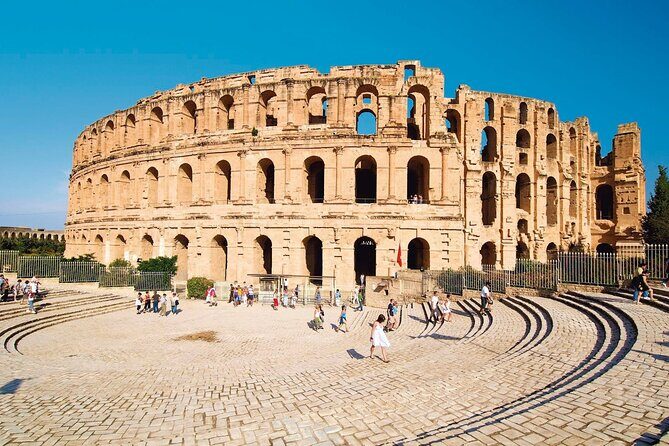
El Jem Amphitheatre: seeing Roman scale at full force
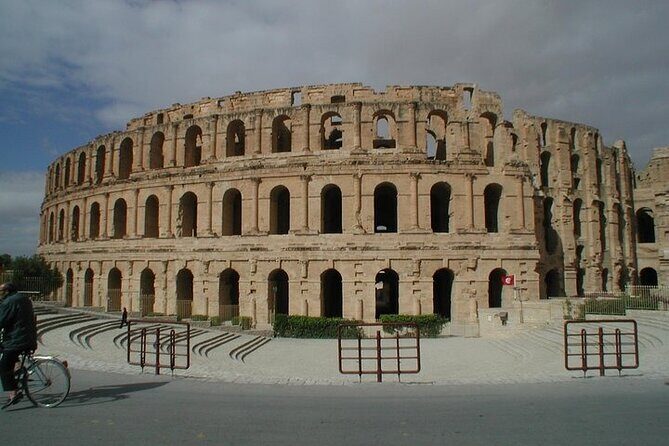
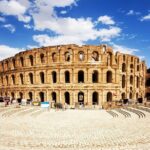
Then comes El Jem, and yes, it’s dramatic. You’ll explore the Amphitheatre d’El Jem, with entrance fees included for both the amphitheatre and the museum.
The amphitheatre is built to make you feel small in the best way. It once held up to 35,000 spectators, which helps you picture the roar and the spectacle even if you’re just walking through stone corridors today. The best part of this stop is how the structure basically explains itself: layers, access points, and the way crowds would have moved.
This portion of the day is long—about 4 hours—and that matters. You get enough time to see it without sprinting, plus a chance to linger in the museum and connect what you’re seeing with what the arena was built to host.
If you care about archaeology, this is the anchor. If you care about religion and art, it still works because it’s another “belief in stone”—just in Roman form.
Museum time and your own pace at the arena
A key detail: you should expect some time at your own pace, especially at the amphitheatre and museum areas. Past guests mentioned having time in the museum and spare time at the El Jem site, which helps you avoid the feeling that you’re always being rushed from point to point.
In practical terms, that flexibility is where you can tailor the experience:
- Spend extra moments on the museum material if you want context for the arena.
- Walk the amphitheatre paths at a comfortable pace if you like photos and viewpoints.
You’ll probably want sturdy shoes. El Jem is all about stone surfaces and walking distance, and a long day turns “just a bit of walking” into something you’ll feel by hour six.
Price and value: what $85.96 really covers
At $85.96 per person, this isn’t just a bus ride. You’re paying for guided visits, major site entrance fees at El Jem, a buffet lunch, and hotel pickup/drop-off. For many travelers, that “all-in” part is the value: fewer tickets to buy, fewer decisions, and less time lost to logistics.
Also, the tour blends two big themes—Islamic heritage in Kairouan and Roman monumental design in El Jem. That’s not a common combo to pack into one day, and it’s a big reason this itinerary appeals beyond one narrow interest group.
What you don’t get is drinks. So if you tend to buy bottled water or soft drinks at every stop, add a little budget.
My advice: treat this as a “great monuments” day, not a “slow and deep” day. If you’re fine with that trade-off, the price feels fair.
Carpet shop detour: one potential snag to consider
One past guest flagged a carpet shop visit that wasn’t on the agenda and called out the long day. That kind of stop can be frustrating if you booked for strict monument time and you’d rather spend every minute on Kairouan and El Jem.
Here’s how I’d handle it. Go in expecting that some departures may include retail-style stops as part of the tourism ecosystem. If you’re not shopping, keep it polite, be firm if needed, and don’t let it steal your headspace. The tour’s main value is the sites—so keep your eye on El Jem and the mosque complexes.
Also, because it’s a jam-packed day, you may want to mentally block out any detours and focus on learning and photos at the big-ticket stops.
Who this tour is best for
This tour fits best if you want a structured day that hits two UNESCO-level style destinations with a guide helping connect the dots. You’ll like it if you enjoy:
- architecture and religious sites in Kairouan
- archaeology and Roman engineering/entertainment at El Jem
- learning history fast, then seeing it in real space
It may not be your best match if you want lots of unstructured time in the Medina or if you hate “quick stops.” One guest wished there were more time walking in the Medina area, and that’s a fair heads-up.
And if you’re visiting as a non-Muslim, plan for possible mosque access limitations based on what at least one past guest experienced. You can still have a great day, but your experience inside the mosque buildings might differ from someone who can enter all areas.
Tour guide vibe: why it matters here
The guide is a huge part of whether the day feels meaningful or just rushed. Past guests specifically praised guides including Fares/Faris for being friendly, charismatic, and great at explaining how Tunisia’s history fits together.
That kind of guidance turns a list of monuments into a story: why Kairouan mattered, how water systems supported life, and why the Roman arena was such a big deal in its day.
So if you care about context, you’ll likely get your money’s worth from the explanations—not only from the buildings.
Should you book this Kairouan and El Jem day trip from Sousse?
I’d book it if you want maximum impact in one day: Great Mosque of Kairouan, Sidi Sahbi, the Aghlabid Basins, then El Jem’s amphitheatre and museum with real time on site. The blend is rare, and the inclusion of transport, lunch, and El Jem entrances makes it feel practical rather than spendy.
I wouldn’t book it if you’re hoping for a slow, flexible itinerary or if you hate shopping-style detours. Also, if mosque access would make or break your experience, be ready for possible entry restrictions.
If you’re the type who enjoys short, guided stops followed by time to look and think on your own—this is a strong day trip.
FAQ
What time does the tour start?
The tour starts at 7:00 am.
How long is the tour?
It runs for about 8 hours.
Is hotel pickup and drop-off included?
Yes. Hotel pickup and drop-off are included.
What’s included for food and drinks?
You get a buffet lunch. Drinks are not included.
Does the ticket include El Jem admission?
Yes. Entrance fees for the El Jem Amphitheatre, including access to the Colosseum and Museum, are included.
Is there a mobile ticket?
Yes. The tour mentions mobile ticket delivery.